



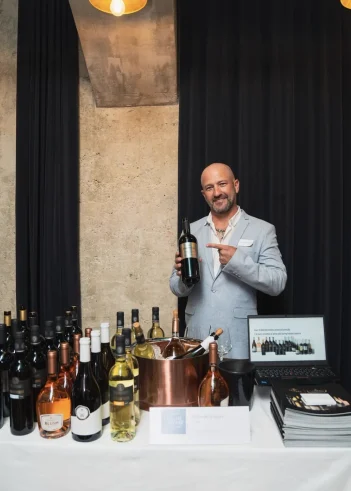

The sommelier in the wine trade is a very central figure. Whereas, the winemaker rules the roost within the gates of the winery, beyond that it is the sommelier who is the main wine professional. Their job is not just serving the wine in a restaurant. It may also involve purchasing, selling, managing the wine inventory or cellar, as well as staff training and wine education. This was an interest of mine in my first steps in wine. In the UK, I was a founder and then honorary member of The Academy of Wine Service in the late 1980s. On arriving in Israel, I founded Pras Yarden – The Yarden Award for Wine Service. This went on to be the main competition for sommeliers and wine waiters for the next twenty-five years. I also organized the first Sommelier Course in Israel in the early 1990s.
Though I started my career in the drinks industry working for a famous brewery founded in 1777, I did not come across the profession of “beer sommelier.” That is until now. I was told that Carlsberg Israel, aka IBBL (International Beer Breweries Ltd), had an internationally qualified beer sommelier. Obviously, I was interested to meet him. It was surprising how hard I had to push to secure a meeting with him. It did not come easily. Carlsberg Israel are a subsidiary of CBC Israel. A juggernaut of soft and alcoholic beverages and the number one total beverage company Israel. Anyway, to start with, I was more interested in the idea than they were!
It is now 30 years since Carlsberg Israel established their brewery in Ashkelon. Before that, Tempo Brewery was the undisputed beer monopoly and the Central Bottling Company (CBC), aka Coca Cola Israel, was king in soft drinks. Then things suddenly became more competitive in the early 1990s. Tempo became Israel bottlers of Pepsi Cola and importers of Heineken and the CBC Israel began importing Carlsberg. They started stepping on each other’s toes. This was greatly to the benefit of the consumer. It brought the Israeli beverage and drinks industry into a modern age.
CBC Israel produce, import or represent the products of Coca Cola and Diageo, the largest soft drink and spirits companies in the world. Their portfolio ranges from global brands like Johnnie Walker, Carlsberg and Coca Cola to the local Prigat, Neviot and Tabor Winery. Their head office is in Bnei Brak, behind the very visible Coca Cola factory.
Over 20 years ago I was at Carmel when CBC had the fleeting thought to enter the wine business through Israel’s largest brewery. In the end they bought a small boutique winery called Tabor Winery, founded by four vineyard growers. They grew the brand until it became the 6th largest winery in the land. IBBLS was the company within CBC responsible for wine and spirits. My son David Montefiore DipWEST, was the one who built their wine import division.
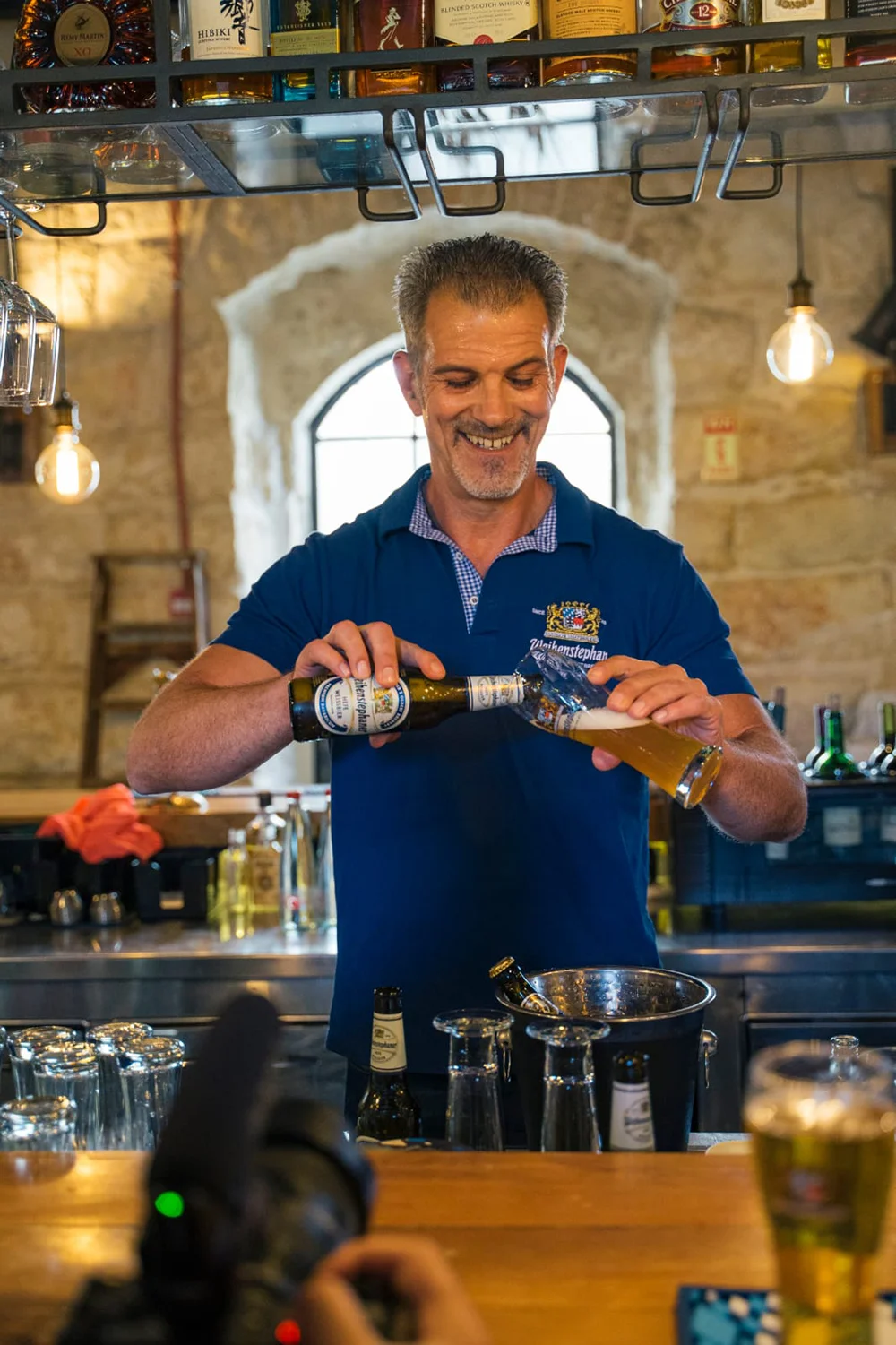
Of course, when I finally met with Ofer Hafkin, the beer sommelier, he was disarmingly charming, very fluent and knowledgeable. I expected and hoped for a tutored tasting of the different beers in the portfolio and a presentation about the Israeli beer industry. Maybe I have been spoiled by too long in the wine industry. What I got was a very informal chat with Ofer, who was a well of information. For the rest, I was left to my own resources.
Ofer Havkin is a giant of a man. It is almost as if he has to fold himself up to fit in his postage stamp office, because his job is really out in the trade, in the training class room and visiting bars. He is the beer ambassador that fits into that space between the technical staff that make the beers, the sales team that sell them and the bars and retailers that place orders. He has immense knowledge and a smile that could crack open any beer. He could out beer talk most and certainly in Israel he is a beacon of information. There are only three beer sommeliers in Israel, and he is one of them, receiving this certification in Germany at the Doemens World Brewing Academy in Munich. You can’t beat that!
The beginnings of beer in modern Israel began in in 1927 when Max Brau Pilsner was made by the Rozenberg Brothers in Acre. In 1934 Palestine Breweries was founded by James Rothschild and Frenchman Gaston Dreyfus. Rothschild’s father had previously founded the Israeli wine industry. They rented a corner of Carmel’s Rishon Le Zion Cellars. After the founding of the State, it became known as Nesher Brewery and they produced the first Goldstar in 1950. The National Brewery was formed in Netanya in 1952 and their most famous beer was Abir. In 1973 there was a consolidation as the National Brewery purchased the Nesher Brewery and Galilee Brewery. The modern beer industry in Israel took shape in 1985, when Tempo, a soft drink company, gathered together the individual breweries under one umbrella company. Goldstar became the leading selling beer, and it remains so to this day. Nesher remains the oldest existing brand.
In the early nineties CBC Israel decided to go into beer representing Carlsberg, the giant Danish brewery and in 1995 they founded the Carlsberg Israel Brewery to take on Tempo. They produce Carlsberg and Tuborg under licence. In the early 2000s interest in home brewing was fanned by competitions and festivals and out of that a craft brewery industry was born. Dancing Camel was the first. Others like Alexander, Golan, Jems, Malka, Negev and Shapiro followed.
Ofer Havkin may be the face of Carlsberg IBBL, but the key figure behind the scenes is brewmaster (or brewmistress) Anat Meir. She has been there thirty years this year. She is the chef, but with beer. Meir started her career at the bottom at the very beginning, and worked her way up. Today the brewmasters at both Israel’s largest breweries are women; Marina Zeltser at Tempo and Anat Meir at Carlsberg IBBL.
Of course, Carlsberg is one of the iconic breweries of the world, founded by JC Jacobsen in Copenhagen in 1847. In 1883 Carlsberg changed brewing forever. They succeeded in isolating the yeast responsible for beer fermentation. This ensured control over the process that had previously been in the hands of the Gods. The worldwide beer industry owes an eternal depth of gratitude to Carlsberg. The main Carlsberg lager is reasonably bland but very refreshing. It is one of those global brands of beer that are everywhere. Their iconic advertising says, it is “Probably the best beer in the world.” One of the great advertising slogans! Carlsberg the company initially invested in the Israeli brewery, but though no longer financially involved, it remains a joint venture in terms of maintaining international standards, shared expertise and the latest technology.
IBBL also produce Tuborg under licence. Tuborg was founded in 1873 in Denmark. Since 1970, it has been part of the Carlsberg Group. Their main product is Tuborg Pilsener, but Tuborg Red was developed in Israel. This is a dark, European amber beer produced to be in a similar style to compete with Goldstar. I have had it described as Munich or Vienna style, but I will leave that to the real experts. Certainly, I prefer this to the regular Carlsberg. It is full of flavor, rich and refreshing. It really fits the style preferred by Israelis.
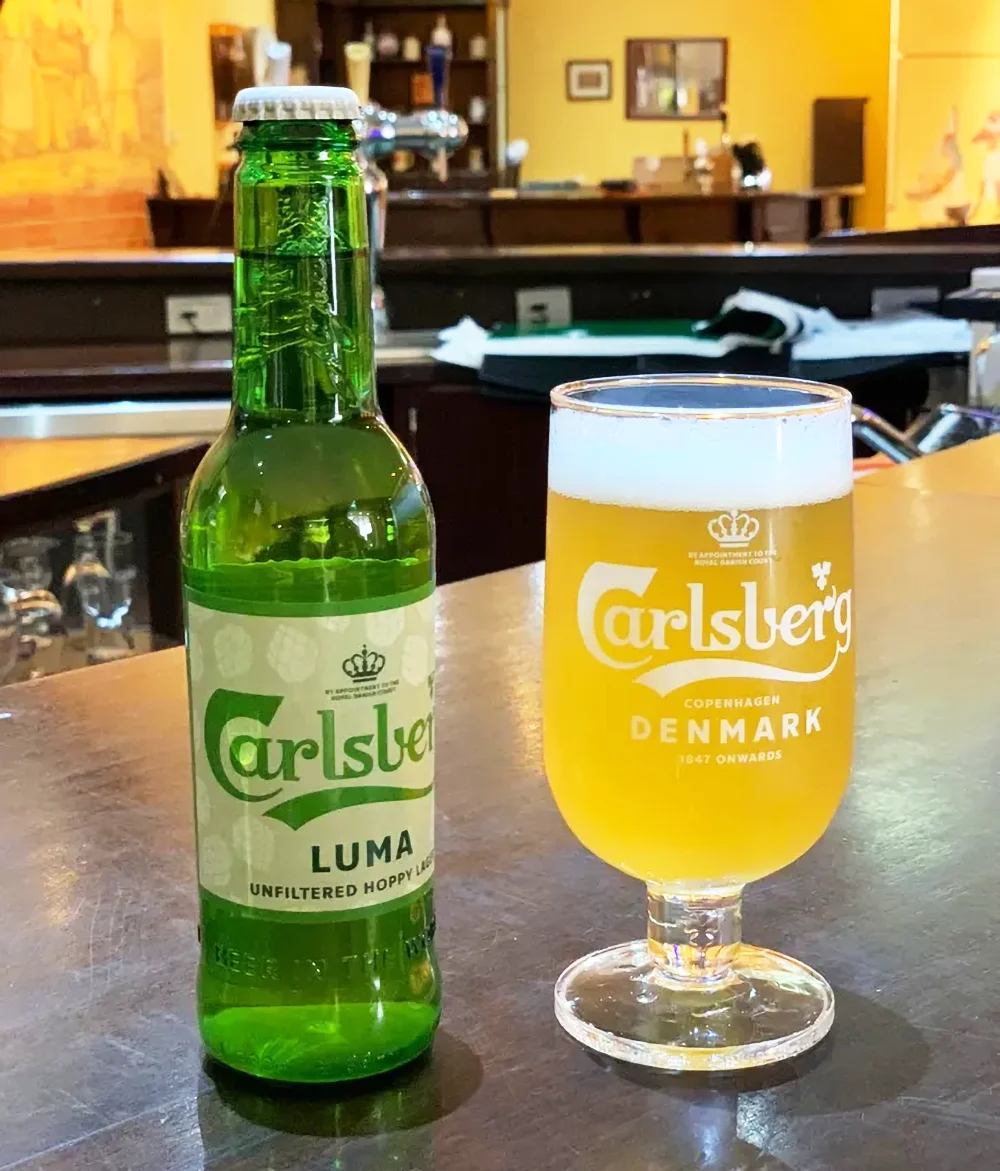
In 2017 Anat Meir, with IBBL’s research and development team, began to develop a new beer called Luma. This combined Carlsberg’s rigorous standards of quality, with the Israeli creative gene. As a result, Carlsberg Luma was launched in 2020. It is an unfiltered lager of 5.2% alcohol, with a citrusy hoppy aroma. It is made from malted barley and wheat, three varieties of hops which are added at an advanced stage of the fermentation (dry hopping.) It is a crossroads beer which has the color of a blonde beer, refreshing elements of lager, the fruitiness of a wheat beer and bitterness of an IPA. It is flavorful, refreshing and original. I loved it when I first tasted it and if it is on tap, I will not pass it by. It is a great addition to the portfolio and an Israeli creation.
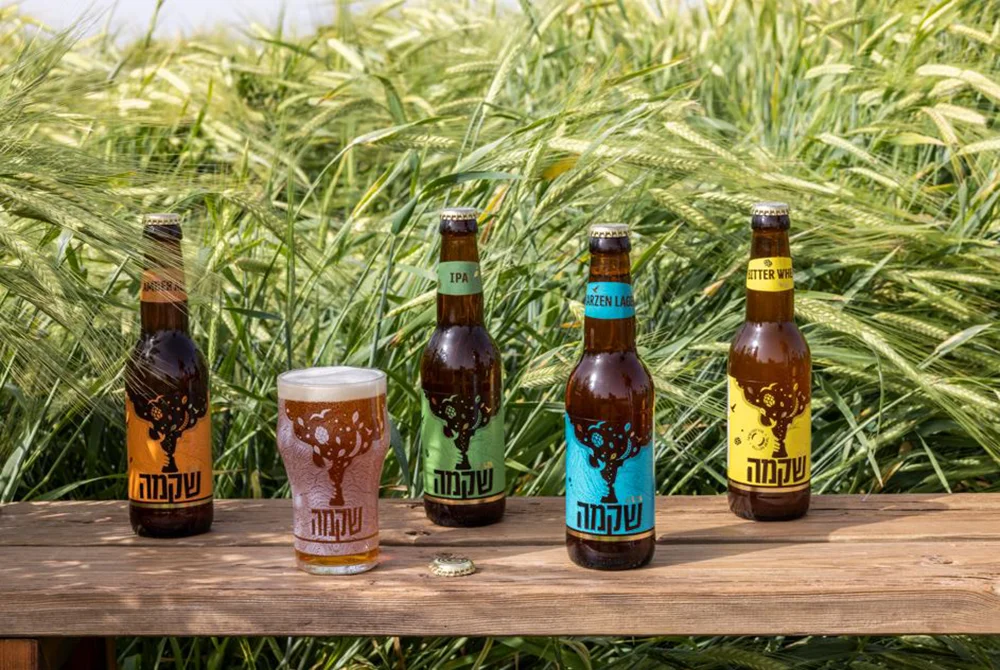
In 2021, the IBBL responded to market forces, by entering the craft brewery market. They called their new brand Shikma, which means sycamore tree. It is also the name of a nearby stream and water reservoir. They initially produced three beers, an IPA, Amber Ale and Marzen Lager. I loved the IPA, but it is not as pale as is traditional. I imagine the color was tweaked with more roasted malt to fit the Israeli preferred color profile. However, it is delicious, refreshing and the Brit in me likes it (I was weaned on IPA in England). The Amber Ale is yeastier, and malty, certainly in a nod to the Israeli style. The Marzen Lager completes the portfolio. It is a beer traditionally made in March at the end of winter, for drinking in the summer. Now, they have just launched a new Blonde Ale, which they describe as a light European style beer. Of course, Shikma is most famous for using malt from barley grown in the Western Negev. Supporting the farmers of the region is an important symbolic gesture. All their beers are good, but my favorite by far, is the IPA.
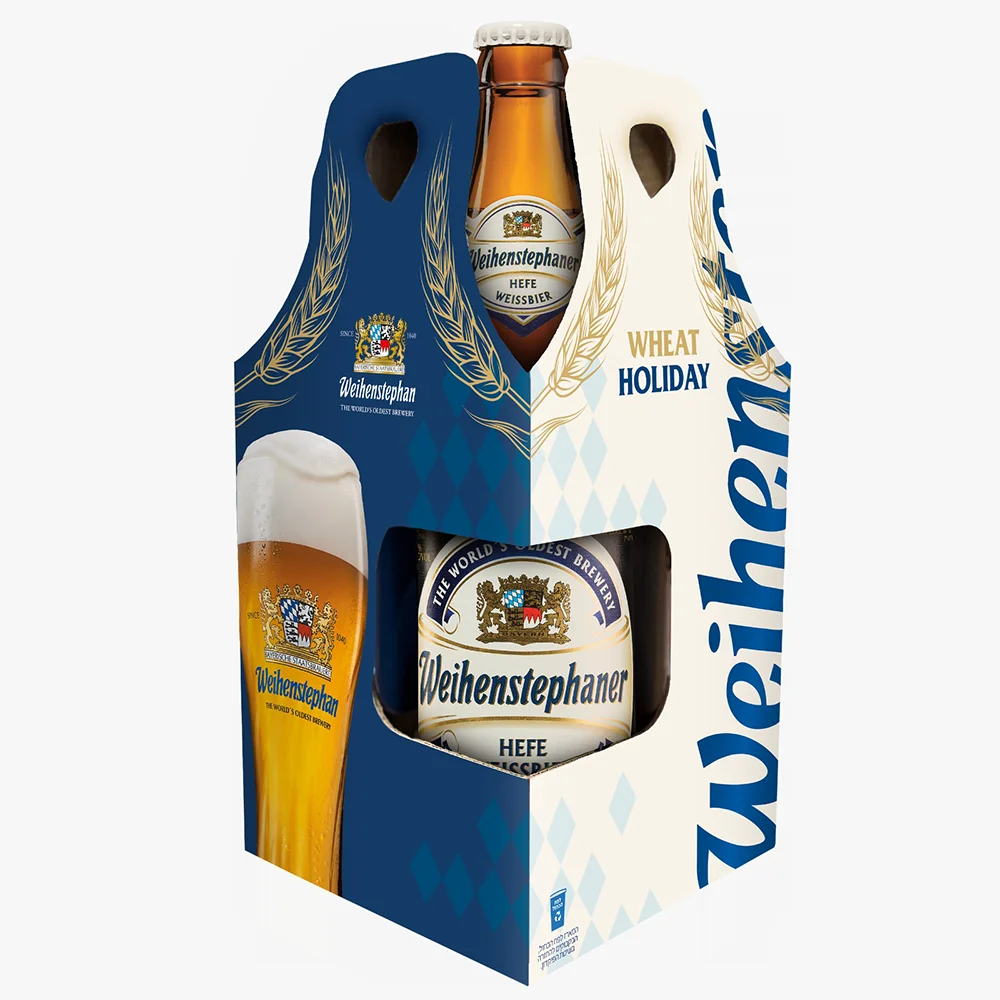
IBBL always imported an impressive range of imported range of beers. In the early days these included two of the world’s most famous, iconic beers: Guinness from Ireland and Weihenstephaner from Germany. Out of all of them, these have stood the test of time. They are still with CBC.
Weihenstephaner from Bavaria brought a new style of beer to Israel. That is Weiss Beer, sometimes called white beer or wheat beer. The brewery dates from 1675, but they claim it goes back to 1040. In our terms this is an incredibly long, rich history. Their core beer is fresh, fruity and very aromatic. Maybe it is the beer equivalent of a Gewurztraminer or Muscat. Despite the difficulty of pronunciation and spelling, it has become the byword for wheat beer in Israel and has helped to create a new category.
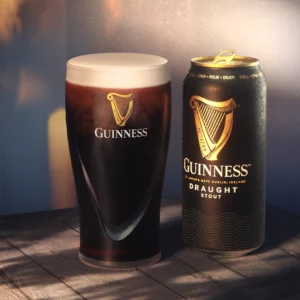
Guinness is the famous dark stout from Dublin Fair City, where the girls are so pretty. Theirs is a comparatively new brewery compared to Weihenstephaner, because Arthur Guinness only started brewing in 1759! Guinness is one of the great beers of the world. It has been around so long, and was in a long slow decline. However, fanned by the young generation, Guinness has had an astonishing revival, to the extent that sales had to be rationed last year to cope with demand. It is not such a big brand in Israel, but it is kind of reassuring it is here. When I find it, I order it. Guinness is probably my favorite beer.
Apart from Weihenstephaner and Guinness, IBBL also represent other famous breweries. Estrella Damm is a Catalonian beer brewed in Barcelona since 1876. It is a crisp, light drink which is refreshing. They also have a beer for celiacs: Estrella Damm Daura which is gluten free. I have friends who will be delighted to know this. Top of the range is the Inedit, a unusual blend of malted barley and wheat beer, flavored with coriander, licorice etc. It comes in a large bottle. This unique expression was crafted by the great Chef Ferran Adria.
Another famous import is 1664, the famous pale lager wheat beer produced by Kronenbourg. It was first brewed in 1664 in Alsace. It is owned by the Carlsberg Group. 1664 is delightful; Fresh, very fruity with a little spiciness.
So, I have now met my first beer sommelier. Certainly, this is a qualification with international recognition, and a job with added value because it is really being the beer ambassador for CBC Israel. This important role, Ofer Havkin carries of with aplomb!
Adam Montefiore is a wine trade veteran and winery insider turned wine writer, who has advanced Israeli wines for 38 years. He is referred to as the English voice of Israeli wine and is the Wine Writer for the Jerusalem Post. www.adammontefiore.com