
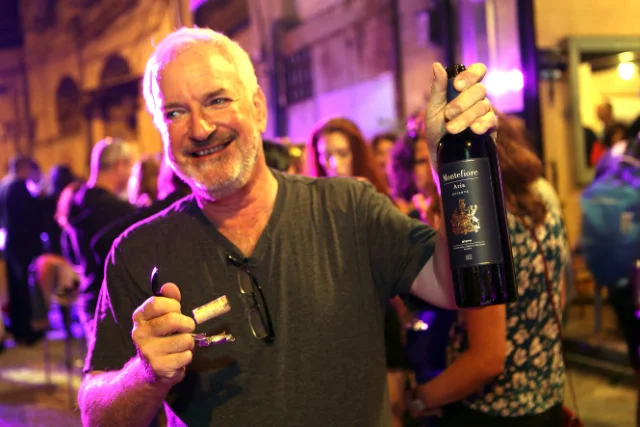
In 1976 I made my first steps in the drinks industry joining British brewer Bass Charrington in London as a business management trainee. Fifty years ago! Forgive me for indulging myself, but a fifty year anniversary is pretty rare. Now, when I look back at wine development here in Israel and I see that 1976 was a pivotal year. It was the year that showed the first twinge in the wine revolution that followed.
The iconic Carmel Special Reserve 1976 was produced that year. It was the first Israeli wine aged in small oak barrels. The Technical Director was the late Freddie Stiller. He told me he had no budget for barrels, but they did purchase limousin barrels for maturing brandy, which was a big thing in those days. He diverted some of these barrels for his precious wine. The Special Reserve was a unicorn wine of its time. It lasted for about twenty years and really was the first international style wine made here.
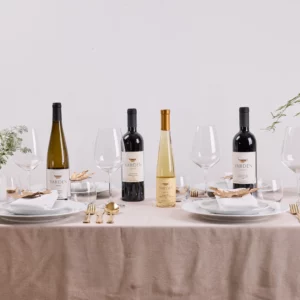
In 1976 the first vineyards were also planted on the Golan Heights under the radar. Each community decided to plant grapes to diversify their agricultural activities. Eventually a partnership was made between four moshavs and four kibbutzes. They decided to get together and go it alone. The result was the founding of the Golan Heights Winery in 1983. The high elevation vineyards, volcanic soil, import of international expertise and advanced technology, combined to make Israel’s first world class wines. The Yarden brand put Israeli wines on the international wine map.
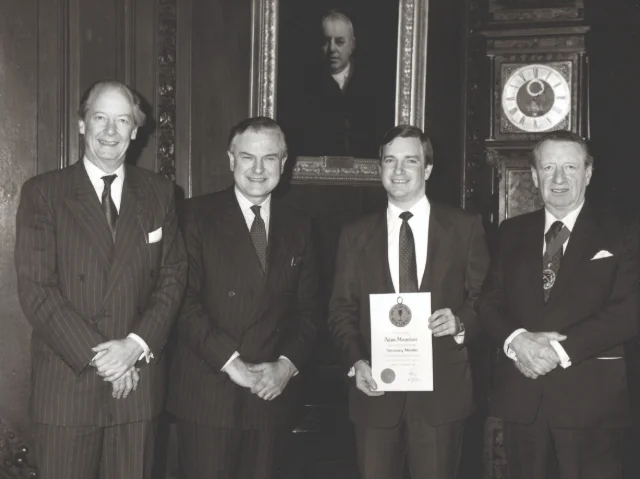
Bass Charrington was the largest brewery and pub owner in the UK, but they were also hoteliers and vintners. I started my journey working with pubs and beer, and gradually moved to restaurants and wines. My wine career may really be divided in three. I began in ‘on premise’ (in the on trade) being involved in compiling wine lists, restaurant wine marketing and wine education. This covered time in the UK and my early years in Israel. Then, whilst working for Israeli wineries I became involved in professional marketing and wine development in Israel, and also in exporting to USA, Europe and the Far East. My existing phase is as a wine consultant and wine writer.
Back to 1986, I was wine manager of Bass hotel group in Great Britain. I was introduced to Israeli wines for the first time by Peter Hallgarten, doyen of the English wine trade. He imported the Yarden, Gamla and Golan wines to the UK and I put them on the corporate hotel wine lists. That is where contact with Israeli wine started for me personally. I put an Israeli wine alongside a Lebanese wine and began my interest in promoting an Eastern Mediterranean wine region. The Caterer and Hotelkeeper said our wine lists and wine program was “way ahead of their competitors.” I was a founder member of what was then called The Academy of Wine Service, and later made an honorary member.
The wine that created the noise was a Yarden Cabernet Sauvignon 1984, which in 1987 won the main prize at the International Wine and Spirit Competition in London. Yarden wines kept on winning important awards. In 1989 I made Aliyah to Israel. I had started my career working with wines from all over the world and only later focused on the wines of Israel. Most Israelis make the opposite journey.
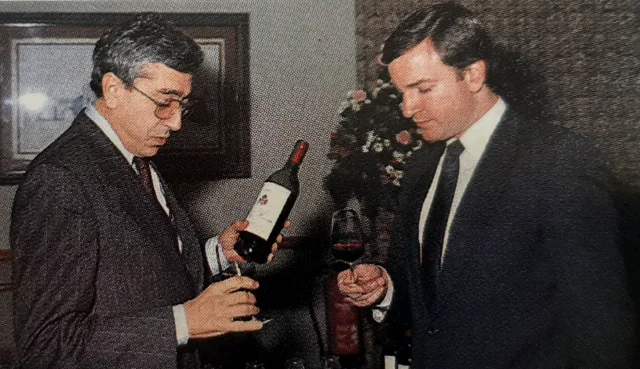
Then, there were 12 wineries in Israel and Carmel controlled over 75% of the market. The main wineries apart from the Golan Heights Winery, were known by names such Carmel Mizrahi, WEST – Stock, Eliaz, Efrat, Askalon Wines and Ha’Baron. With the wine revolution, they all wanted to improve their image and this entailed changing their names. So they soon became known respectively as the more familiar Carmel Winery, Barkan, Binyamina, Teperberg, Segal and Tishbi. The main planted variety was Carignan and most of the vineyards were in the Mount Carmel region and the central coastal plain.
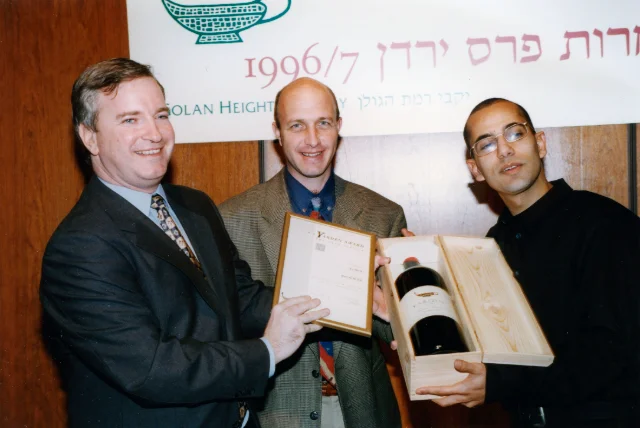
I spent the next 27 years working for Carmel, the historic winery of Israel and the Golan Heights Winery, the pioneering winery of Israel. During my early years, I feel I contributed to more professional wine lists, giving a new focus to wines by the glass and introducing a new method of professional support for the Hotel & Restaurant sector. At the Golan Heights Winery, I initiated and organized Pras Yarden (The Yarden Award for Wine Service) which became the main wine competition for sommeliers for the next 25 years. Many of the winners became stalwarts of the Israel wine scene. I also organized the first ever sommelier course. The nineties was a time of setting new standards in Israeli wine in terms of wine quality, wine tourism and wine education.
It was in the 1990s the boutique winery revolution started and some quality wineries were founded. Chief amongst these were Margalit Winery, Domaine du Castel and Tzora Vineyards. The stirrings of a food revolution with bread, cheese and olive oil leading the way also had their roots in the nineties.
I was responsible for export for first the Golan Heights Winery, then Carmel. In those days these two wineries accounted for 90% of Israeli exports. Probably for this reason I became like an unofficial spokesman for Israeli wine overseas. This responsibility has stayed with me over the following decades.
In 1996, I started assisting Gabi Lachmann to contribute to Hugh Johnson’s Pocket Wine Book. This is an annual wine guide which is the largest selling wine book year after year. It is translated to 12 languages. My area of expertise was Israel, the Eastern Mediterranean and North Africa. The Golan Heights Winery was the first Israeli winery to receive *** (three stars) and Castel was the first to receive **** four stars in 2008. Today there are more than 40 wineries listed. The leading ranked Israeli wineries (in alphabetical order) are Castel, Flam, Sphera, Tzora, Yarden and Yatir. Thirty years later, I still contribute to this book.
In 1999, I had the good fortune to be the first Israeli to attend the New York Wine Experience. This was the most prestigious wine tasting event of the year organized by the Wine Spectator and open by invitation only, to the 250 best wineries in the world. The Golan Heights Winery was the first Israeli winery to be invited. It is a unique event. Rare wines are poured by the winemakers and owners of all the famous wineries. It was like being amongst the Gods. I was on my own and took half an hour off, raced around in a frantic rush, tasting some of the most exclusive wines on the planet. I returned flushed and breathless to pour Yarden Cabernet Sauvignon 1996. I remember the sense of awe and excitement, but of the individual wines, I can’t remember a damn thing. Pleased to say Israeli wines are still invited to this most prestigious event. This last year Israel was represented by three wineries, Flam, Recanati and Yarden.
In the early 2000s, now with Carmel, I had dreams of founding “Wines Without Borders” a consortium of Eastern Mediterranean and Levantine wineries. However, unfortunately it was an idea ahead of its time. We did however sponsor a Trophy for Best Eastern Mediterranean Winery at the IWSC in London. At the turn of the millennium a number of new wineries were established, larger in size with attention to aesthetics. Amphorae, Clos de Gat, Recanati and Yatir were some of them. I was personally involved with the launch and development of Yatir Winery, because they were a subsidiary of Carmel.
I founded Handcrafted Wines of Israel, an export marketing consortium that included Castel, Flam, Margalit, Tzora and Yatir, amongst others. It was the first time Israeli wineries worked together to advance Brand Israel.
In 2006 I was asked to write the sections on “Israel” and “Kosher” for Jancis Robinson MW’s The Oxford Companion To Wine. I have continued to do this over the last three editions of this tome, published over the last 20 years. It has been described as the most useful wine book ever published and is a text book for Master of Wine students.
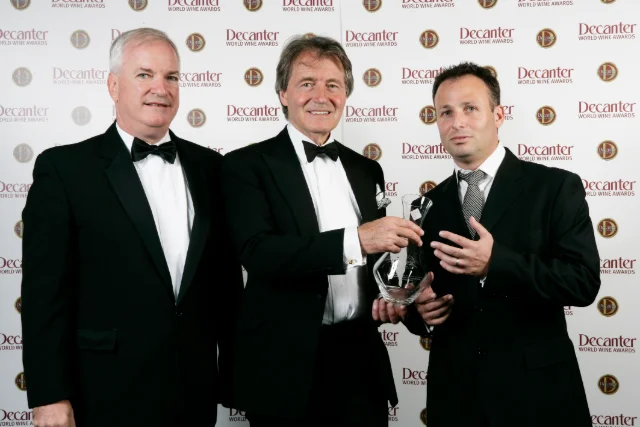
In 2010 Carmel Kayoumi Shiraz 2006 won the International Trophy at the Decanter World Wine Awards. They called it the sensation of the competition and the sensation of any year. It was like the Oscars. We had no idea we would win a major award. When announced there were shrieks of disbelief, gasps of surprise, generous applause and a memorable celebratory whistle. Winemaker Lior Lacser and I were on hand to receive the award from the legendary Stephen Spurrier. It was and remains the best award ever received for an Israeli wine. I wonder what the response would be like today, in these turbulent times.
In 2010, I began to write my regular Wine Talk column for the Jerusalem Post, which I continue until today, following the late Daniel Rogov, who was a previous food and wine writer for Israel’s most famous English speaking newspaper. This was the decade that Israel cuisine, a fusion of the region, began to gain notice amongst foodies and the creativity of Israeli Chefs began to be receive acclaim worldwide.
In 2016, I left the corporate world and founded Adam Montefiore Wine Consultancy, and my clients have included some of Israel’s leading wineries, hotels, restaurants, retailers and private individuals. I have provided consultancy services to over forty wineries. I became a partner in Israel Wine Experience, founded by Oded Shoham, which is involved in Israel wine education and advancing wine tourism. I wrote the wine books “The Wine Route of Israel” and “Wines of Israel” with regular updated editions, which were edited and published by Eliezer Sacks. I became a member of the Circle of Wine Writers, being privileged to be proposed by such giants as Jancis Robinson MW, Hugh Johnson and Julia Harding MW.
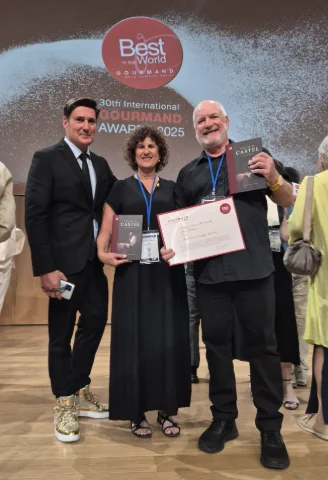
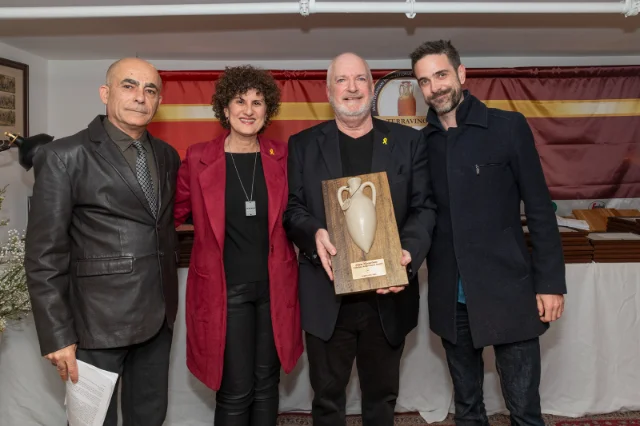
In the 2020s I was commissioned to write the biography of Israel’s two most famous wineries, the Golan Heights Winery and Domaine du Castel. Both these books won Gourmand Awards, the Oscars for food and wine books. The prizes were presented in June 2025 in Portugal. We were stranded there because of the Israel – Iran War, but the awards made it all worthwhile. “Domaine du Castel: The Biography” was adjudged the “Best Northern Hemisphere Wine Book.” Furthermore, “Golan Heights Winery” won the prize as “Best World of Wine Book of the Year.” These awards were a big surprise, especially considering the climate, and a credit to Israeli wine as a whole. In 2024 I was also very proud to be awarded with “The Terravino Lifetime Achievement Award” following laureates such as Eli Ben Zaken, Yair Margalit and Uri Shaked.
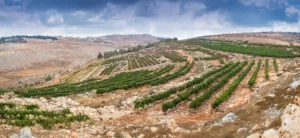
Israeli wine today comprises 350 wineries, not including domestic wineries and garagistes. The main wine growing areas are the Galilee, Golan Heights and the Judean Foothills. The areas producing the best wines are the Northern and Central Golan, the Upper Galilee and the Judean Hills. There are also vibrant wine routes in the coastal Mount Carmel region, in the Central Mountains and in the Negev. The most planted variety is Cabernet Sauvignon. We have two Masters of Wine, Eran Pick MW and Ido Lewinsohn MW; Israeli wine has earned a place as one of the quality wine countries of the world.
I have been privileged to be at the forefront of the advance of Israeli wine over four decades, from 1986 to 2026. I have seen and participated in the blossoming of Israeli wine, which is the very best ambassador for Israel in the wider world. Soft power diplomacy if you like. No doubt wine represents the beautiful Israel. We have not arrived anywhere yet. Think what we have achieved in the last fifty years, and what we may achieve in the next fifty years. I am now working a new book on Israeli wines. The journey continues!
Adam Montefiore is a wine trade veteran and winery insider turned wine writer, who has advanced Israeli wines over four decades. He is referred to as the English voice of Israeli wine and is the Wine Writer of the Jerusalem Post. www.adammontefiore.com