


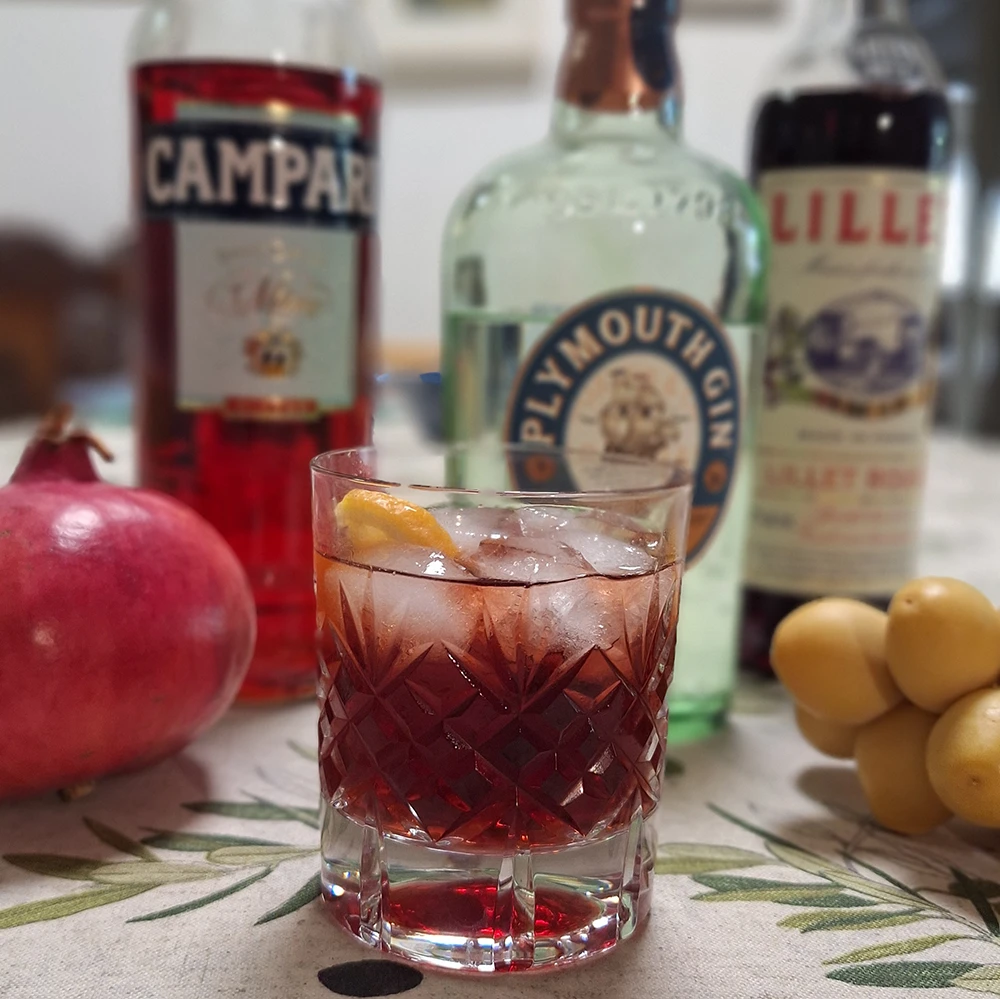
It is not just Rosh Hashanah this week, but also International Negroni Week. Two important occurrences coincide! Negroni Week lasts from September 22-28th. This is the most famous Campari cocktail, which most probably was adapted from an Americano, a cocktail of Campari with sweet vermouth and soda water. The unsubstantiated folklore says a Count Camillo Negroni from Florence, was unsatisfied with alcoholic punch of his Americano. Therefore, he ordered his own version, asking for gin in place of the soda water. That was estimated to be 1919, and the Negroni cocktail was born.
A classic Negroni is very easy to make. You just need equal measures of gin, vermouth rosso and Campari (25-30 ml of each is plenty.) The gin provides aromatics and alcohol; the vermouth gives sweetness and the Campari provides bitterness and the beautiful red color. That is the secret of both a good cocktail and for that matter, an interesting dish. They should be a blend of contrasts, with each ingredient offering something different, where the end result is greater than the sum of its parts. A Negroni is traditionally served on ice, in an old-fashioned tumbler, with a slice of orange, or even better for the look, a twist of orange peel. Along with a Margarita and Bloody Mary, it is my favorite cocktail.
My favorite partners in a Negroni are Plymouth Gin, Lillet Rouge and Campari. Plymouth Gin has been distilled on the same premises in Plymouth, Devon, UK since 1793. It has been described as the ‘single malt of gins.’ Lillet Rouge is not strictly a vermouth and not as sweet as the traditional rosso. It is an aperitif wine that blends Bordeaux wines with quinine, citrus and herbs, and it is a superior choice to be part of a Negroni. But basically, any gin or sweet vermouth will suffice. Standards like market leaders Gordon’s Gin and Martini Rosso are absolutely fine. With trial and error, you can find the right ingredients for you.
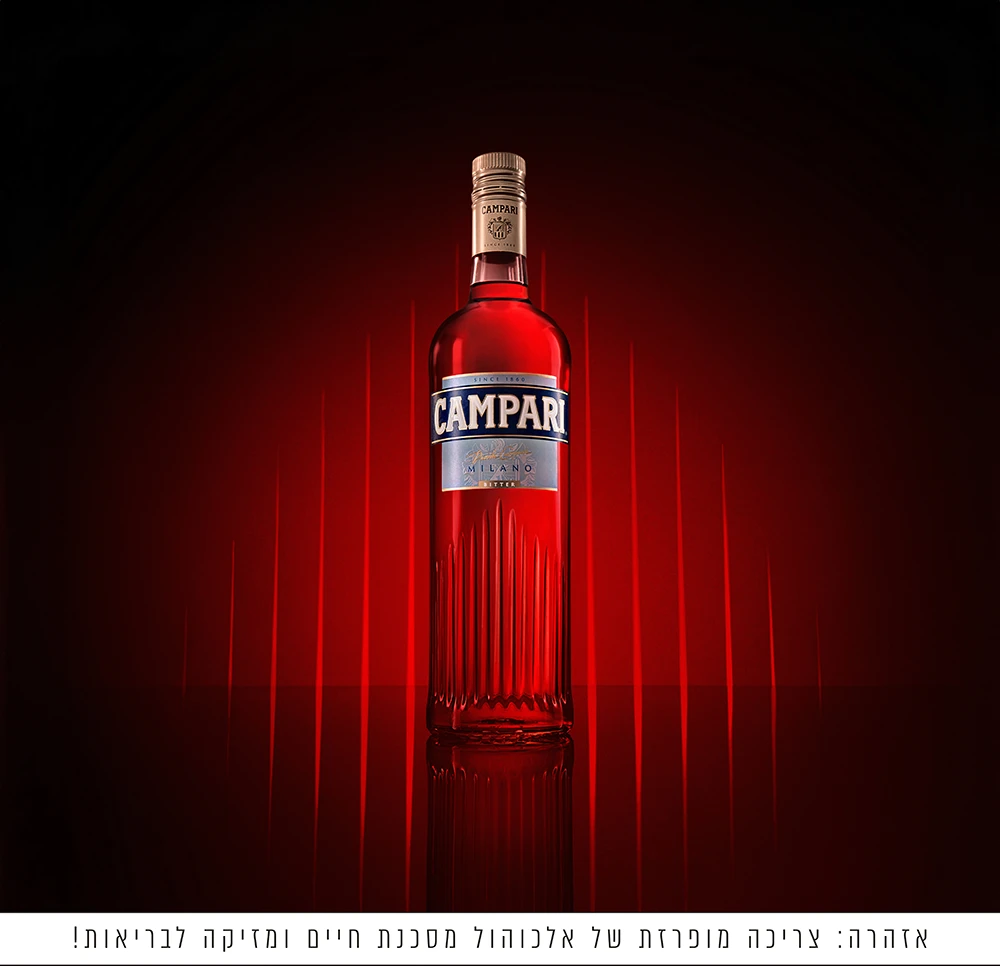
If I want an Israeli Negroni I will use M&H Levantine Gin and Vedetta 52 Rosso Vermouth to accompany Campari. Levantine Gin is a small batch triple distilled pot still gin using malted barley as the base, with macerated local botanicals, including za’atar, produced by the award-winning Milk & Honey Distillery. Vedetta Rosso is inspired by the Konditon spiced wine of ancient times. It is based on Muscat and contains local herbs and botanicals and even a local wormwood variety, all from the Judea region. It is a craft, artisan production by Eyal Drory, one of our best winemakers, who lived in Turin for 6 years. This is the home and founding place of Vermouth Rosso. Now Drory makes the finest Israeli vermouths and each is a work of art with a distinct sense of place.
I don’t usually drink Campari at home. In my own surroundings, I am a whisky man. However, if I am in a restaurant, I am addicted to ordering Campari and Soda as an aperitif, before the meal. So as soon as I arrive and am seated, before looking at a menu and before even considering food or wine, I am badgering the waiter for a Campari. I like it in a highball with ice, a slice of orange with the soda water out of a bottle, not tap, served separately. That is my poison. Most Israeli bars will serve it with lemon, but those that are truly professional and know their job, will go for the orange slice instead. Like some boring old fart, I will normally comment to the barman that uses an orange slice, that they know their job. Pour encourager les autres. Like Count Negroni, if I want a greater punch, I will often order a Negroni instead of Campari and soda.
Campari is a part of a liqueur category called bitters. These are made with a bitter flavor through the addition or infusion of herbs, spices, fruits, barks and roots on a spirit base. Anything goes and the variety is enormous. They are designed to help with the digestion and are also very useful for cocktails. They cover a wide spectrum of styles. Many European countries have their own version, but Italy is home to a few that have become international names. The Campari recipe is strictly secret, so much so that we have no real idea of the ingredients. There is always speculation, but much of it is fake news. Campari is bottled at 25% alcohol by volume.
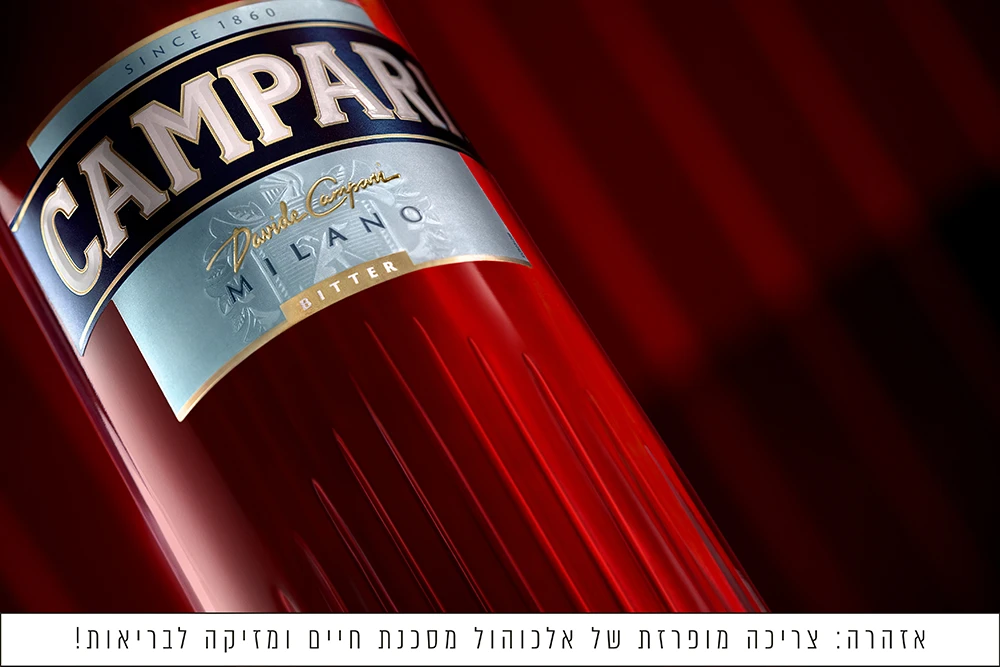
It was invented by Gaspare Campari in 1860. He was born in Lombardy in Italy in 1828 and was the tenth child of a farming family. At the age of 14 he started working as an apprentice waiter and dish washer, and soon became the barman in a high-profile bar-restaurant in Turin, where he served the elite, including apparently the king and prime minister. He was more like a mixologist of today, making his own aperitifs and liqueurs using spirits as a base and herbs and spices for flavorings. I know the type. The kitchen or back room is full of bottles with temporary stoppers, each containing a different elixir of unusual combinations. When you visit, you have them thrust under your nose with a “what do you think of this?” Gaspare must have been little like that. He was a tinkerer who liked to play and experiment. The fun was in the trial and error. But then he stumbled into red gold.
After his first wife and children tragically passed away, he left Turin. Fortunately, he met someone new, married her and followed her to Milan in 1862, where she lived. He had a café opposite the Duomo, the magnificent and majestic cathedral of Milan. When a new shopping arcade was planned called La Galleria Vittorio Emanuele, he was compensated for losing his café by being given the first premises on the left of the main entrance. This was called Café Patisserie Campari, and his wife started offering customers the new bitter which was his finest creation.
Davide Campari, Gaspare’s son, was born in 1867. For the first years of his working life, he worked in the café. The red, bitter sweet aperitif started to get a following, and other bars sent in their barman to try and figure out why it was so popular. To protect his father’s creation, Davide told them this was the original Campari bitters, using his own name. Almost by chance, he had given birth to a brand name which would last through the ages and become world famous.
Davide Campari was the genius who took this product from the cradle, and transformed it into an international brand. According to Andrew Jones in his book “The Aperitif Companion”, it was partly love, that fueled the fast growth. Davide fell in love with a famous opera singer, and followed her forlornly wherever she performed. This entailed travelling. First, she went to France, then Russia, and finally New York. The love sick Davide followed her, but in each country though, he made sure to market his precious drink and he built a solid international market and gained a loyal following of devotees.
Most Italians at the time thought of bitters as a digestif to settle the stomach, but Davide Campari innovatively suggested his product should be served as an aperitif. That is to be drunk before a meal, to stimulate the appetite. In 1915 he opened the Camparini Bar in the Galleria and it still sits there, modest, unspoiled and unchanging in one of the most fashionable shopping malls in the world. It is a monument to father and son as well as to what they have achieved and the place where it all began. A homage to a product, person and place.
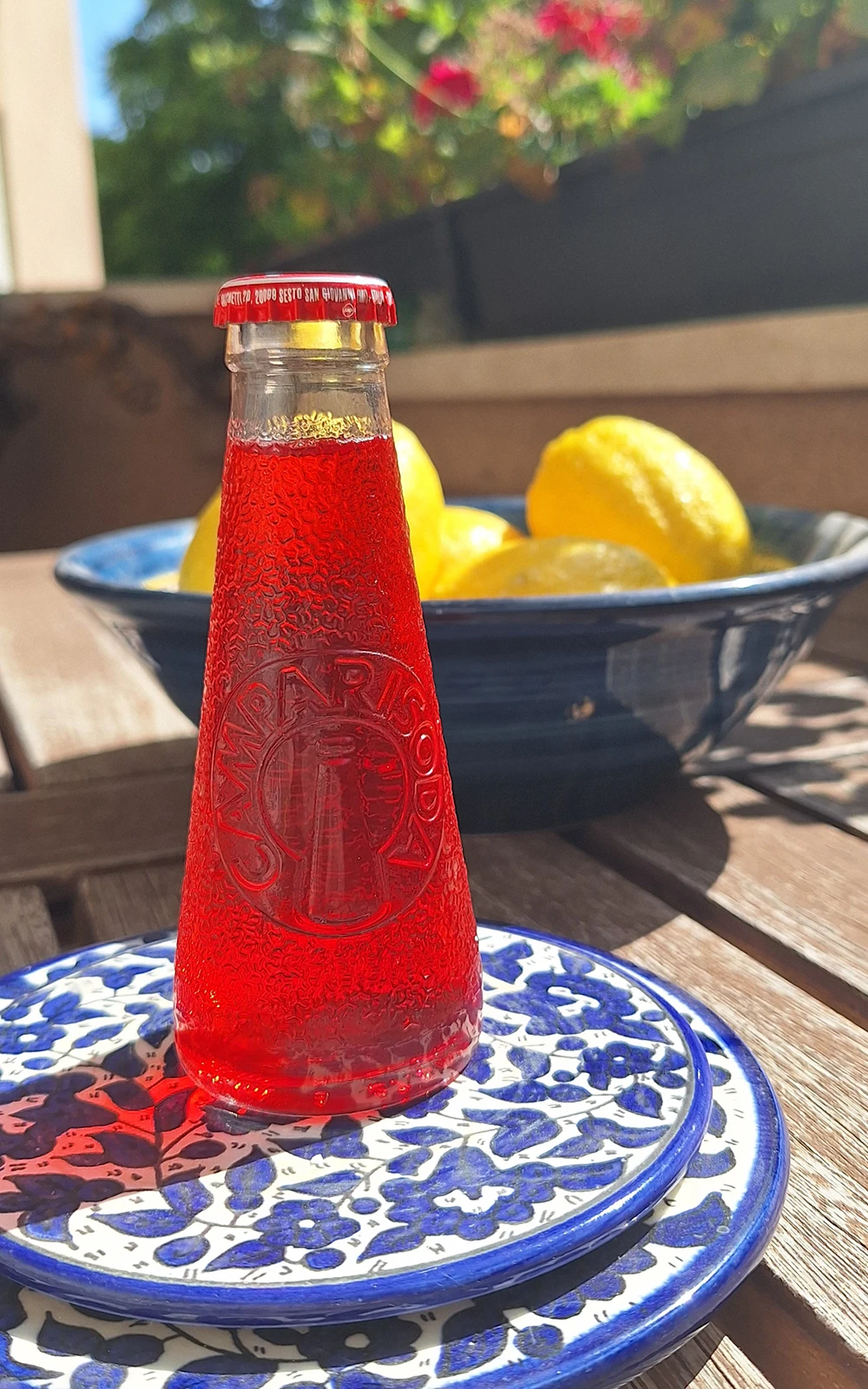
In 1932 they created the famous single serve Camparisoda, the first single serve aperitif. The bottle was designed by Fortunato Depero, a famous artist. The ready mixed bottle of Campari and soda is still used today. Davide Campari also used innovative poster advertising, which was way ahead of his time. He passed away in 1936. His father created the product, but he laid the foundation for a great brand. Campari was already the world’s largest selling brand of bitters and has remained so ever since.
Campari is now sold in over 190 countries. It was a single brand company until as late as 1995. The parent company, Davide Campari-Milano NV, has since grown into an empire. The Campari Group has grown to become the 6th largest spirits group in the world. They are comfortably the largest spirits company in Italy. Campari own a broad range of global brands including Cinzano Vermouth, Glen Grants Whisky, Courvoisier Cognac, Grand Marnier Liqueur, Wild Turkey Bourbon and Appleton Rum and there are many more. Their group headquarters is at Sesto San Giovanni in Milan.
The also own Aperol which is sometimes confused with Campari. Aperol is also a bitter aperitif that was created in 1919 by Luigi and Silvio Barbieri in Padua. It was bought by the Campari Group in 2003 and since then its sales have taken off. The classic drink is an Aperol Spritz, which an Aperol topped up with Prosecco, the best-selling Italian sparkling wine. The main differences between Aperol and Campari are that Aperol is orange and Campari is red. Aperol is less than half the alcohol of Campari. It is also sweeter and less bitter than Campari. Both of them together cover the broadest spectrum of customer preference. If you don’t like one, you will like the other. As such, they sell very well together, as a duo, under the same ownership. They are ever present in most bars in most countries.
When I first came to Israel, Carmel Mizrahi sold products with such laughable, inappropriate names as Lord Gin, Captain Rum, Tehila (a kind of pretend Tequila) and an Israeli version of Bitters which they called it Caprei. These were not great products, but that is what there was in those days. This was before the import gates were opened so that the global brands could arrive, and before the current craft distiller revolution. In truth they were mainly left on the speed rail and were used for mixing cocktails. Anyway, the Caprei name and the color of the label was considered too close to Campari. Lawyers exchanged heated letters as Campari protested and even though it was an extremely poor imitation, an imitation it was. That episode did not end well and Carmel ceased production. Fortunately, as soon as international imports were permitted, these local spirits thankfully disappeared without a trace.
Campari today is imported and distributed in Israel by the Spirits Department of CBC Israel (aka Coca Cola Israel), which used to be known as IBBLS. Here it has found its place and may be found in any bar, whether grand, prestigious or simple, authentic and popular. It is simply everywhere. Campari has carved out a place for itself, which is unique. There is no product quite like it. However, this week I will be paying homage to the Negroni, one of the great classic cocktails. Cheers!
The writer is a wine trade veteran and winery insider turned wine writer, who has advanced Israeli wines for 38 years. He is referred to as the English voice of Israeli wine and the Wine Writer of the Jerusalem Post. www.adammontefiore.com