


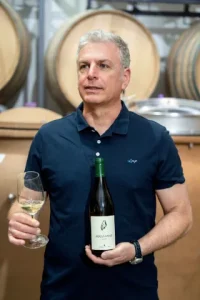
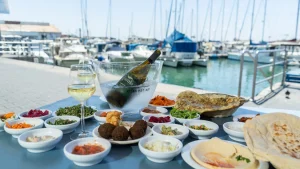
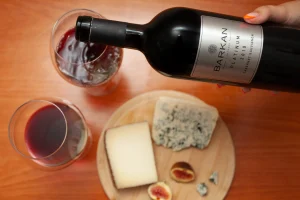


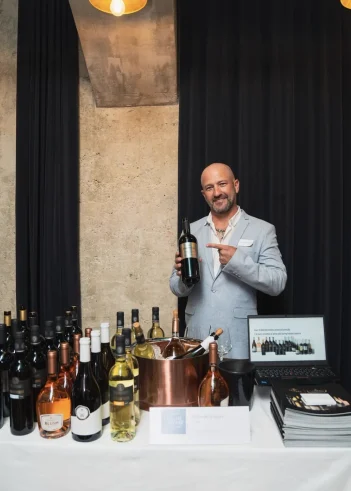
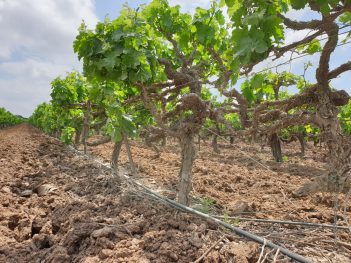
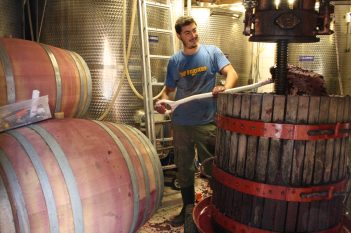
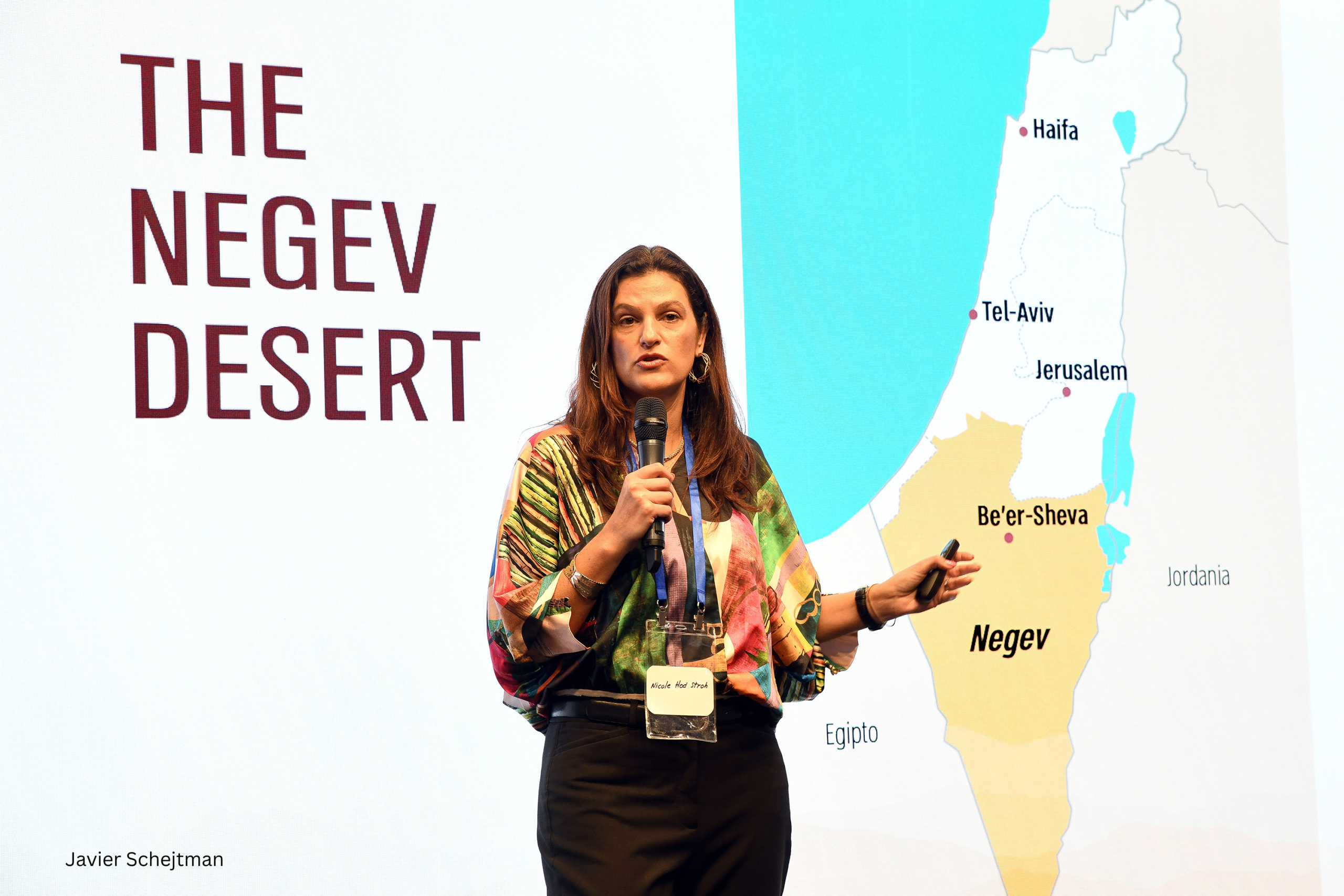
The Negev Wine Club was founded in 2020. Its purpose is to market the Negev as a fascinating wine region, promote tourism and to give wineries a framework for development. At the outset there were just over twenty wineries or vineyards that signed up for the idea, but nothing creates interest like success. Now there are nearer fifty, as small wineries and farmers, as if coming out of the woodwork, became eager to join in. They have support from the very impressive Merage Foundation and professional guidance from wine educator / wine tourism expert, Guy Haran. The wineries exhibit together, host joint tastings, participate in symposiums and undertake study tours overseas. Everyone is primed to talk up the main brand, which is Negev Desert Wines. It is all about selling your wine through marketing the growing region. It is well organized and offers a successful blueprint for other wine regions to follow.
Only those crazy Israelis, with a spirit to do the impossible, would attempt to grow wine in a desert! Yet the growers do, with creativity, innovation, advanced technology and Israel’s renowned agricultural prowess. There is no lack of mountain, valley or coastal vineyards around the world. However, desert winemaking is something rare, different and seen as reasonably exotic.
Today, the Negev is blooming…with vineyards! There are wineries dotting the wine map from Lachish to Eilat. Carmel traditionally had vineyards in the semi-arid northern Negev area, but the birth of the modern period of growth began in 1988. This was when a vineyard was planted in Arad Valley, in the northeastern Negev. The resulting Carmel Merlot 1992 was the first modern desert wine. The vineyard was later renamed Ramat Arad, and the wine was put under a blue Private Collection label. Later, Carmel’s new single vineyard range launched in the early 2000s included three Ramat Arad wines, and in the early days some of Yatir Winery’s wines also used Ramat Arad fruit.
Apart from Ramat Arad, there were also wine developments in the central Negev Highlands, and at Kadesh Barnea in the Western Negev on the border with Egypt. In the Negev Highlands, there were vineyards planted in Sde Boker and Mitzpe Ramon in the mid to late 1990s respectively for Tishbi and Barkan Wineries. The boutique winery revolution also reached the Negev. Eyal and Hannah Izrael founded the Carmey Avdat Farm in 1998. They planted a vineyard and began to make wine. At about the same time, Zvi Remek, a Californian born resident of Kibbutz Sde Boker started making small quantities of wine with knowledge he had gained from his home state. In 1999 he founded Sde Boker Winery.
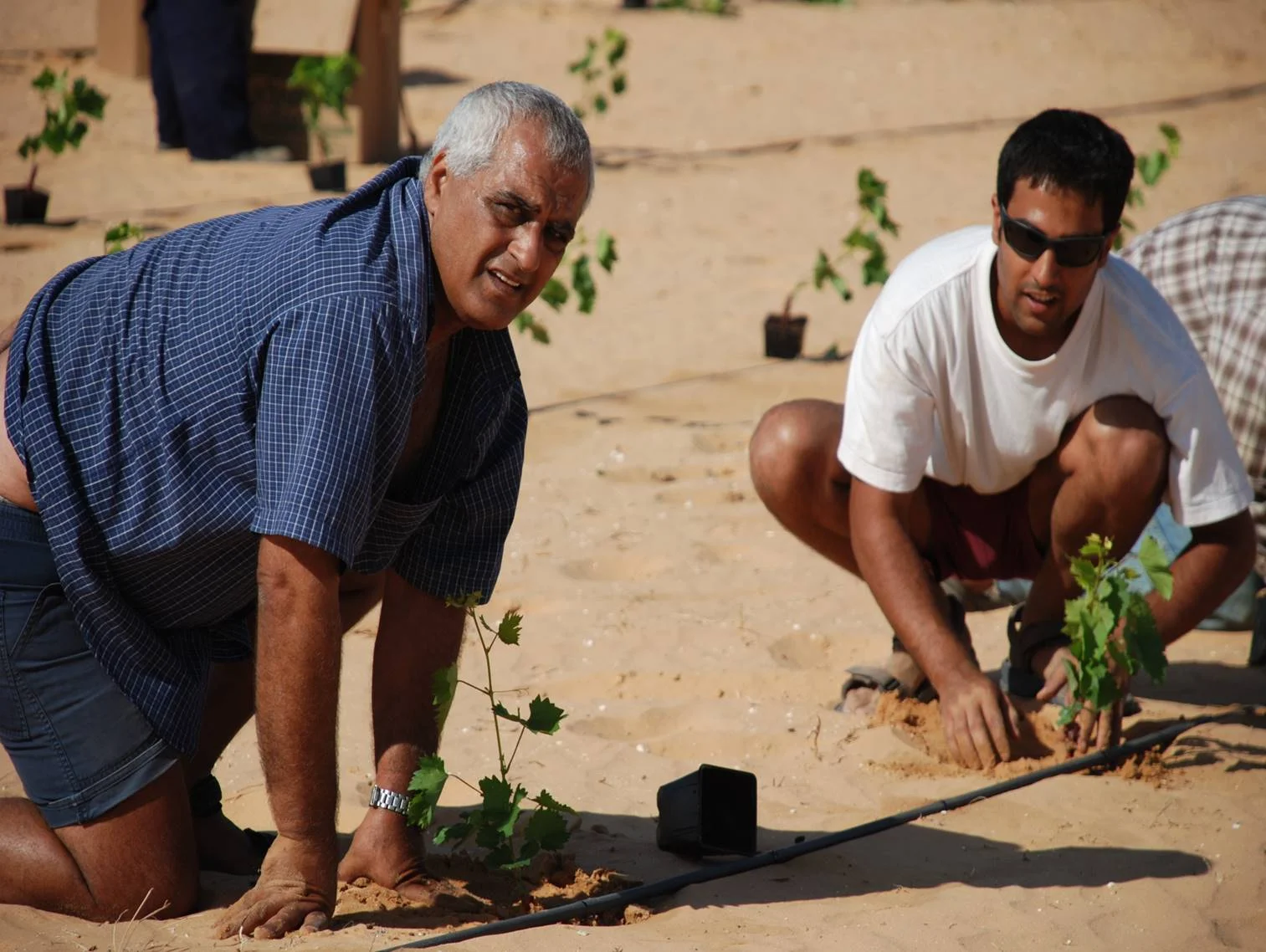
On the border with Egypt at Kadesh Barnea, Alon and Nira Zadok had their own dreams. In 1997 they planted a tentative vineyard of Cabernet Sauvignon. Most of their friends thought they were mad. In 2000 they made their first wine and in 2001 they founded Kadesh Barnea Winery, later to be renamed Ramat Negev Winery.
These pioneers were following a long, deep history of winemaking in the Negev. The Nabateans were nomads from Roman times, who mastered preserving and channeling the precious water from the sparse rainfall. They traded on the Spice Route and wine became a precious commodity. Then the Byzantines built a large successful wine trade. The well preserved archaeological sites at Shivta and Avdat indicate how large production was. According to groundbreaking research led by Prof. Guy Bar-Oz of the University of Haifa, it was discovered that earthquakes, economic depression and plague were the initial factors behind the decline in the Negev wine industry, more than the arrival of Islam.
There are some delicious tidbits uncovered up by archaeologists. A pottery shard was found at the archaeological site of Tel Arad, which overlooks the modern day Ramat Arad Vineyard and Yatir Winery. On it was written a message from a Judean soldier “If there is wine, please send quantity.” This was dated back over 2,600 years! Apart from being a mainstay of the economy, wine was then important for calories but also essential being safer to drink than the water
Some random grape pips were discovered by Prof. Bar-Oz’s team in a sealed cave at Avdat. The scientist researchers set to work. Two of them yielded electrifying information. Through DNA testing and carbon dating, they were dated to be from 1,100 years ago and discovered to resemble the Syriki red grape variety (also known in Crete and Lebanon) and the Be’er white variety. This was possibly the oldest white grape variety ever identified. Movingly, these varieties have been replanted at Avdat.
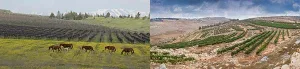
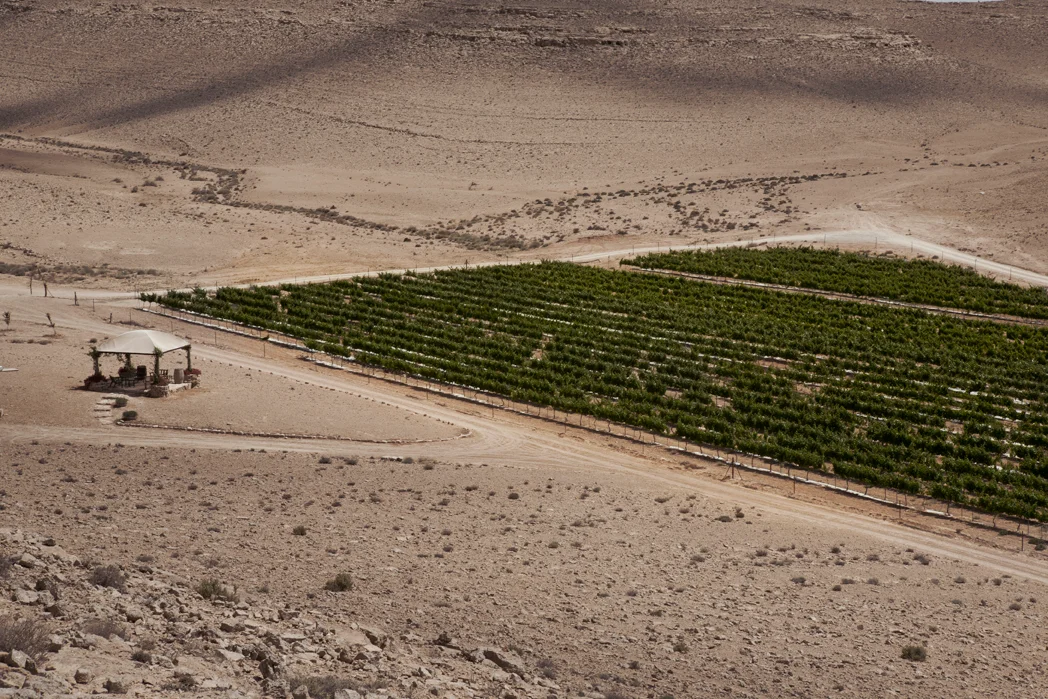
So what is so different about the Negev? It is dry, sandy and hot, with over 300 days of sunshine a year, a high, intense radiation and a meagre precipitation. Most of the land is arid, and the soil is rich in salt but poor in minerals. The lack of humidity means fewer diseases. The lack of cloud cover results in very cold nights, lowering average temperatures considerably. In the Golan, the pest is the wild boar that comes to gorge on the grapes just when they are ripe. In the Negev, it may well be the camel, roaming free. When one comes across a vine, they eat it to the ground as though it was a salad.
Making wine on the edge required patience, experimentation and research. Viticulturists, agronomists and scientists have not stopped in their quest to conquer this most challenging of terroirs. These days Professor Aaron Fait of Ben-Gurion University is at the forefront of the R&D, with the Jacob Blaustein Institutes for Desert Research. Wine folk from afar are carefully watching the developments in desert viticulture. It becomes more relevant as global warming bites them at home.
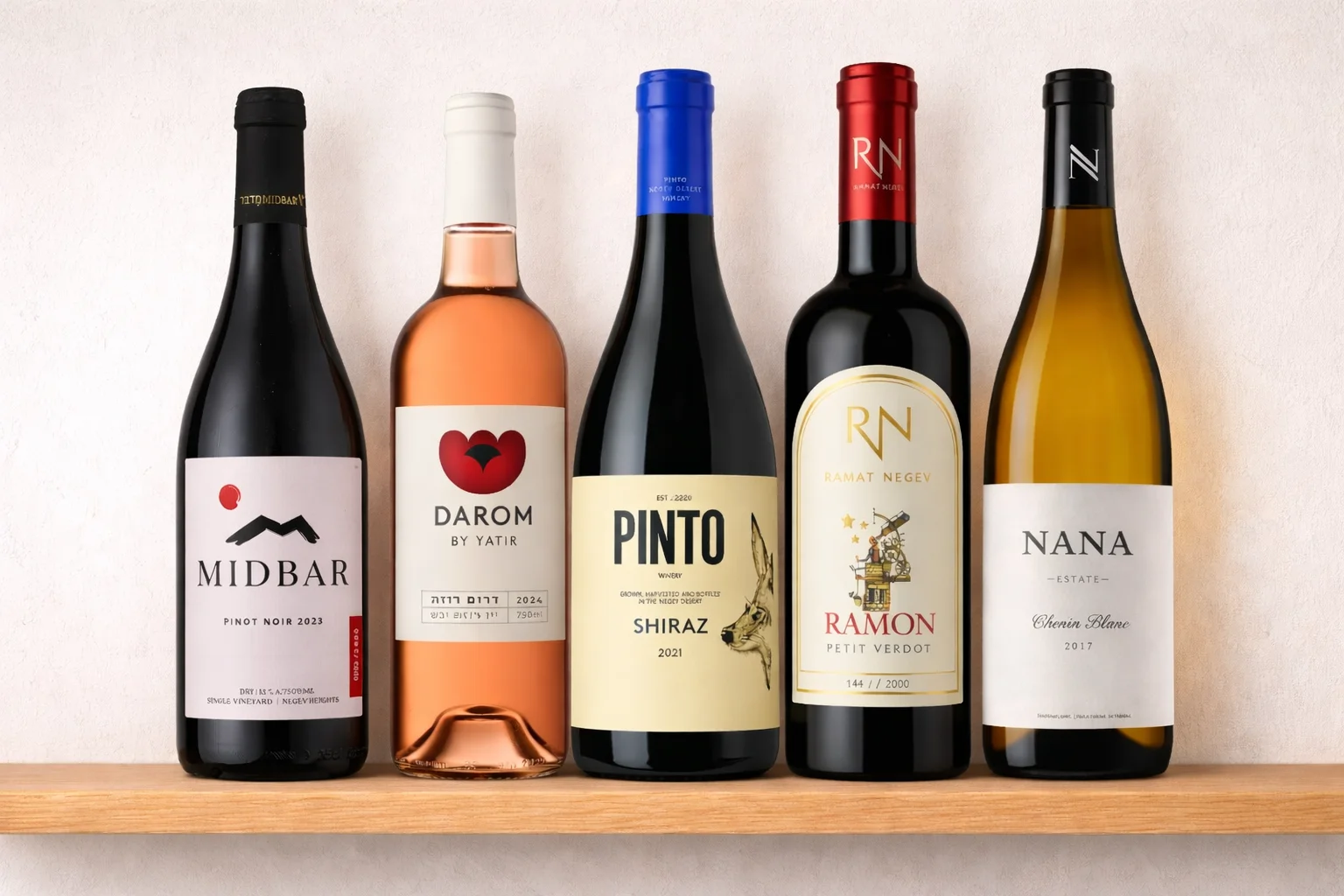
The main wineries flying the flag of the Negev today, following the map from east to west, are Yatir, Midbar, Pinto, Nana and Ramat Negev. The king of the castle is undoubtedly Yatir Winery, established in 2000. Winemaker Eran Goldwasser, who graduated in Australia, is the winemaker. Yatir Winery is situated at Tel Arad. However their wines now come exclusively from the high elevation Yatir Forest referred to in the official IPEVO map as the Negev-Judea region. They have a less expensive brand called Darom by Yatir whose grapes mainly from Mitzpe Ramon, Ramat Arad and ‘Negev-Judea.’ Yatir’s Petit Verdot is excellent, Mt Amasa great value and I love the finesse of their new Mediterranean blend. As far as Darom is concerned, the white and rose are good value and they have a new Cabernet Sauvignon.
Midbar Winery founded in 2010 is based in Arad. Most of their grapes come from Mitzpe Ramon. Their Viognier received impressive international recognition a few years ago. They also have a light, refreshing, fruity Pinot Noir, which I enjoy.
Pinto Winery, established 2020, is the most interesting new start up in the Negev wine stakes. They have planted a vineyard at Yeruham and built a new winery there. The innovative Ya’akov Oryah is the winemaker. I like best the lean Chardonnay and Chenin Blanc, and spicy Shiraz. The Holot Red is a deep and promising Bordeaux style blend.
Nana Vineyard was planted in 2007 at Mitzpe Ramon, at an elevation of 800 meters above sea level. This is probably the most well-known vineyard in the Negev. This is because of the well documented struggle of Eran (Nana) Raz, who succeeded to plant the vineyard against all the odds. It had a great start with an excellent steely Chenin Blanc and a complex Syrah (Cassiopeia), but has since gone off the radar for me. Nana has developed vineyard tourism, which is rare in Israel.
Ramat Negev Winery is the largest winery in the Negev. Alon’s son Yogev Zadok, who studied and graduated in Italy, is the winemaker. The Ramon Malbec and Petit Verdot are some of the best reds I have tasted from the Negev so far. I recently tasted through the range and the less expensive wines are also both quality and very good value. I think it may be the most improved winery in the region.
One of the most intriguing things about the Negev is the different terroirs and the individuality of the people making the wines. There is such variety. From Moa Winery in the Arava, I recommend their Blanc, which is a multi-variety blend which is complex and precise. The Tzoof Winery in Arad likes to experiment and push boundaries in making natural wines. I liked their Sangiovese and Petit Verdot when I tasted them. Dreyer Winery in Beer Milka has been inventive and resourceful in managing their vineyard and they also believe in nature and the natural. I love Boaz Dreyer’s spirit, his smile, his sheer enjoyment of what he does. His Chenin Blanc is an orange wine with flavor, complexity but also satisfying freshness and the Merlot is good. Galai Winery was founded in 2002 in Nir Akiva. There, Assaf and Sigalit Galai have made wines which have won repeated local awards for over 20 years. My favorites are the Casa Negev Red, the Marselan and their dessert wine (Sweetie) is a delight.
The newest wineries are those in the Gaza envelope of the Western Negev, whose communities were savaged on October 7th 2023. At Kibbutz Be’eri, Tom Carbone, whose mother was murdered on that black day, has since founded Be’eri Winery. The late Dror Or, the master cheesemaker, was also murdered on 7.10. Carbone continues to work in the dairy and by making cheese and wine, he is ensuring their shared dreams come true. The dairy and winery merit support.
The late Oren Stern of Netiv Ha’asara was killed on 7.10, whilst heroically battling the Hamas invasion. Weeks before that, he had been planning to build a family winery. His brother Eyal and sister-in-law Mali, made his vision become a reality. They established not only Oren Winery, but also produce a Mookis Beer in his name. It is a wonderful place to visit and chill out…especially for wine and beer drinkers.
Most poignant is the Pauker Winery. The late winemaker Gideon Pauker was murdered on 7.10 at Nir Oz. He had a small vineyard, which was damaged in the attack and made Nir Oz wine in a disused shelter. His three partners in wine were kidnapped by Hamas. Haim Perry and Yoram Metzger were murdered in captivity, but octogenarian Gadi Mozes was set free after 480 days in the tunnels of Gaza.
With assistance from the Haim Gan of Ish Anavim and winemakers Meiram Harel of Amphorae and Shivi Drori of Gvaot, the Nir Oz wine was saved. The Pauker family then planted a new vineyard in Gideon’s name and founded Pauker Winery. Gal Pauker, the grandson, is the winemaker, and Raz Pauker, the son (and father of Gal) is the vineyard manager. The innovative winery truck is parked between the established vineyard and Nir Oz. Please visit to show support.
The Negev is the most fascinating wine region in the country. It is a great place for agri-tourism. Stick a pin in the map and there will be wineries, accommodation, restaurants, gourmet farms and attractions nearby. The wines are not so well known as those of the north and center of the country, but the passion and sheer individuality makes each new find a delight. Dive in to a glass of desert wine, and experience the Negev!
Adam Montefiore is a wine trade veteran and winery insider turned wine writer, who has advanced Israeli wines over four decades. He is referred to as the English voice of Israeli wine and is the Wine Writer for the Jerusalem Post. www.adammontefiore.com