






Cheese is part of numerous cultures, but in each one it has a different place. In the west, it is normally part of a meal and there is usually a whole course devoted to it. As a Brit, I was brought up with the idea that cheese is eaten at the end of the meal, after the pudding or dessert. However, the French have a different custom. Their cheeses are served after the main course, but before the desserts. Both give a place of honor to cheese. The British way would enable them to enjoy a glass of port with their cheese, whilst the French practice allows them to continue to drink the main course red wine with the cheese. Whatever the custom, cheese has an important place in gastronomic circles. Posh restaurants will have a cheese trolley, and very, very posh restaurants may even have a cheese sommelier.
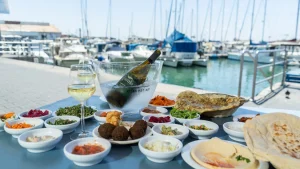
In countries like Switzerland and the Netherlands, cheese is often served at breakfast. This would also be true of Israel. The famed Israeli breakfast covers a large range of dairy products, where there are no problems of kashrut (mixing milk and meat.) In countries like Greece & Spain, cheese will often be served as part of the mezze or tapas at the beginning of the meal. I have also been at dinners here where cheese is served as a kind of first course aperitif.
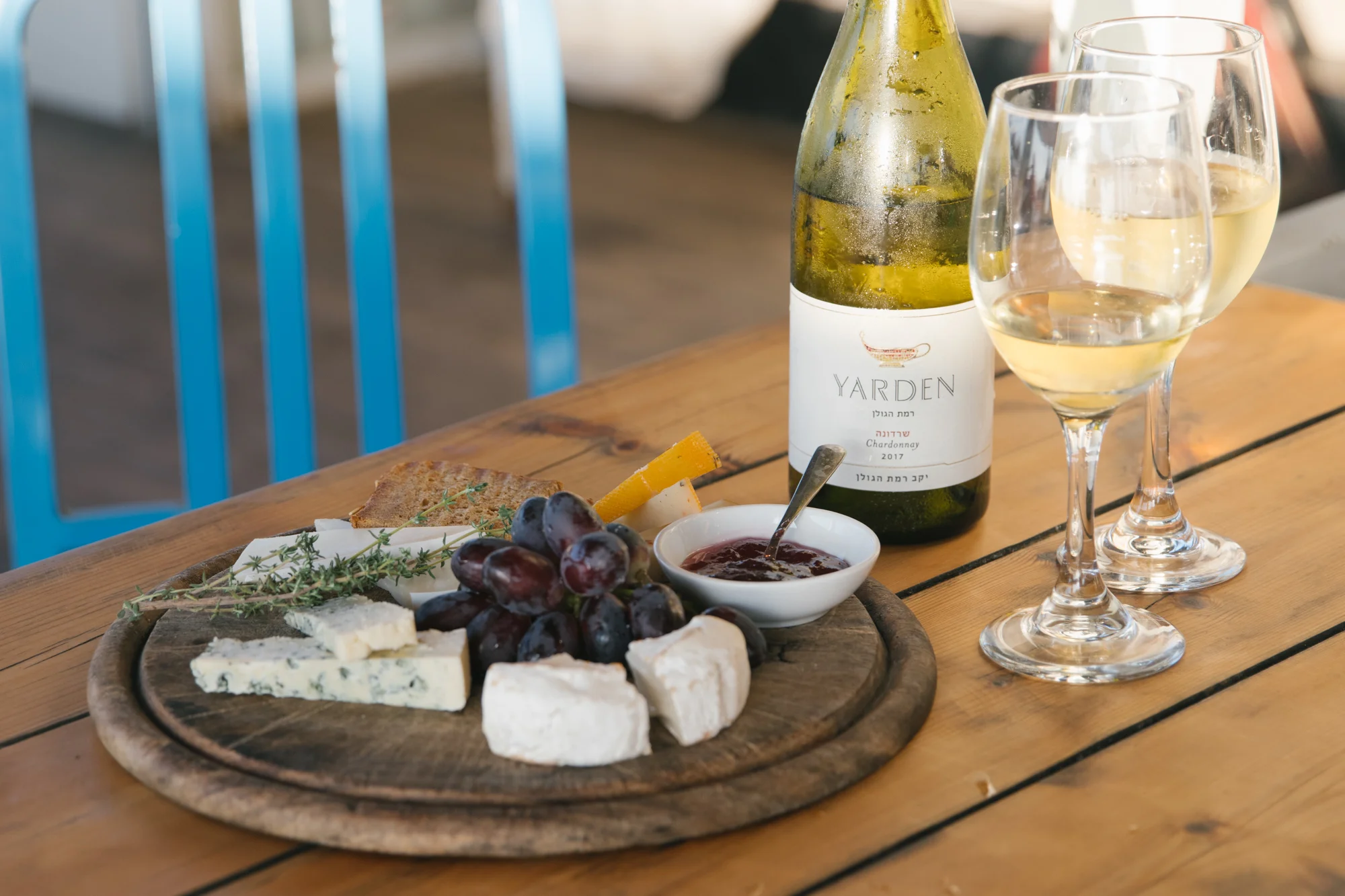
The Jewish calendar also takes into account cheese lovers. We have a festival at which it is traditional to serve dairy products. This is at Shavuot, which gives the perfect opportunity to hold a cheese and wine party. The phrase, ‘cheese and wine’ rolls off the tongue. They are natural partners like bread and butter, or salt and pepper. This does not mean that every wine goes with every cheese. For instance, there is regular misconception that red wine is the most natural partner to cheese, but there can be some awful clashes. In fact, white wines can often go better and be more versatile.
There is a famous saying in the English wine trade: “Buy on an apple, sell on cheese.” This means an apple will show up the quality of wine as it is, faults and all, whereas cheese will make a wine more palatable. So when you are buying the wine, taste it with a slice of apple, but when you are selling it, provide cheese which will enhance the wines. Most tastings at wineries will be served alongside cheese.
Wine is a world in itself, but the cheese world is if anything even more complicated. There is such variety. Cheese may be strong flavored, fat, acidic or salty. It can be hard, soft, creamy or crumbly. It can be matured, pasteurized or unpasteurized; made from goat’s milk, cow, or sheep. French President Charles de Gaulle once complained in exasperation: “How can anyone govern a nation that has two hundred and forty-six different kinds of cheese?” And he was only talking about France!
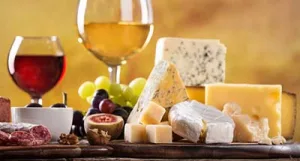
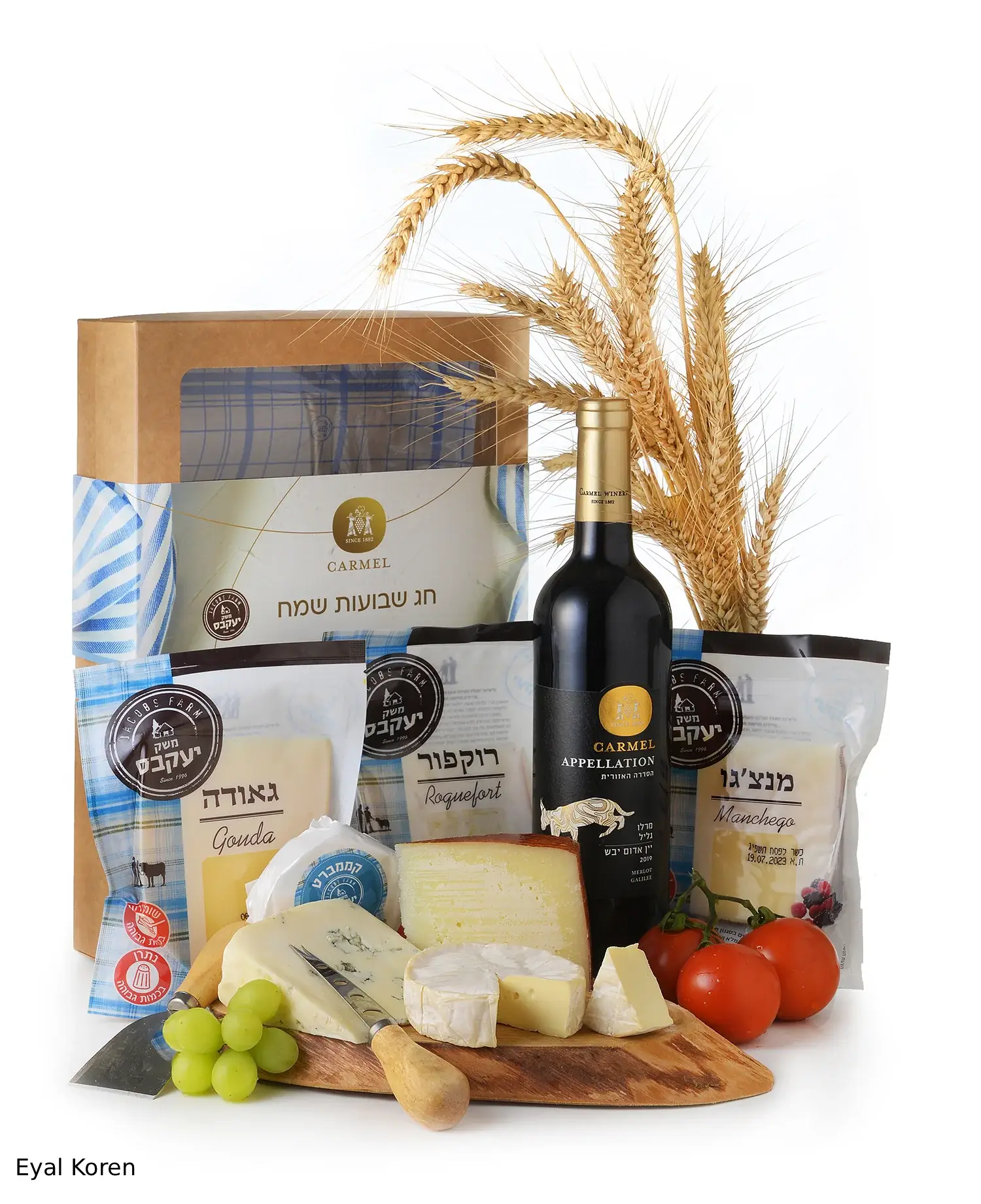
However, to prepare a cheese and wine party is relatively easy to do. You will need to decide if you want to go international or Israeli. There are plenty of good quality options here too. As a simple guide, I suggest you choose at least four different types of cheese as a minimum. These could be a hard cheese, a soft cheese, a goat’s cheese and a blue cheese. This is enough to give the necessary variety.
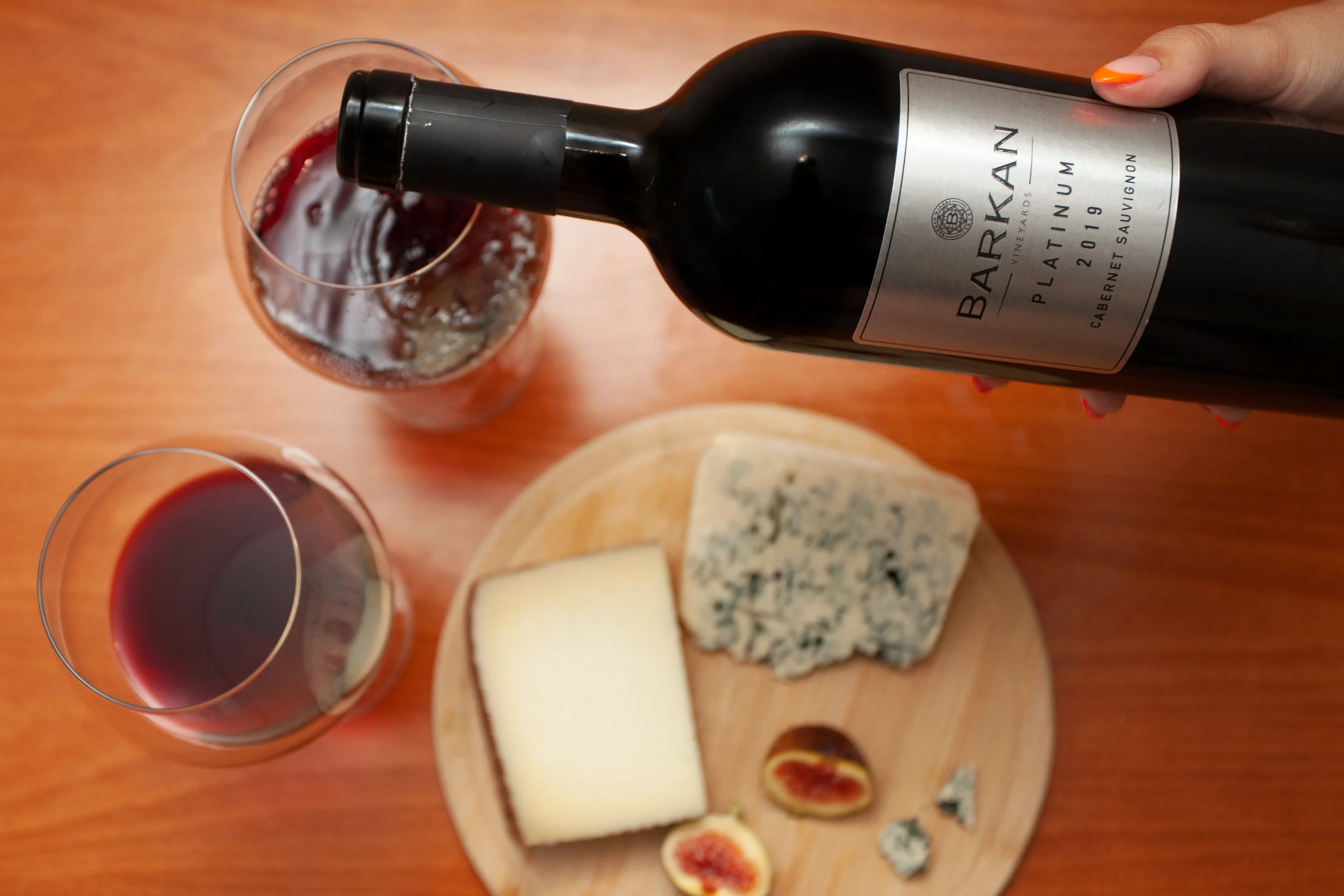
The hard cheese may be something like Emmental, Gruyère, Cheddar or Parmesan. The best wines to match with this will be a full bodied dry white wine like an oaked aged Chardonnay or quality red, possibly made from Bordeaux varieties. For Chardonnays I recommend Teperberg Essence, Recanati Tel Fares Vineyard or Carmel Mevo Betar. For reds, Shiloh Cabernet Sauvignon or Feldstein Cabernet Sauvignon would be classic. Darom by Yatir Cabernet Sauvignon and Barkan Platinum Cabernet Sauvignon are good value alternatives. The Kishor Tefen Metzuda and Galil Mountain Yiron will be perfect blends, but if you want something more original, the Vitkin Carignan and Jezreel Valley Argaman will also do the job.
In the same way the English add milk to lessen the tannin of the strong tea they drink, the cheese will soften the tannin of the red wine. Remember an older, matured cheese will be tangier with a more pronounced acidity. If the cheese is older and more pungent, the wine needs to be more mature and less tannic to avoid a clash. For this you will need older vintages. Cheeses start bland and become stronger as they age. With wine it is the opposite. Older wines are less tannic and astringent.
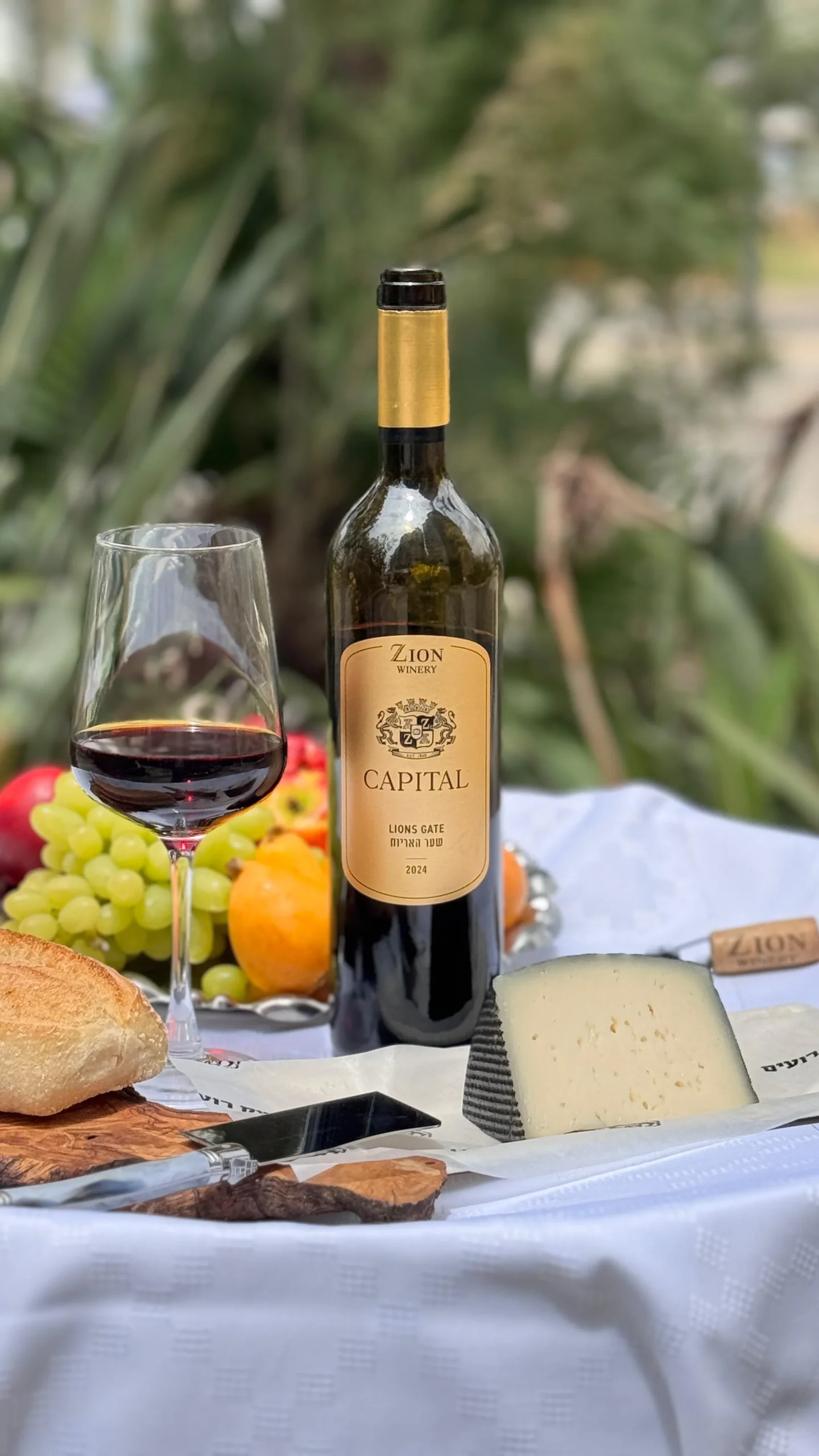
The goat’s cheese could be a Chèvre. The options are endless because Israel excels in this category. Try and match the region of wine and cheese. There some wonderful Israeli goat’s cheeses from artisan dairies. They tend to have a strong goaty character, but can go with either white or red wines. However, the classic combination for a young goat’s cheese is a varietal Sauvignon Blanc, which is very aromatic, totally dry and with a sharp, refreshing acidity. Either Yarden Sauvignon Blanc, Tulip Net Sauvignon Blanc, or Jerusalem SBL, would be a great match, and if you want something else, the Teperberg Inspire Colombard and the Tzuba Semillon Sauvignon would also do the job. An aged goat’s cheese will go better with a well-rounded, soft style Merlot. Favorites of mine are the Yarden Merlot and Tura Mountain Heights Merlot. The Zion Capital Lions Gate blend (Marselan, Grenache, Caladoc) would also be perfect.
The soft cheese may be a Brie or Camembert, or something similar. If this style of cheese is too young, it will be virtually tasteless and bland. However, if it is older, and runny, it can be so pungent as to be too strong for any wine. A fine balance between the creaminess and the flavor is what is desired. This is the hardest category to find a match. A creamy, fatty cheese will make most reds seem like water. The fat in the cheese will neutralize the tannin, but an oaky and tannic red wine will taste slightly metallic when these cheeses are ripe and runny. A Brie or Camembert would best be served alongside a lightly oaked Chardonnay with good acidity. Jerusalem Vintage Chardonnay, Kishor Viognier, 1848 Winery 2nd Generation Orient White (Colombard, Chardonnay, Roussanne) or Artisanal by Tabor Creation White Blend (Chardonnay, Chenin Blanc Roussanne) would be perfect. Or alternatively, a light unoaked red wine with lots of fruit, good acidity and no tannin is the best choice. A Beaujolais style red or young fruity red would really be ideal. The Selected Cabernet Sauvignon, Zion Estate Shiraz, Barkan Gold Merlot or Dalton Kna’an Red are options.
The most famous blue cheeses are Stilton and Roquefort. The classic match is to drink them with sweet wine because the saltiness of the cheese and sweetness fit together like a hand in a glove. Opposites attract. A quality dessert wine would be the perfect partner. Yarden HeightsWine is the best dessert wine we have. Alternatively, a sweet fortified dessert wine will also do the trick. The Netofa port style wines are as good as any here. The salt and sweetness contrast to enhance both cheese and wine. Tasting these together should be part of any course matching food and wine to illustrate the theory does sometimes work and that ‘one plus one can equal three.’ Salt accentuates tannin so the myth that red wine goes with all cheeses is shown to be most false when a red wine is matched with a blue cheese. Note that authentic Danish Blue and the strongest Gorgonzola may just be too strong to be wine friendly.
That only leaves us with the dessert to eat after the cheeses. Obviously, this is likely to be …a cheesecake! No surprises there. The best wine to enjoy with the classic New York style of cheesecake is a fortified Muscat. Always ensure the wine is sweeter than the dessert. I think a Moscato would be also good with this, for instance Private Collection Moscato, Teperberg Moscato or a less expensive Buzz Moscato.
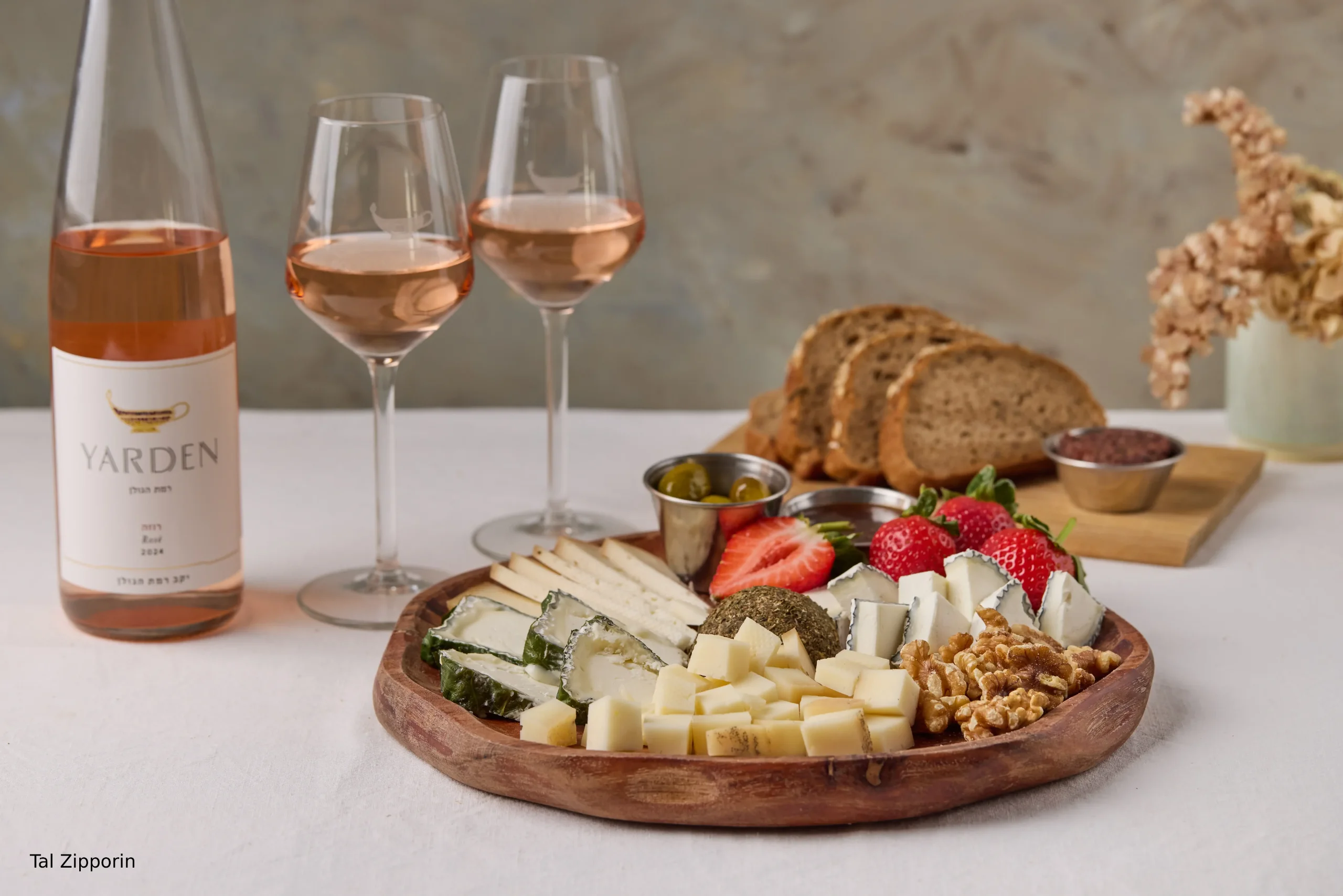
Serve the cheeses at room temperature, so take them out of the fridge in advance. Decorate the cheese platter with grapes, served cold from the fridge, chutney, with some walnuts and finally a few cut vegetables, like carrots and peppers of different colors. Celery also provides a crisp, refreshing partner to cheeses. Buy some crusty baguettes, which you can cut just before people arrive, and have some healthy crackers available too.
As for wines, we have to be practical. It is obvious you will not purchase a wine to match every cheese.
However, for the absolute minimum, you need a dry white wine, a medium bodied red wine and a dessert wine. It goes without saying, if you prefer semi dry, buy it without a second thought. The Carmel Appellation Gewurztraminer or Jerusalem Vintage Gewurztraminer are pretty good. Also for lovers of pink, rose wines could be chosen instead of white wines. It is all a matter of personal choice. Barkan Blush, Messody Rose and Recanati’s Gris de Marselan are good quality roses, each with its own attractive packaging.
Provide one glass for everyone and you will have prepared the easiest party you have ever hosted. You can just eat, drink and schmooze if you want to be informal. However, if your guests are wine geeks, you can taste each wine with each cheese and decide which goes with what and then discuss why. Of course you can ask your guests to contribute, by bringing cheese or wine to share the load.
There is something satisfyingly rustic with having a meal of freshly baked, crusty bread, drizzled with olive oil, alongside a variety of cheeses and a carafe of wine. Those who have enjoyed the experience of ordering what is called a Ploughman’s Lunch in an English pub, will know what I mean. In my English days, I would have enjoyed this with a Draught Bass or Charrington IPA.
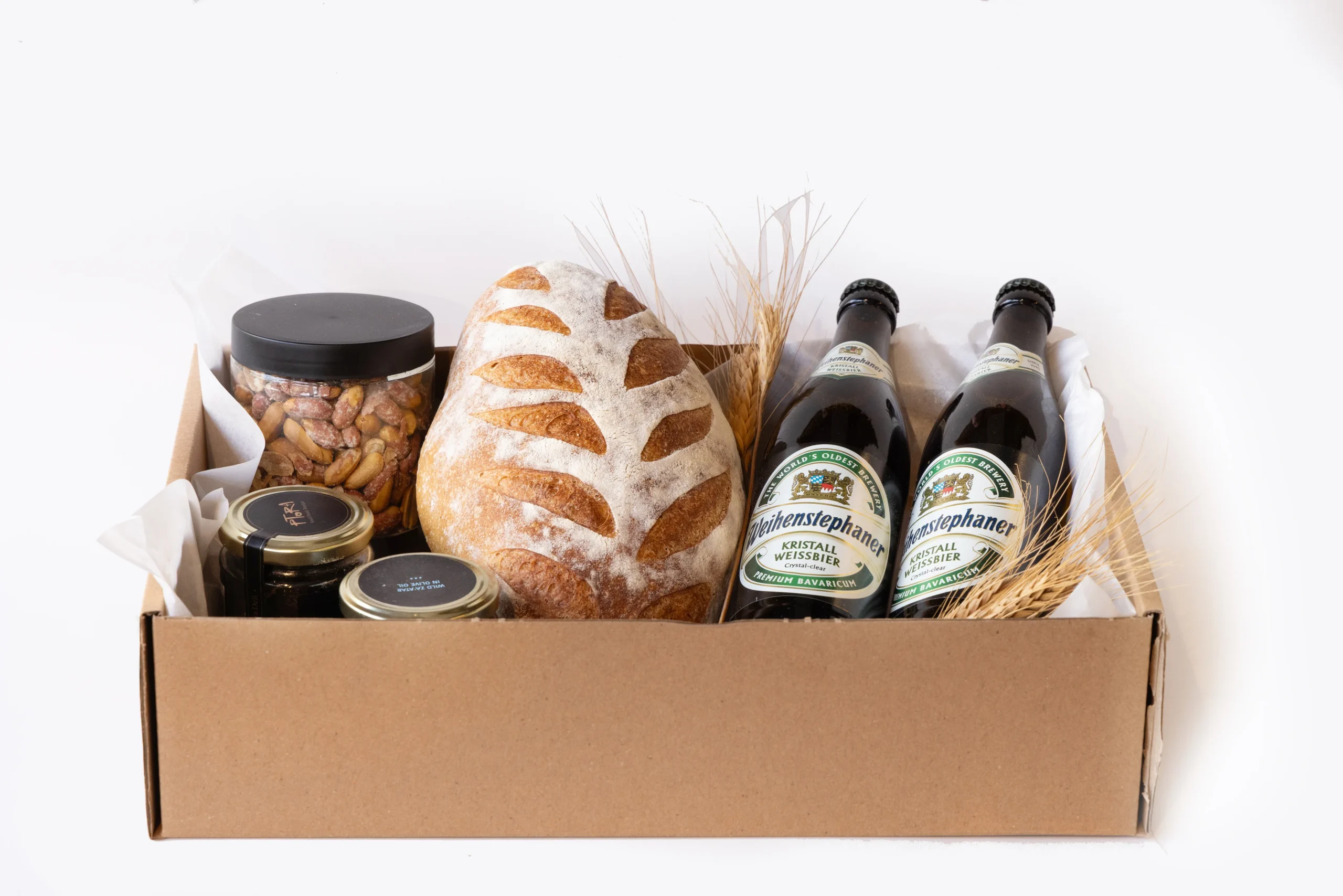
I am a wine guy, but started my career in beer. Shavuot also celebrates the wheat festival. What could be more appropriate than to also offer a Wheat Beer (Weissbier), which would be a mouth-watering match with the cheeses. The most famous brand is Weihenstephan, readily available here. It is the world’s oldest brewery operating since 1060! Certainly, this would be a most refreshing alternative, especially as Weihenstephan are offering a beer-based sourdough bread, specially developed by baker Uri Sheft, in a joint holiday offering for Shavuot. Remember the great Persian poet Omar Khayyam: “A loaf of bread, a flask of wine and thou…” Why not offer the option of a Wheat Beer as well as the flask of wine to go with your beer bread and cheese? A Wheat Beer and a Wheat Beer Bread to celebrate the Wheat Festival sounds innovative and appropriate. I recommend adding this to the wine offering. Providing variety caters for more tastes.
I love a wide variety of cheeses. There are few I don’t like, but we are often made to feel guilty enjoying them too much or too often, because of health reasons. How grand it is that we have our very own festival where it is a mitzvah to eat cheese, drink wine and party with friends! Let’s make the most of the opportunity!
Adam Montefiore is a wine trade veteran and winery insider turned wine writer, who has advanced Israeli wines over four decades. He is referred to as the English voice of Israeli wine and is the Wine Writer for the Jerusalem Post.