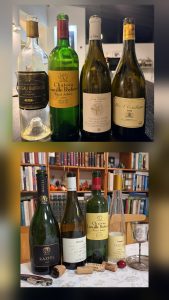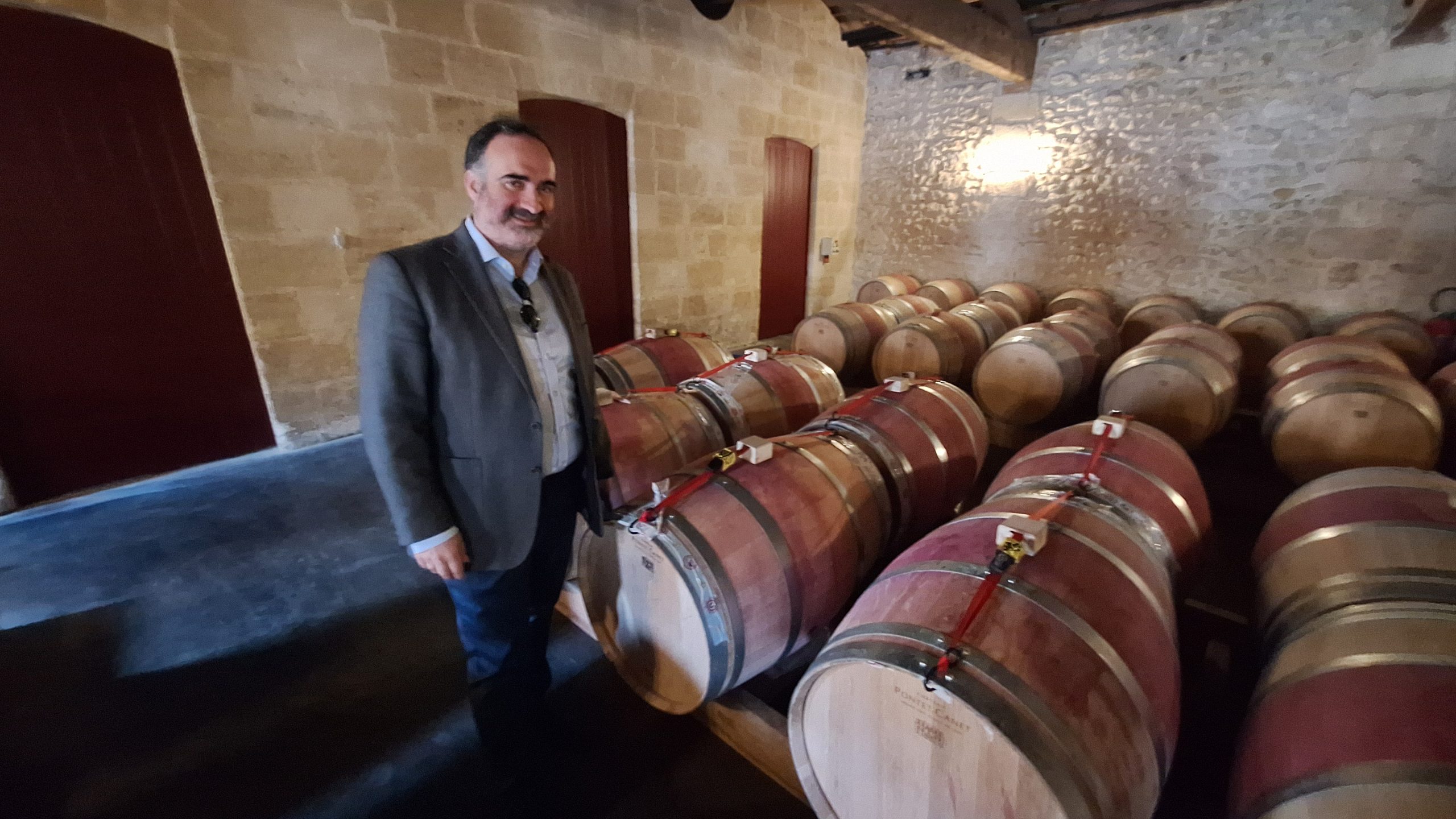
Royal Wine Corp of Bayonne, New Jersey, is the most important company in the kosher wine world. They are outstandingly the largest producer, importer and distributor of kosher wine in America, but they have tentacles all over the world. Owned by the Herzog family, it was Royal Wine that spread the kosher revolution, raised standards of quality and reaching new countries over the winemaking globe.
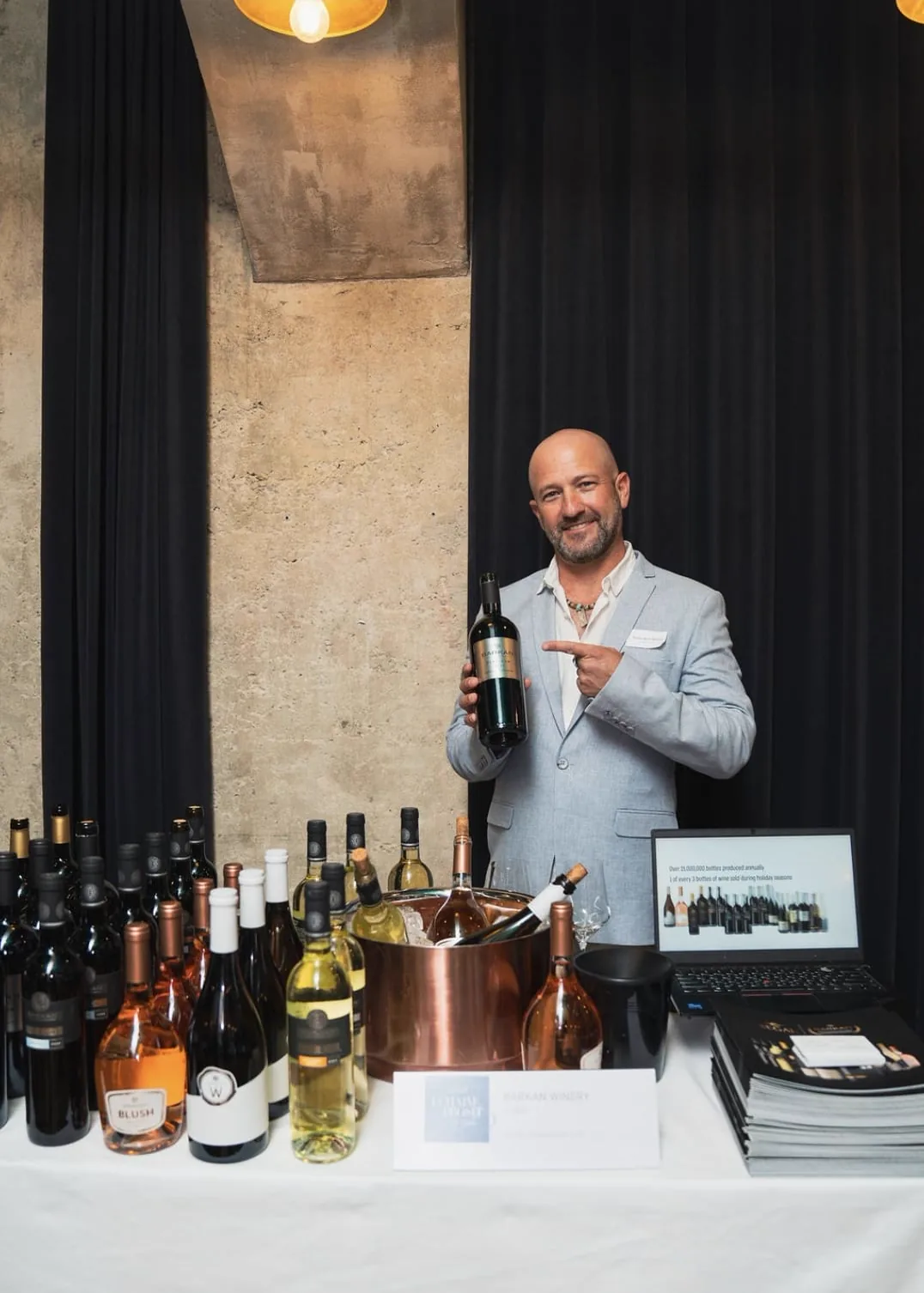
They were never the largest producer of kosher wine in the world. That particular honor belonged to Carmel Mizrahi, whose distribution reached most Jewish communities in the world. Carmel was founded in 1882 by Baron Edmond de Rothschild (senior) and they had the two largest wineries in Israel, at Rishon Le Zion and Zichron Ya’acov. Today, Carmel and Barkan Winery are the two largest kosher wineries in the world.
Nor were Royal the first to aim for top quality. Both Hagafen Cellars in Napa Valley and the Golan Heights Winery at Katzrin on the Golan, were founded in 1979 and 1983 respectively. They were the first to make high quality wines as a first objective, which just happened also to be kosher. However it was Royal, owned by the Herzog family, which fanned the new interest, pioneering kosher wine production in new countries and bringing a whole generation of new kosher consumers to firstly appreciate dry wines, and then quality dry wines.
The Herzog family hailed from Slovakia where they made wine in the mid-19th century. When they became suppliers to Franz Joseph, Emperor of the Austro-Hungarian Empire, Philip Herzog was bestowed with the title “Baron.” The Herzogs survived the Nazis, then the Communists and in 1948 fled to America, where they had to start all over again. Past experience counted for nothing in the new country. Life was very hard. The family experienced severe poverty in the early years.
Eugene Herzog found work in his forties at a wine company. He was a driver and salesman working 15-hour days for a pittance. The company became known as Royal Wine. When, by a stroke of fortune, he found himself running the unsuccessful company in 1958, he did not look back. He decided to produce the first Kedem Grape Juice. This was the foundation stone. Kedem wines and grape juice grew to be major brands in the niche kosher market.
From those beginnings Royal Wine steadily grew, and the Herzogs expanded their horizons. In the mid-eighties they made two key decisions which were signposts to the future. In 1985 they made their first Californian wine under the name Baron Herzog. The Herzog Winery was born. Royal Wine had already made French kosher wine, but the giant step forward came in 1986, exactly forty years ago.
When Baron Edmond de Rothschild (Junior – the grandson) decided to make a kosher wine in 1986, he needed kosher hands. The Rothschilds were arguably the most famous wine family in the world. Pierre Miodownik, born to parents from Poland, lived in the Languedoc. Surrounded by wine he became interested, gained experience, and was involved with making the early kosher cuvées. He was the practical choice. The result was the first Barons Edmond & Benjamin de Rothschild Haut Medoc 1986. Miodownik was the connection between Rothschild and Royal Wine. He became the winemaker of Royal Wine’s French wines and Barons Rothschild was to become the biggest selling Bordeaux kosher brand. A new partnership was born. Symbolically it was a turning point. Not long after, Royal was making wines at Grand Cru Classé wineries in Bordeaux. Château Giscours 1993 was the first. They never looked back.
Today, Royal Wine Corp has three main winemaking arms. Herzog Wine Cellars is their winery in California, producing quality and value at every price point. I always think Herzog’s leading wines are better quality than they are given credit for. They really are top notch. Kedem Winery is in Upper State New York. They are managed by brothers. Joseph Herzog is at Herzog Cellars, and Michael Herzog is at Kedem Winery. Another brother, Morris, manages Kedem Europe, Royal’s UK arm. The third wine production center is Royal Wine Europe situated in France.
Like a wine focused Chabad, Royal then sent mashgichim (religious supervisors) all over the world to make kosher wines. They began making wine in places as far apart as Australia, Chile and Italy. In the 1990s they made the first Bartenura Moscato in Asti, which came in the iconic blue bottle. It became the largest selling kosher brand in the world, expanding well beyond the confines of the kosher market.
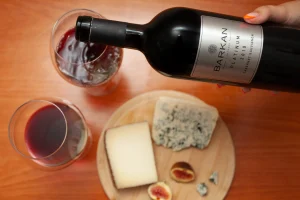
Royal Wine Corp was not only a producer but became a distributor. They represent the largest Israeli wineries like Carmel and Barkan, and some of the best like Castel, Flam and Yatir. They now import the wines of forty Israeli wineries, under the umbrella of IWPA, and are the main international ambassador of Israeli wine. Royal represent Californian wineries like Hagafen and Covenant, Spanish wineries like Capcanes and Elvi and Italian wineries like Terra di Seta. As we all know, making wine is easy, but selling it is the problem. The late Carmi Lebenstein of Carmel once told me “making wine is art, but selling it is a profession.” New producers were drawn to Royal Wine because of their size, power and influence in the market place. If you wanted to sell, you picked up the phone to Royal.
Royal Wine became the main player in the kosher world. It remains a family company and the contribution of the generations is carved in stone. Eugene Herzog was the founder, Ernest Herzog the stabilizer, David Herzog was the builder and innovator, and under Mordy Herzog the current CEO, and Nathan Herzog, the President, the company has just gone onwards and upwards. They also own food company, Kayco which is even larger than their wine business.
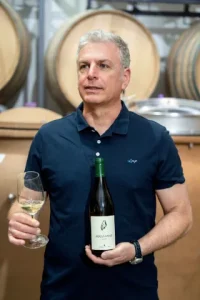
However, lets focus on France, always the most important wine country. There, they built buildt on those Rothschild beginnings. The winemaker of Royal Wine Europe is Menachem Israelievitch. He is the father of five and lives in Paris. A blend of 50% Ashkenazi and 50% Sephardi, his father, a classical musician of some repute, hailed from Russia and Romania; whilst his mother came from Morocco. He has 30 years’ experience in wine, starting at the very bottom. There is nothing he did not do in learning the ropes. In the end he became Pierre Miodownik’s trusted and ultra-reliable assistant. When Miodownik made Aliya to found Netofa Winery in the Lower Galilee, Israelievitch took over.
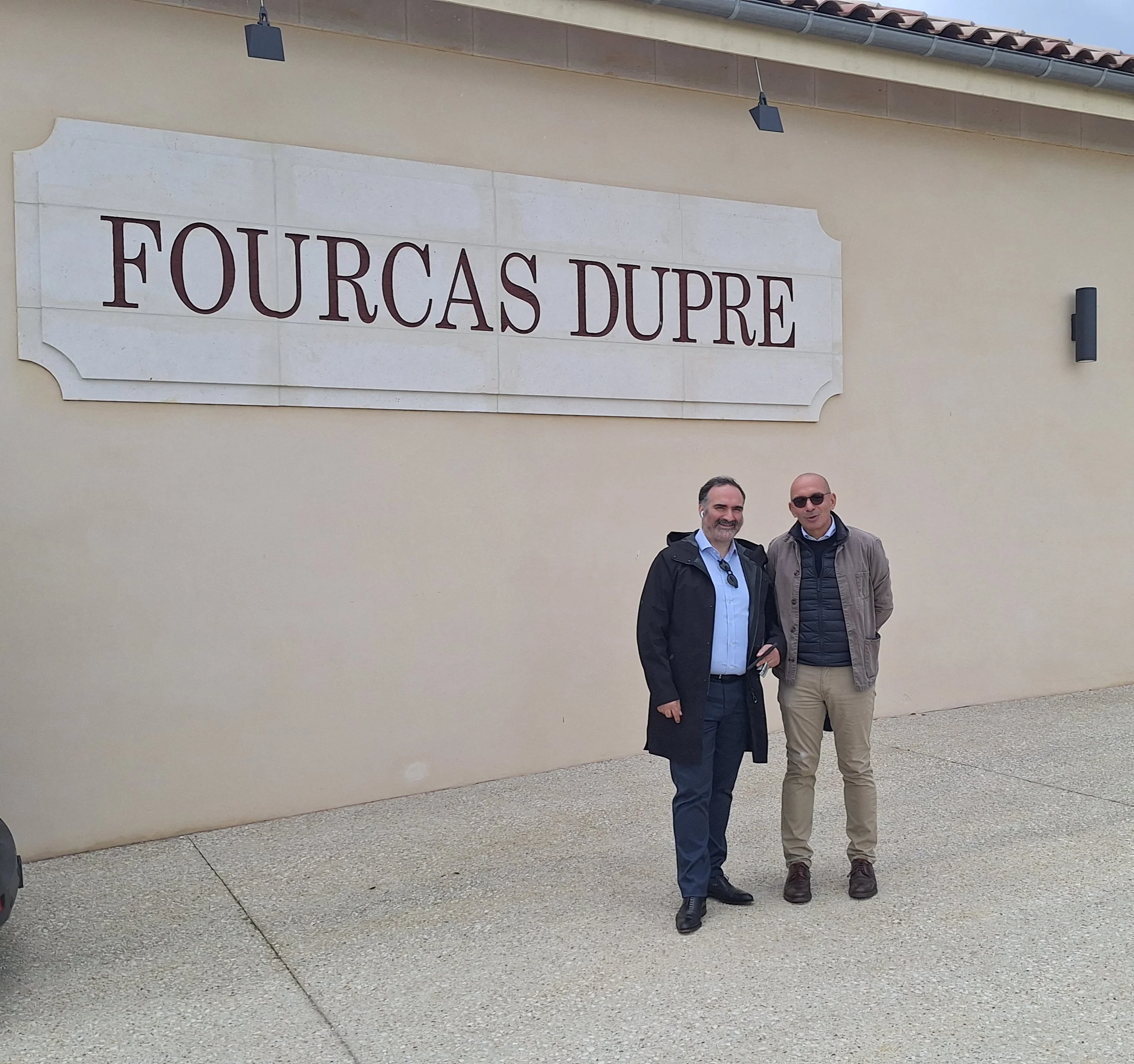
Menachem Israelievitch is the impressive figure who today makes over a million bottles of wine at no less than 70 different wineries in three countries, France, Spain and Portugal. He is the Kosher King of Bordeaux where he makes wine with no less than 45 wineries! He is received with great respect by some of the great wineries of the world under the most famous appellations. These include wineries of the caliber of Château Pontet Canet from Pauillac, Château Cos d’Estournel of St. Julien, Château Lascombes of Margaux, and the Rothschild owned Château Clarke of Listrac. The latest is Cos d’Estournel. The wines are already made and the launch is to follow. Kosher wine aficionados will be looking forward to these wines. It is a tremendous addition to the portfolio.
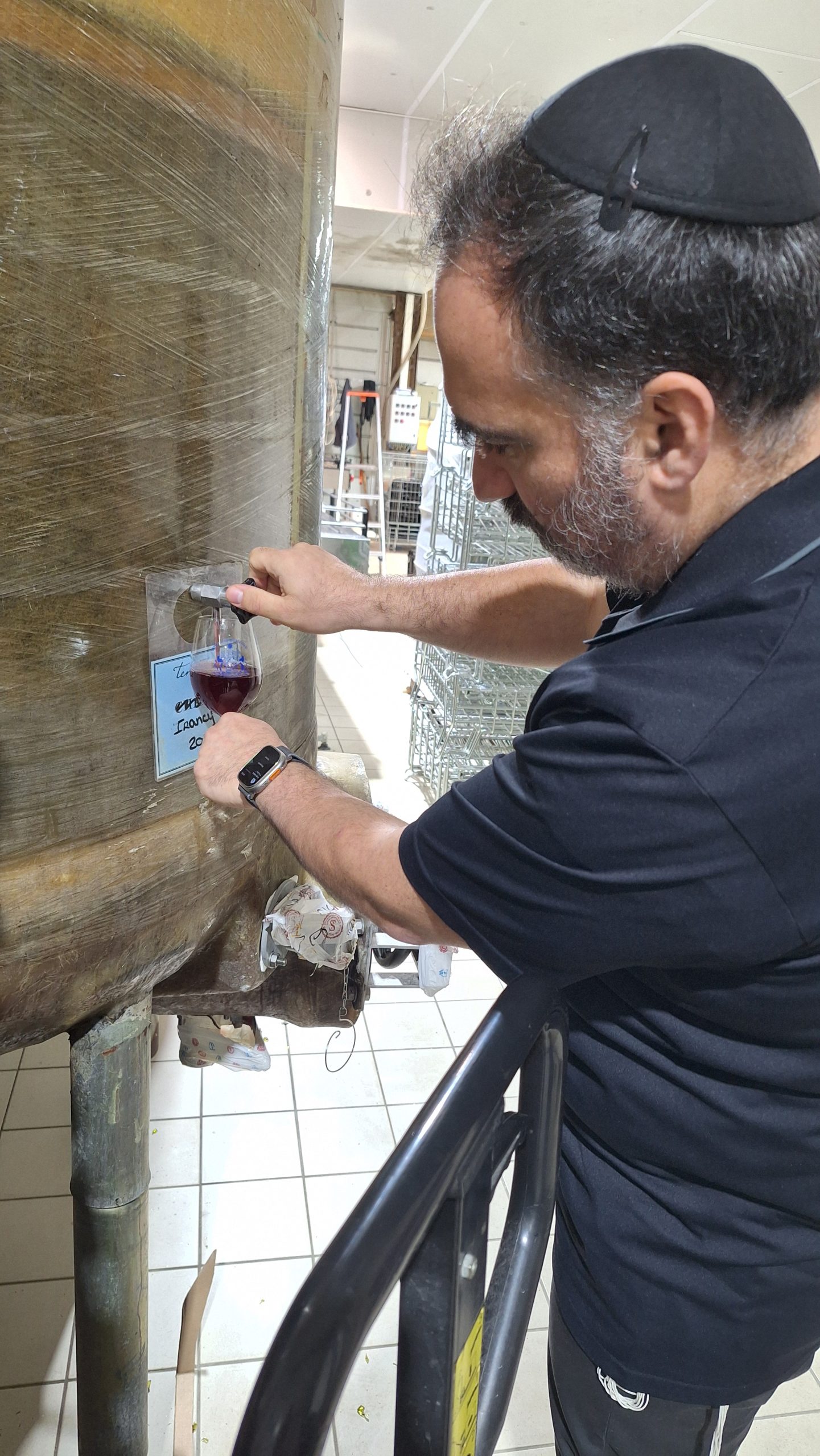
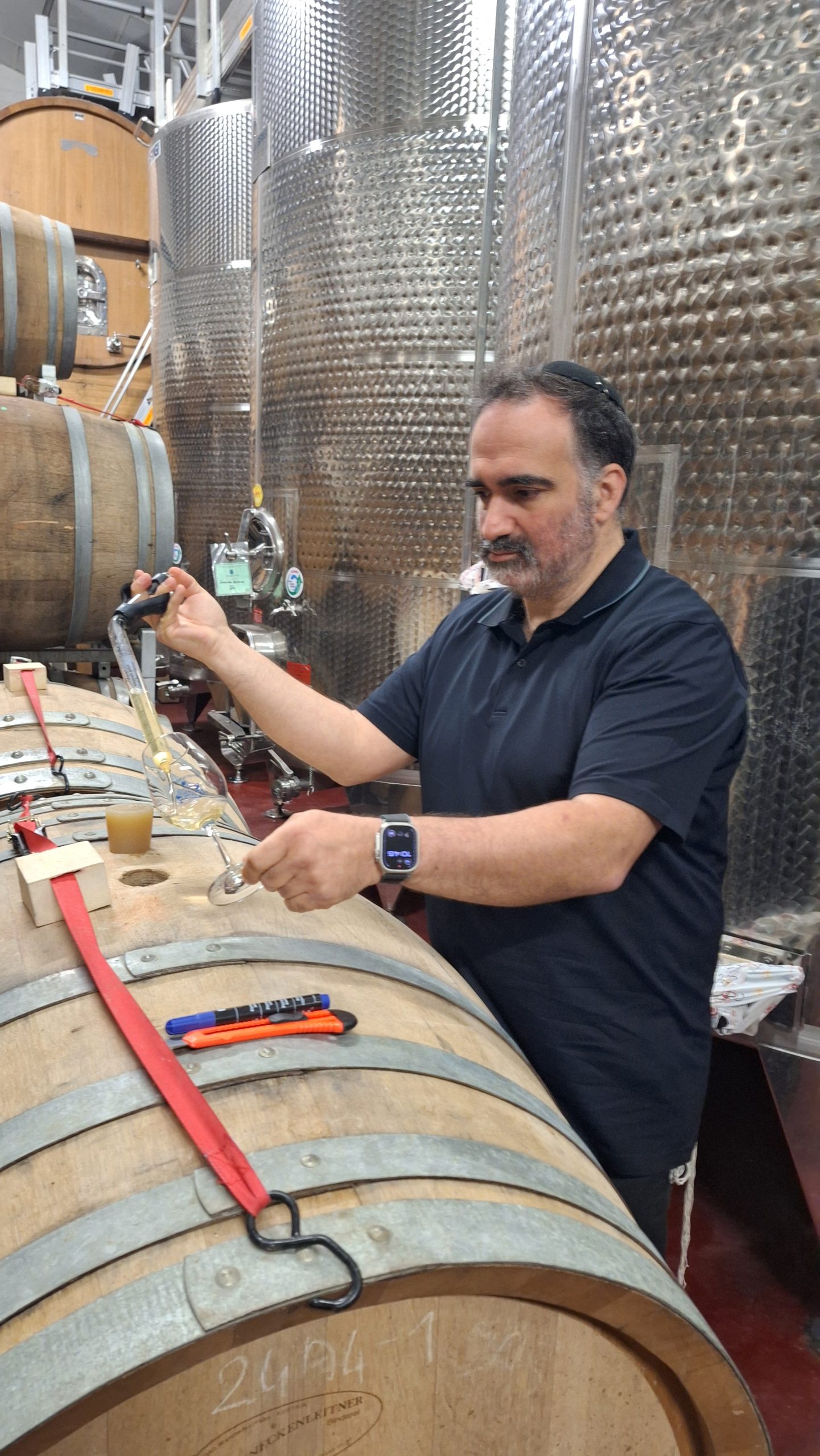
I meet Israelievitch once a year at the annual KFWE in Tel Aviv. In 2018 I was privileged to spend time with him and left mightily impressed. Recently I was fortunate to again see him at work. He really is a force of nature. He has a calm, charming character with a friendly, easy smile. He is open, friendly with a good sense of humor, an infectious laugh and a kind smile. Yet he is focused, dynamic, oozing expertise and is a smooth, organized operator. He knows everyone and there is nothing he has not done in the wine world in the last 30 years. His work ethic, professionalism and affability give him an aura of respect wherever he goes. You only have to see how he is accepted and respected by the wineries he works with to understand his impact and success.
Yet like the proverbial duck, serene above the waterline, but frantically paddling below the surface, Israelievitch is constantly organizing, arranging and working non-stop to keep the empire ticking over. Many times, he was talking to me, and when he continued talking I answered, only to find he was in fact speaking to someone else. The logistics of making kosher wine in seventy wineries defies belief. He is like a puppeteer, controlling the movement of a number of people at any one time. If he were a juggler he would have an exaggerated number of balls in the air at once. He reminds me of an old-time receptionist with a switchboard, with cords and plugs to route calls manually. They are answering one call, connecting another, then returning to a third on hold.
That is Israelievitch in a nutshell. He is either talking to one of his wineries on one hand or to his pool of mashgichim and the invaluable kosher work force he has to train, nurture and keep at his fingertips to be available at the drop of a hat. At the peak periods during the harvest, he will need up to sixty workers. He is arranging, controlling, adapting, coping with emergencies, and answering requests made with no notice. All to ensure the non-Jewish winemaker making a kosher batch is inconvenienced as little as possible. The proof of the pudding is in the eating. The service he gives ensures these famous wineries are more than content to make kosher wines again and again.
Menachem Israelievitch’s prime job is to make wine. However, he is far busier than that. He almost stalks potential wineries and this can take an investment of many years of gentle persuasion and schmoozing. He acts as a consultant in the making of wines ensuring they are represent the winery style and quality, whilst being strictly kosher. Then he has to juggle his workforce to make sure they are available in the right place whenever required. He is present at the blending with some of the most experienced winemakers and most famous wine consultants in the wine world. He job does not stop there. He negotiates the price, pushing with great charm but no little persistence for the best possible price. If that was not enough, he markets and sells the Royal portfolio to those in Europe not covered by the Royal Empire.
He is very businesslike, but what sets him apart is his passion for wine, immense knowledge and long experience. On long car journeys, I had the opportunity to talk wine with him and we had deep discussions with a depth that only true wine lovers share. Meet him and you understand the kosher wine portfolio. He succeeds in bringing some the world’s finest names to the thirsty and eager kosher consumer.
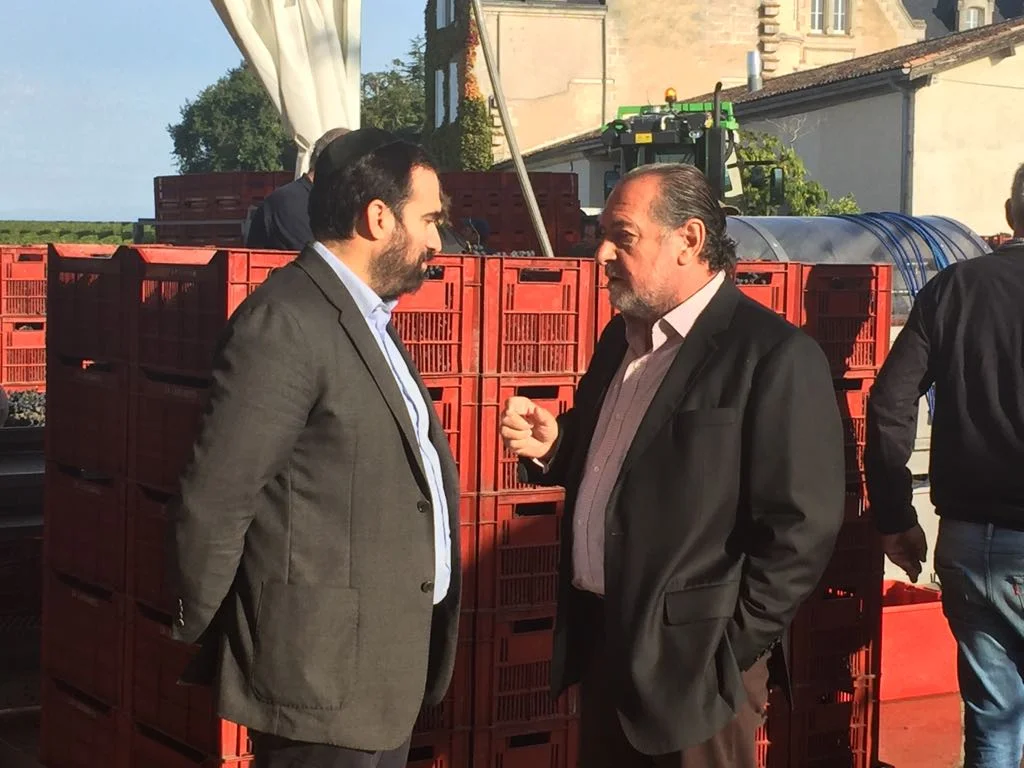
Sadly, we recently heard about the untimely death of Michel Rolland, the world’s most famous wine consultant and flying winemaker. He was arguably the most well-known oenologist on the planet. He was based in Bordeaux and made wine in no less than 13 countries, including Israel. He will be sadly missed. Michel Rolland and Menachem Israelievitch could be taken for brothers. They share looks. Stocky, squat, good looking, broad shouldered, upright stance, both bearded, with good natured smiley personalities, punctuated with plenty of laughter. They often tasted kosher blends together at wineries like Chateau Lascombes. The best compliment I can give to Israelievitch, is that he is the Kosher Michel Rolland. I can pay him no higher compliment. Royal Wine Europe is in the best possible hands.
Adam Montefiore is a wine trade veteran and winery insider turned wine writer, who has advanced Israeli wines over four decades. He is referred to as the English voice of Israeli wine and is the Wine Writer of the Jerusalem Post. www.adammontefiore.com