With the importance of California and UC Davis (University of California at Davis) to the first part of the Israel wine revolution, it is often forgotten that the Israeli wine industry was initially built on French expertise, with French sponsorship and with a dollop of influence from Bordeaux.
In 1882 Baron Edmond de Rothschild became involved in making contributions to those setting up the farming villages of the First Aliyah. He contributed funds, sent experts and gradually, by stages, became more and more involved.
His early experts, like Justin Dugourd, were agronomists. Dugourd was from the Gardens of the Palace of Versailles. The later experts, sent from 1886 onwards were viticulturists. This reflected the change in priorities. The farmers decided to focus on vineyards after a few years of experimentation and failure with other crops. It was not relevant at the beginning, but Rothschild just happened also to be owner of the famous Bordeaux winery Château Lafite, which had been purchased in 1868 by his father. In the famous Bordeaux Classification of 1855, Lafite was ranked first amongst equals. It could be argued it was the most famous winery in the world. Therefore, Baron Edmond had wine knowledge and the contacts to seek advice from the best experts.
In 1887 Rothschild visited Israel and metamorphosed from a mere philanthropist into a Zionist. He decided to create an Israel wine industry. Apart from his management and administrative staff he put in place, he also surrounded himself with wine experts.
The main viticulturist was Gerard Ermens. He had experience in hot countries including Algeria, and also Kashmir, where Rothschild had a nursery free from Phylloxera for his winery. Professor Gayon of the Station Agronomique et Oenologique in Bordeaux was the main wine advisor. Monsieur Dupuis from a family of Bordeaux winemakers was sent to Rishon Le Zion Wine Cellars to be the first winemaker. Charles Mortier, the Maître de Chai of Château Lafite, was the first wine consultant, and later, he visited the new wineries. That was the wine team.
Rothschild built what were then large, technologically advanced wineries. The first telephone and electricity ever used in Israel was at his two wineries. His dream was to make a fine Palestinian Claret. Cuttings of Bordeaux varieties were brought from Lafite and from the nursery in Kashmir. Unfortunately, farmers complained yields were too low, there was no demand for a Grand Vin (people wanted Kiddush wine or Sacramental wine from the Holy Land) and the vines eventually were affected by Phylloxera, so they had to be grubbed up. However, when a hundred years later, Israel began to make quality wines, it was with Bordeaux varieties (initially Cabernet Sauvignon, Merlot and Sauvignon Blanc) that the breakthrough was made. The result meant that Rothschild’s vision came true eventually, but it took 100 years.
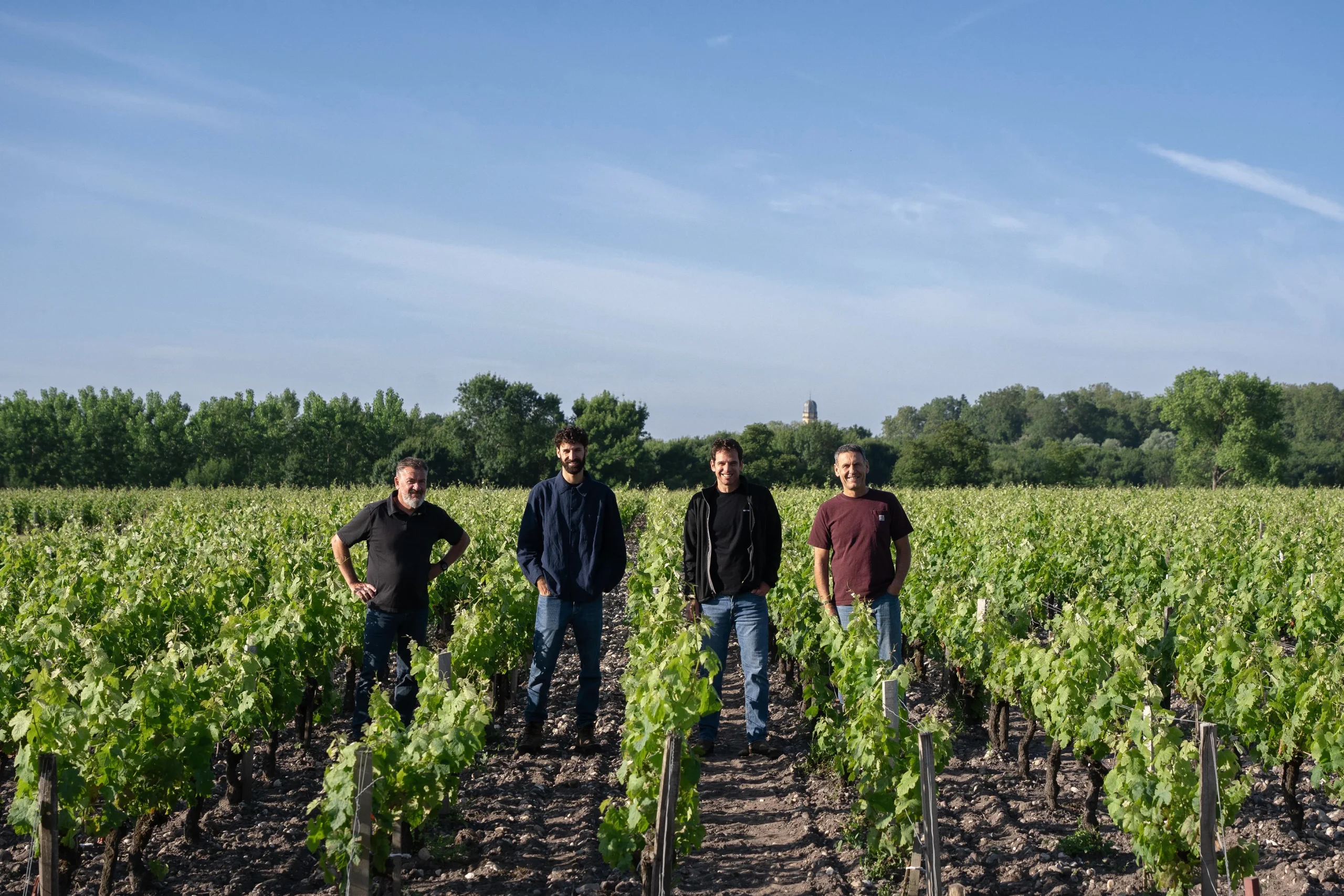
Now, 134 years after Bordeaux came to Israel, Israel has made the return journey and gone to Bordeaux. In an exciting development, an Israeli partnership purchased a Cru Bourgeois winery in the Haut Médoc in 2024. Tzora Vineyards, owned by Nathan Hevroni, and Flam Winery, owned by the Flam Winery, joined forces to buy Château Tour du Haut-Moulin. This is the very first Israeli owned Bordeaux winery.
There were Jewish owners of Bordeaux Châteaux pre-Second World War (for example Châteaux Beychevelle, Palmer & Le Tertre) as well as the previous generations of the Rothschild owned wineries (Châteaux Clarke, Mouton & Lafite). A few of the big names produce batches of kosher cuvées these days (amongst them Châteaux Giscours, Lascombes, Léoville-Poyferré, Pontet Canet & Smith Haut Lafite). One of the owners of Château Lynches-Bages, Catherine Cazes, is married to an Israeli. So, they usually have the Israeli flag flying outside. There is even a greatly respected Israeli vigneron (Omri Ram at Château Lafleur), but there has never been Israeli ownership in Bordeaux.
It is nothing new for Israelis to be making wine abroad. I remember Carmel’s Choice of the early 2000s, making wine from Australia to California, and a Segal Wente joint venture. Touch by Fusion, owned by Doron Yitzhaki, has made wine in various European countries since 2006. Others like Ido Lewinsohn MW (in Germany and Cyprus) and Zlil Oblass (in Italy) have made wines in various countries. These days it is not unusual for large wineries to occasionally make wine abroad. For example, Zion Winery makes some wines in Spain, and made wine in Cyprus during the Shmittah year. If there is full disclosure, all is ok and above board. However, if the wine made overseas is passed off as Israeli, as has happened with our two largest wineries, it is extremely problematic, if not downright misleading.
What makes the Bordeaux Israelis different from all these, is that they will do it the hard way. Their project will be managed from the ground upwards, from farm to table, or more appropriately, from vine to wine. For them the vineyard is the thing. Growing wine (instead of grapes) is for them not a pretty slogan, but a raison d’être.
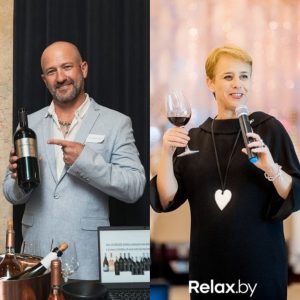
The Hevroni and Flam families are similar in that they invest in quality and authenticity. No effort is too great in the search for making fine wines. Tzora Vineyards (est. 1993) and Flam Winery (est. 1998) are considered amongst our very finest wineries. Tzora Vineyards is awarded **** (four stars) in Hugh Johnson’s Pocket Wine Guide, whilst Flam Winery receives ***>**** (three to four stars). These are outstanding ratings. The partnership of these two wineries, brings together some of finest winemakers on the Israeli wine scene. Each brings to the table prime expertise from a different region.
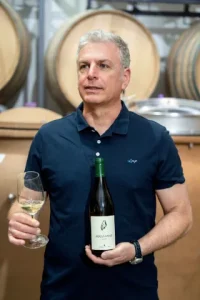
Eran Pick MW is the CEO and winemaker of Tzora Vineyards. He graduated at UC Davis. He is Israel’s first Master of Wine, reaching the pinnacle of the wine world. There is only a hundred or so winemaking MW’s in the world….anywhere. He has experience in California, Australia and Bordeaux, including spending a period of time at Château Lafite Rothschild itself. Furthermore, the Bordeaux relationship is strengthened by the fact that the consultant of Tzora Vineyards is none other than the great Jean-Claude Berrouet, legendary winemaker of Château Petrus. Pick has always been a Bordeaux wine lover and a flag waver for the region.
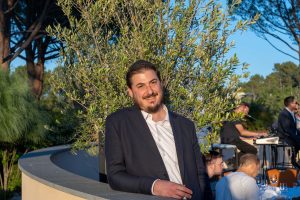
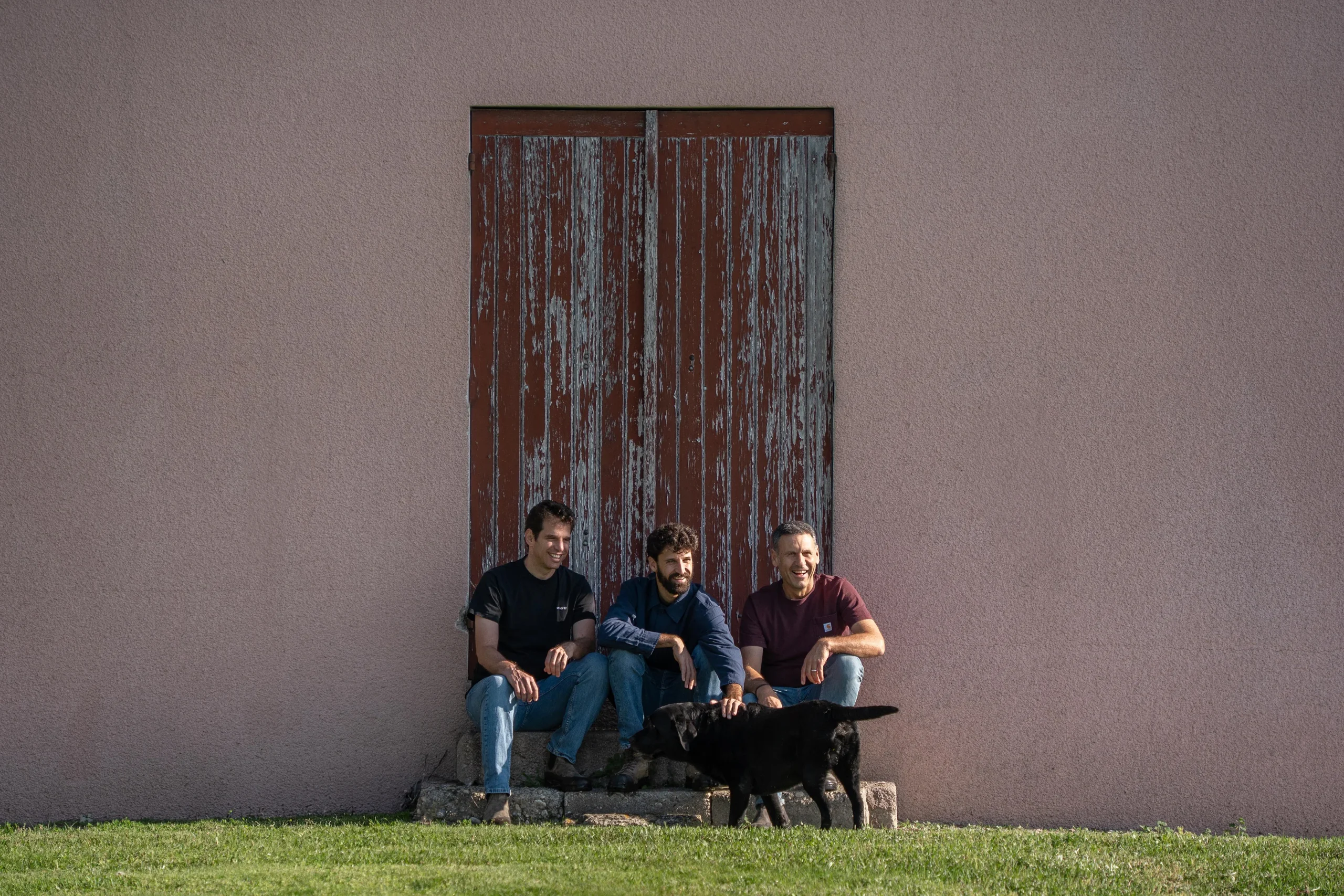
Golan Flam, winemaker of Flam Winery, graduated from the University of Piacenza in Milan and worked for a while at Carpineto in Tuscany. As a result, he is an out-and-out Italophile. Golan is a second-generation winemaker. His father Israel, was head winemaker at Carmel Mizrahi for decades. Golan himself has already been a winemaker for 28 years. The third part of the jigsaw is Dan Sheinman, also a winemaker at Tzora Vineyards. He is familiar with France, but the area of his expertise so far is Burgundy. He worked for three years at the celebrated Domaine de Montille. The winemaking trio is a sparkling blend of winemaking experience, knowledge and talent.
Aubert de Villaine of Domaine de la Romanée Conti once said: “Man can only make great wine if he is spiritually connected with his vineyard.” He would know! This is an attribute that connects each of them. Both Eran Pick and Golan Flam are close friends, partners in wine in the Judean Hills Quartet, with a similar philosophy of terroir led wines, with elegance, texture and drinkability. They both believe the vineyard is the key to producing quality wines.
They have something else in common. I get the impression they would far rather host people in the vineyards than at the winery. Eran Pick has a scholastic, academic air, but when walking the vineyard, he can’t hide his excitement in finding yet another fossil, which he will pick up and pass around as though it was the first he has ever seen. Golan Flam can be quiet and taciturn. He is a man of few words. Until you get him in the vineyard that is. Then he will delight in sharing the whiffs of wild herbs caught by the wind, whilst pointing out the wild flowers and trees. He can be positively effusive with a vine and nature for company. They are both winemakers who are energized and inspired in the vineyard.
Dan Sheinman, I know less well, but he is a vine cutting of the same stock. Knowledgeable, studious and curious…and also with his feet deep in the soil of the vineyard. These are people making wines with soul. Their wines have the thumbprint of a person and a place. The vineyard is the essence and the wine is the expression. There are no short cuts here.
We should not forget one more person behind the scenes. Gilad Flam is CEO of Flam Winery. He is a deep thinker, strategist, business manager and marketer of some experience, with proven accomplishments. He is talented and his attention to detail, aesthetics, style and perception of quality more than matches the skills of the winemaking trio. He is not up front. It is the winemakers who will gain the kudos, but his contribution fleshes out the partnership and fills in the gaps in the dream team.
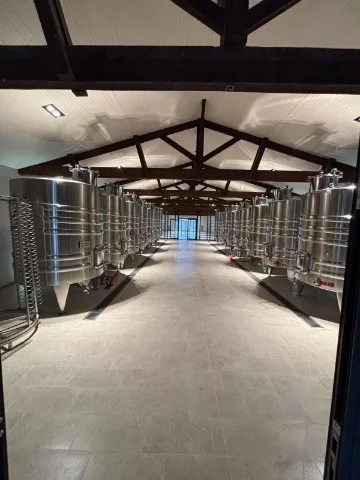
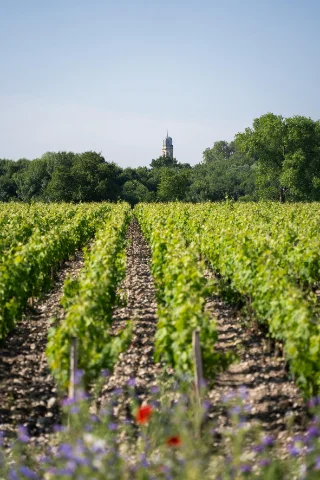
From the moment they shared the idea, it took them five years to accomplish their objective. During that time, they looked at over forty properties. They were looking for a quality vineyard, a good property and estate, with promising sales potential. In most instances they were satisfied by one parameter, but the others were insufficient. However, in Chateau Tour du Haut-Moulin, they were satisfied by each criterion. Most striking and most crucial, was the quality of the vineyard which was well cared for, in good condition and with the potential they were seeking.
Château Tour du Haut-Milon was established in 1870. It is situated in the village of Cussac Le Vieux, which is part of the neighborhood of Cussac-Fort-Médoc. It lies in between Saint Julien and Margaux, and is in close proximity to the left bank of the Gironne River. The vineyard, with the traditional gravel soil, is divided between Cabernet Sauvignon 50%, Merlot 47%, and Petit Verdot 3%.
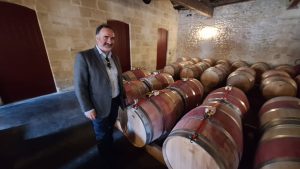
The previous owners, Lionel and Carol Poitou will stay on to manage the vineyard. This will provide continuity. He is a descendant of the founding family and was even born on the property. He has managed the estate for over forty years and according to the new owners, he is a very knowledgeable and talented grower. They are delighted he has agreed to stay on to manage the vineyard. Dan Sheinman will be more frequently on site than the others. As a French speaker, with experience in France, he is the ideal choice as winemaker, but both Pick and Flam will be involved in the tiniest viticulture or winemaking decisions. Try and keep them away! You can’t keep perfectionists at bay. Their wine consultant will be the very highly regarded but equally modest, Vincent Dupuch, who already consults the Flam family. The partnership will trade as Flora France SA (a playful combination of the words Flam and Tzora.)
The Château has a good name with the most important critics. Influential American critic Robert Parker once recommended “Tour du Haut-Moulin is a name shrewd buyers should check out.” Jancis Robinson MW gave 17 points to the 2000. English wine personality Oz Clarke wrote: it was “consistently one of the best value Crus Bourgeois in the Médoc” and he listed it amongst “the best of the rest in the Haut-Médoc.” In Hugh Johnson’s Pocket Wine Book is written in note form: “Classic wines, structured, to age.” Stephen Brook in his book on Bordeaux referred to it as: “this sterling property.” So, there is some basis and history here for the Israeli partners to build on. They are wines that can age. Eran Pick chose the 1996 as one of his Desert Island Drinks on a recent podcast hosted by Patrick Schmitt MW of Drinks Business.
The first release is a wine called Cussac Le Vieux. The label has the look of classic Bordeaux, with a wildly flowery C, which I misread as a G. However, the hierarchy is Burgundy style. The village is given top billing. The winery is secondary in small type. This is similar to the Tzora Vineyards recipe, where the wines are named after the plot, vineyard and region. The winery name is low key. The label says the wine was grown, cultivated and vinified to reflect the terroir of Cussac-Fort-Medoc.
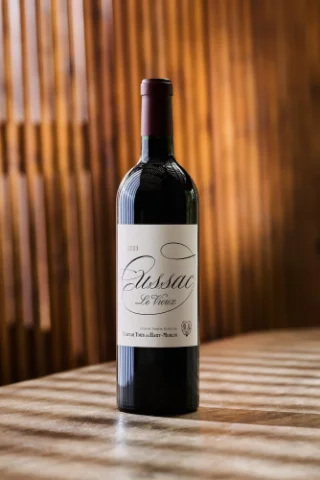
The Cussac Le Vieux 2023 has a delicate, ephemeral, enticing nose of blackcurrants and blackberries. The wine is of medium weight with a vibrant freshness, which is its calling card, with tannins and acidity which cleanse the palate and provide a pleasingly refreshing finish. It is elegant and understated. The first expression is less than 3,000 bottles. Hagefen, the Flam owned importer, will distribute the wines in Israel. I know it will be the first question I am asked, so yes, there will be a Kosher cuvée in the future.
A good job, well done! With apologies to the late and great Leonard Cohen, first they took the Judean Hills, now they will take on Bordeaux! However, wine is never in the fast lane. It is at best a slow developing story. A tweak here and there may become effective over years, even decades. However, we will be cheering from the sidelines and watching with no little pride and great interest.
Adam Montefiore is a wine trade veteran and winery insider turned wine writer, who has advanced Israeli wines over four decades. He is referred to as the English voice of Israeli wine and is the Wine Writer of the Jerusalem Post. www.adammontefiore.com