If you are a feinschmecker and frequent the leading restaurants in Tel Aviv and Jerusalem, you will see a name that keeps popping up on wine lists. It is not one of the commercial wineries, big brands or one of the well-known small boutique wineries. You will find the name Zur Winery seeping in again and again. Low key, but ever present. It appears the leading sommeliers feel they have found a rising star.
If you find yourself in Paris, and in the spirit of patriotic loyalty visit Sharbour, Assaf Granit’s Michelin star restaurant, you will find Zur wines on the wine list. Impressive, because most Israeli chefs abroad prefer to put Chateau Something from France on their lists rather than supporting their own country’s wines.
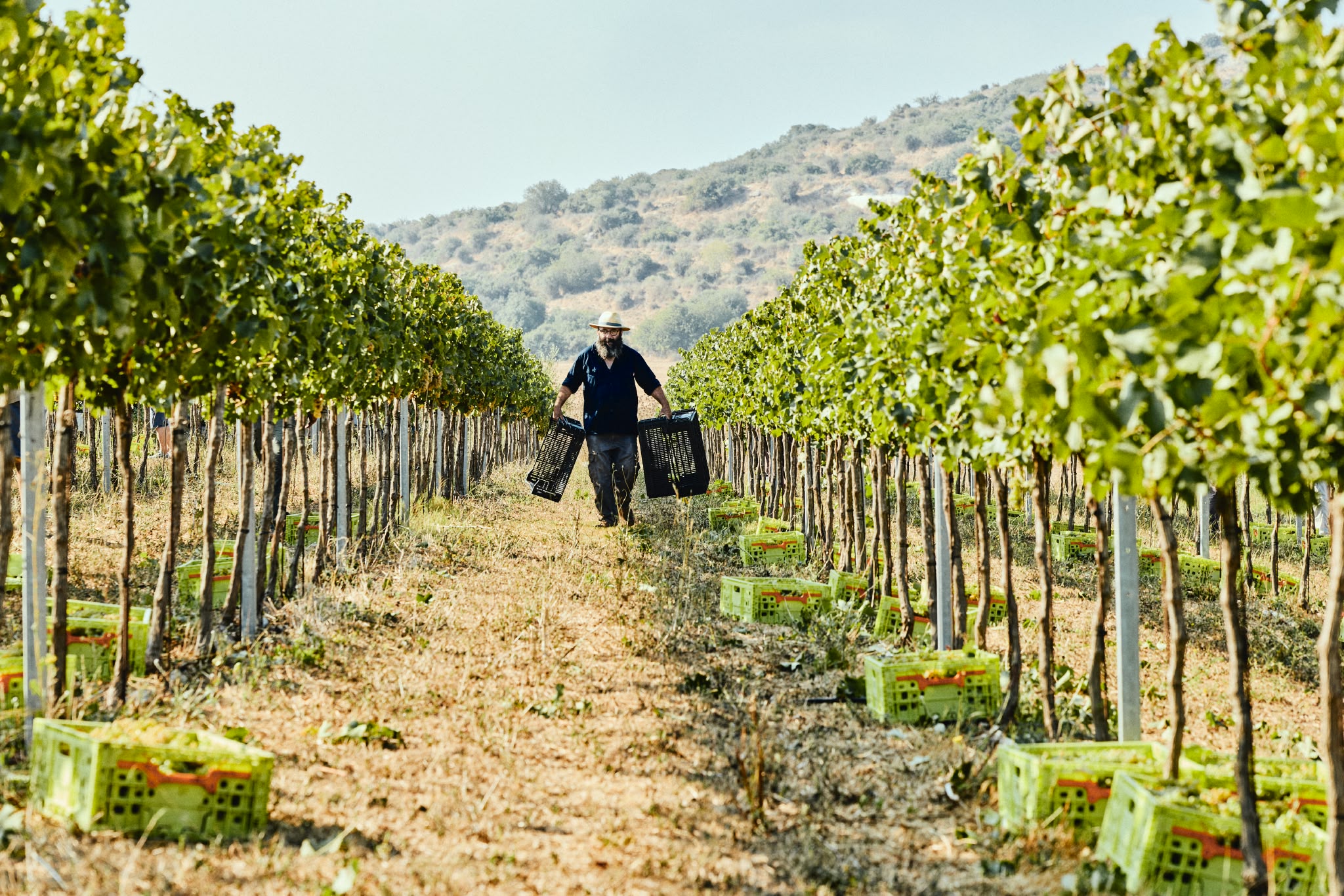
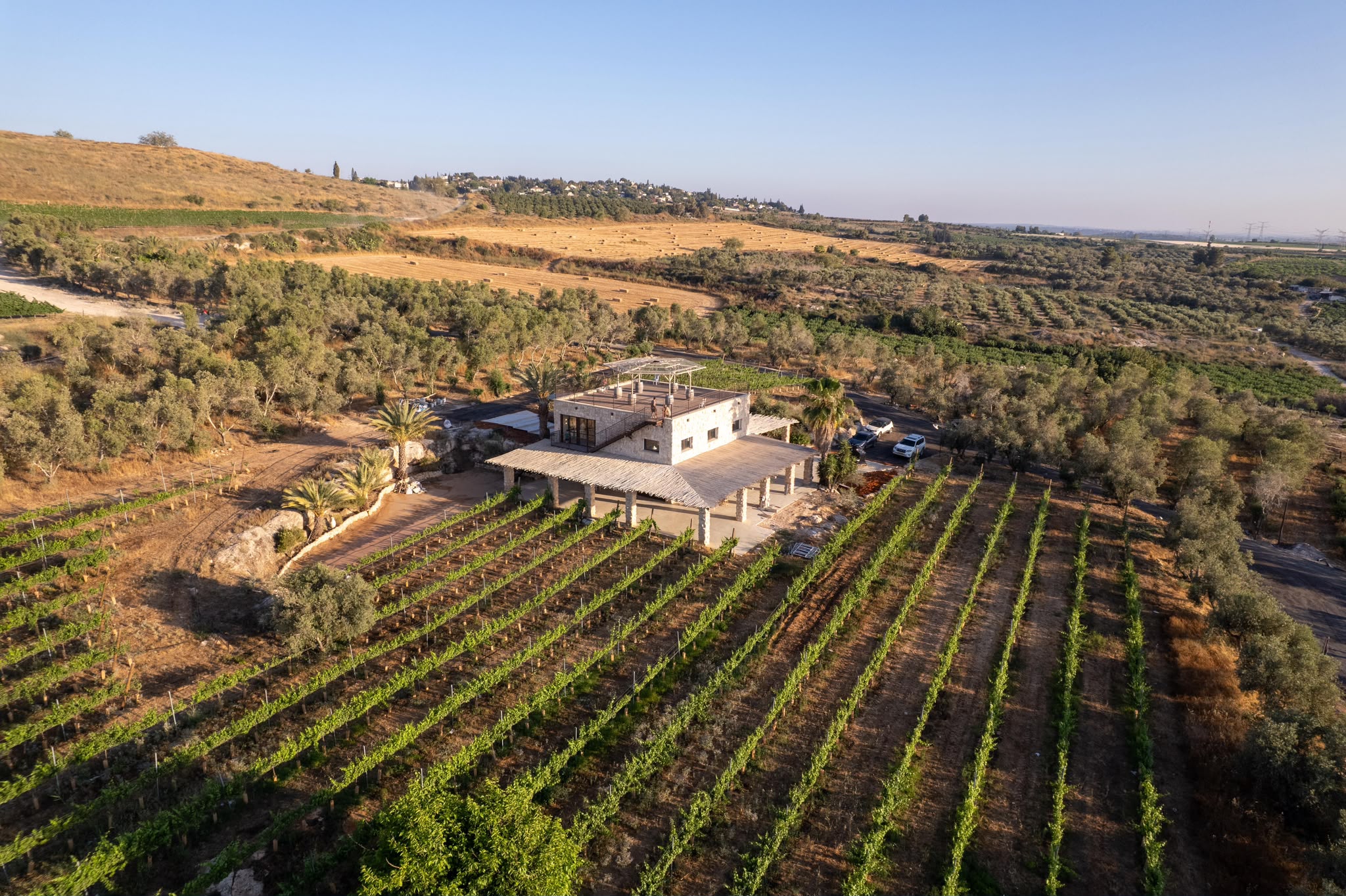
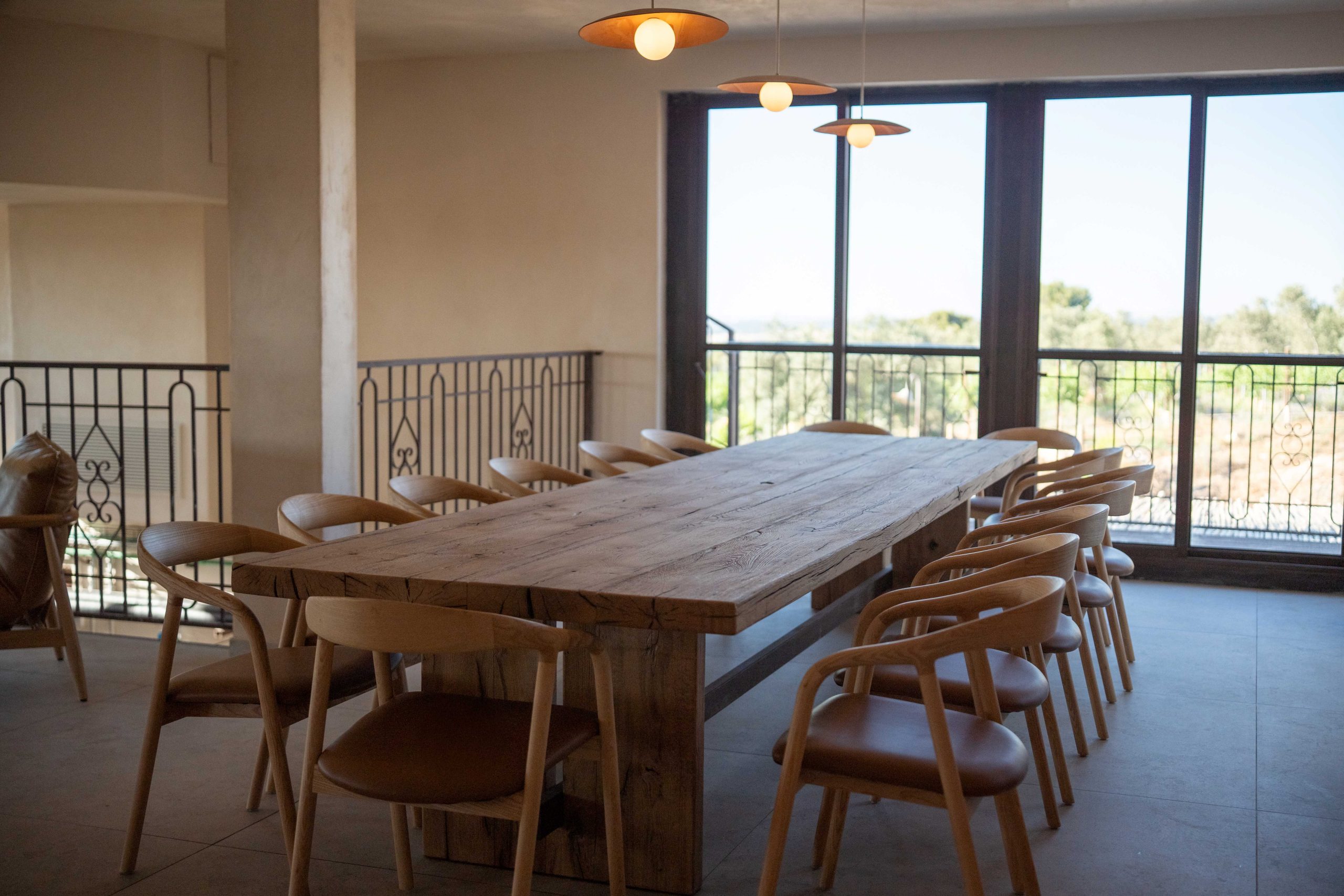
The brand made its name because of the quality wines starting with a Rose just at the time when the rose explosion took root and following with a creative, totally original Blanc de Noir. Now, Zur Winery will be become more known, because in time for the 2026 harvest they have opened a stunning new winery. It was once an olive oil press. It has now emerged as a winery of dreams. Clad in stone, the handsome building is decorated with imposing, impressive, rustic oak doors at the entrance and inside there is a large oak table center stage. There is space, plenty of light and vines, olive trees, wild herbs and wild flowers are all around you. There is a rooftop place to sit, schmooze, taste and talk about wine, which offers a panoramic view of the Judean Lowlands and the Central Coastal Plain. Hugging the building are vines from every vantage point. It is a rare genuine estate winery.
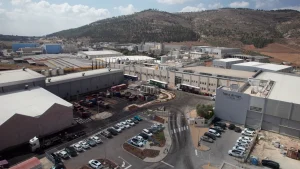
The use of the term “estate” is a thoroughly abused word in our industry. It refers to a winery which receives all its fruit from its own vineyards, but the purest meaning of the word is when vineyard and winery are in the same place. On the same estate, as it were. Because Israel laws are not geared to tourism, wine has always been regarded as industry where in most of the world it is categorized as agriculture. So here, vineyards tend to be in the countryside, while wineries are on unattractive, detached industrial estates. Elsewhere apparently wine is more appreciated, valued and nurtured.
I once hosted a wine personality from the United States. We visited thirteen wineries in three days. On the way to the airport, I was self-satisfied, patting myself on the head. We had achieved my objectives and I thought I had done a good job. Then my esteemed guest said to me “Do you know, I have not visited or even seen a vineyard.” For an agricultural product where place and local terroir is important, it was an important message for me. I have never made the same mistake again. It is in the vineyard where the grower and winemaker craft the wine. Those committed to quality will say “we grow wine, not grapes!” Certainly, for me, if I have not seen the vineyard, I have not really understood the winery.
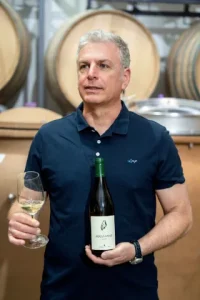
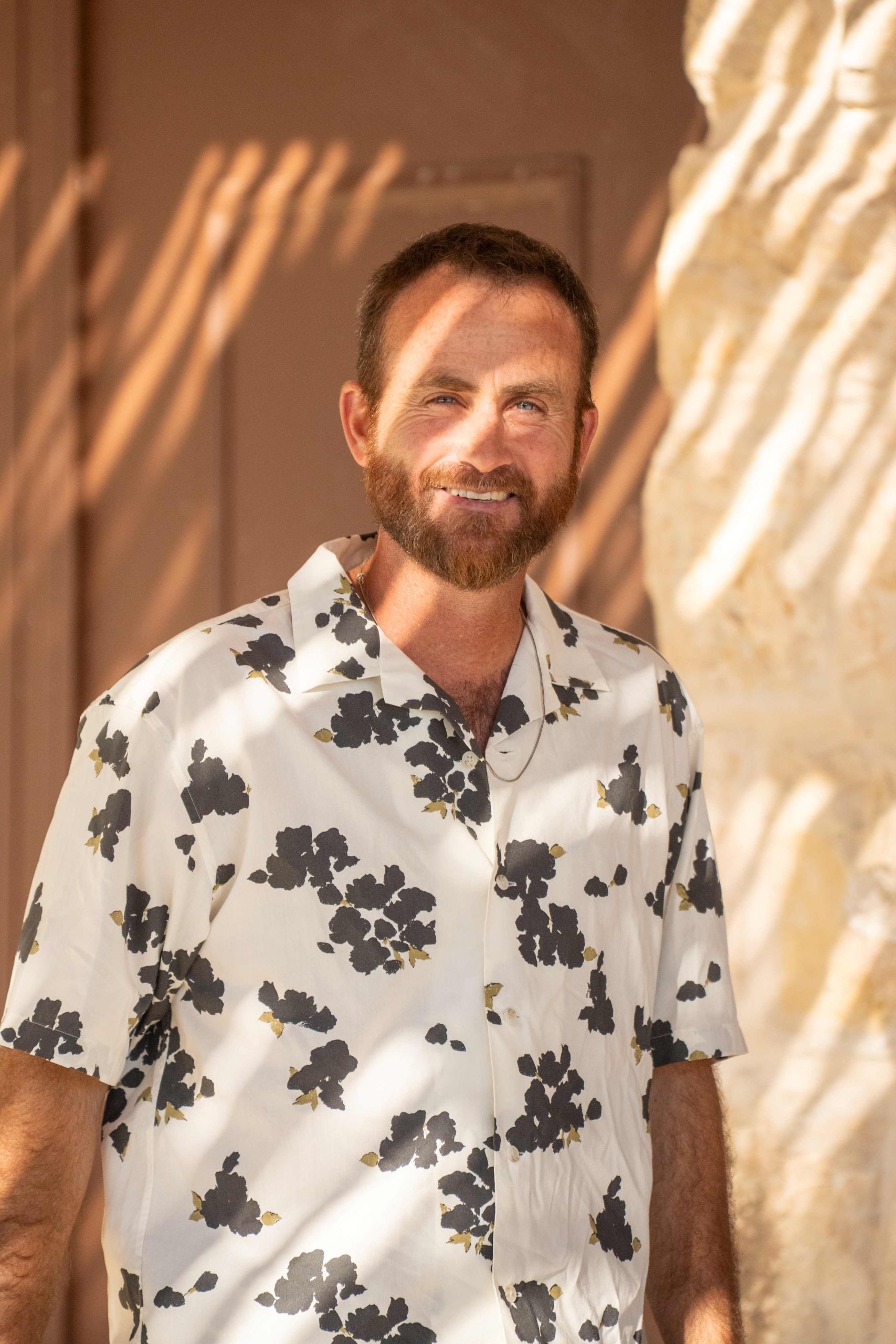
The person behind this dream winery is the slight bearded figure of Itamar Aviran. When talking to him, you get the feeling he can’t quite believe it has all come to fruition. He is modest, self-effacing, and constantly thanking his lucky stars. He is grateful for a series of coincidences that fell in his favor, and says that he can barely believe he is making wine and that people, wine professionals, and the end customer, are prepared to buy them.
This humility and humbleness is a good sign in a winemaker. Too many Israelis are in the “I came, I saw, I conquered” category, where speech is peppered with “what I did and what I achieved.” In our business, the loud self-confidence and complacency, usually equates to less authenticity and credibility. The studied, quiet approach is always more impressive.
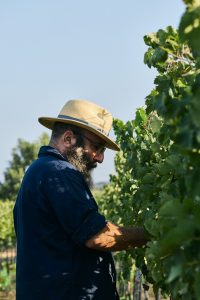
Itamar Aviran sees himself as an agriculturist, who over the last decade has become intimate with his vines. He has three children, but regards his vineyards collectively as a fourth child. Like the parents evening at school, he is constantly discussing potential with his vines and feels his job is to interpret what they are trying to say.
He loves living and operating within the nature that circumstance has given him. He does not impose his winemaking needs on his vineyards, but adapts to include the animals that visit and inhabit his patch and the flowers and herbs, bushes and trees that called this place home before Zur Winery arrived. Aviran humbly sees himself as a caretaker. He fits in rather than imposing a master plan.
Fifteen years ago, he barely knew what a vine was. He was brought up at Paran Moshav, in the Arava, 100km north from Eilat, and instinctively warmed to the agricultural activities. He loved nature, the flora and fauna and appreciated the dance agriculturists have to do to be in sync with challenging surroundings.
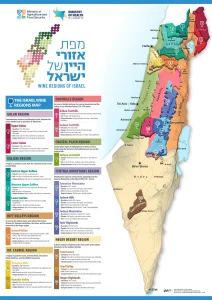
With the support and encouragement of his wife Noa, he was presented with a series of opportunities, which he grasped with both hands. Noa’s family hail from Karmei Yosef, situated in the rolling hills of the Judean Foothills. Around Tel Gezer they owned some agricultural land needing care and attention. Tel Gezer is an ancient archaeological site, nature reserve and national park offering evidence of settlement from the Canaanite period onwards, with ancient wine presses illustrating that it was a wine growing region through the ages. The Judeans made wine here over a 1,000 – year period.
In 2010, Noa suggested he satisfy his craving for agriculture by working the land owned by her parents. Itamar understood that this chalky soil would support vines and olive trees, but not much else. He thought vines would be more interesting for the budding agriculturist, than olive trees which are more independent. He planted vineyards in 2012. This included Cabernet Sauvignon, Syrah, Shiraz (the Australian clone) and Petit Verdot. He did a course with the Soreq Winery Winemaking School under the tutelage of Nir Shaham, one of the great unsung heroes of Israeli wine. Though, initially he was quite happy to be grower, supplying grapes for the Flam family, friends of his in-laws. 2015 was the first vintage. It was a notably difficult year, characterized by hamsins and the unusual sandstorm that cloaked the country for a number of murky days.
Here, Noa was key. She had spent a period of time in Australia. She knew wine, was familiar with wine culture and pushed, steered and encouraged her husband to not only be a wine grower but also a winemaker. For fun and to complete the learning experience, he decided to make wine. It turned out to be rather good, and the idea of a winery was born.
Aviran studied and graduated in Viticulture and Enology at the Faculty of Agriculture of the Hebrew University. The family moved to Hulda, home of Barkan Winery and the largest vineyard in the country. This he balanced with a dedicated army career. But his heart was in the vineyard.
He called the winery Zur as a homage to his wife (her maiden name) and her parents. They gave him the opportunity and the drive. For the logo he chose the handsome head of a gazelle or deer, one of the animals for whom the vineyards and surrounding woods are home. On the labels they describe the gazelle as being “a majestic creature symbolizing nobility, curiosity and family values.” Zvi (deer in Hebrew) is also the name of a loved grandfather and their eldest son. All is thought out. It all fits in.
His first wine was a Rose made from Cabernet Sauvignon and Syrah. Then he made his first red blend Sharkiya. Shira Tsidon the esteemed sommelier of the prestigious Norman Hotel, was the first to find the light under a bushel. She listed the wine and others amongst the Tel Aviv wine intelligentsia pricked up their ears, took notice and followed suit.
Later, he expanded his vineyards by planting an adjacent plot with Petite Sirah, Grenache Blanc, Roussanne and Assyrtiko and another plot of Chenin Blanc alongside the winery. He found a business partner, and the proof of the pudding is in the eating. You only have to visit the winery, taste the wines and look into Itamar’s blue eyes to understand the seriousness of it all. This is not an amateur start-up, or a casual rich man’s hobby.
He may appear uncertain, grateful and almost surprised by the lot fate has dealt him, but what the winery shows is someone else entirely. This is a man of intense attention to the smallest detail, with immense drive and determination. He is a man of style and quality. Yet he is an absolute perfectionist. You just don’t get this when you meet him. His casual, slightly diffident outer character belies all this, but the steel is inside; A steel fist in a velvet glove.
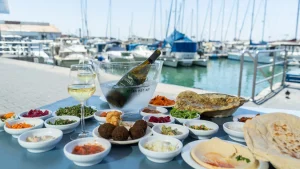
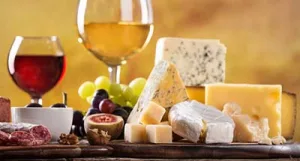
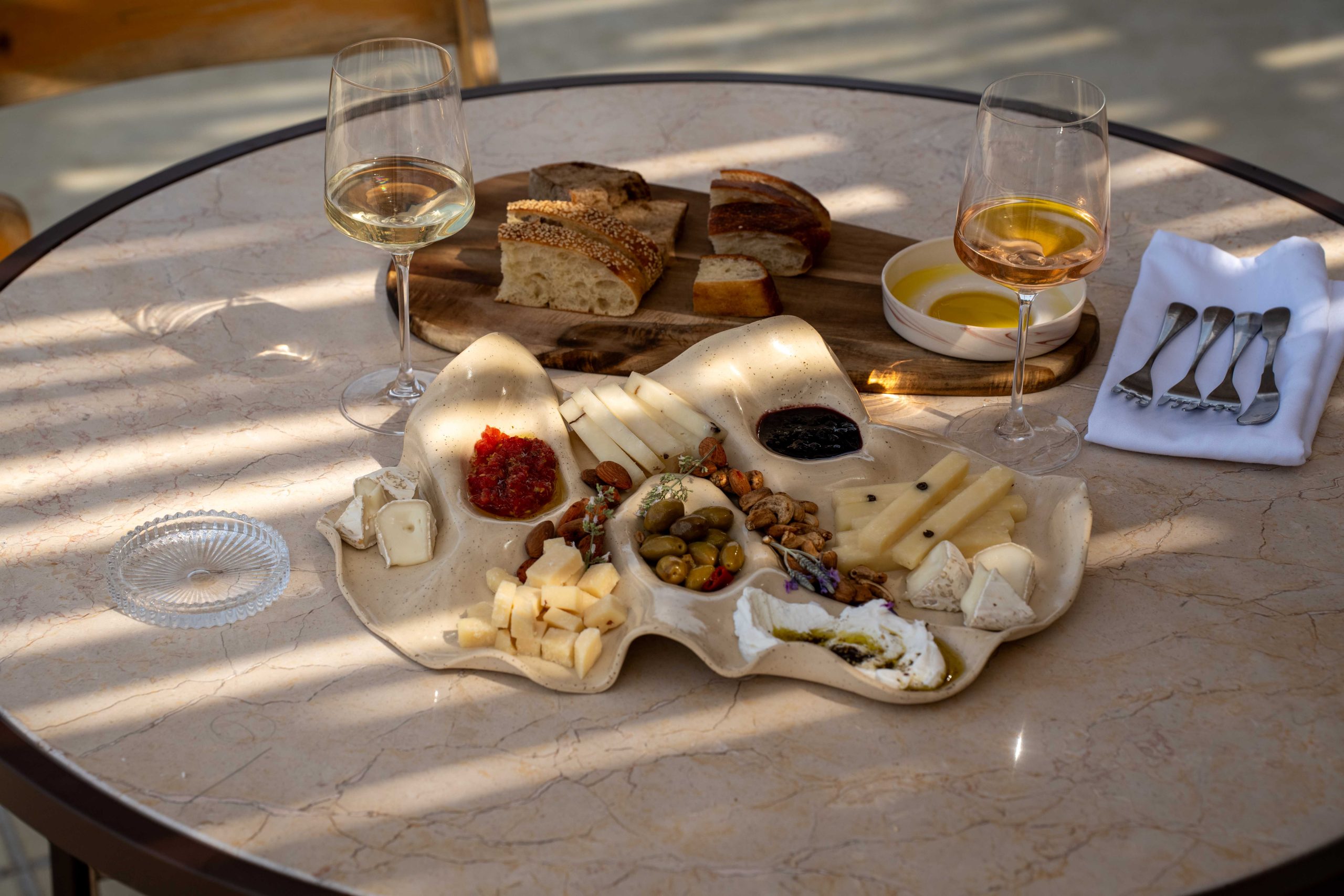
Doing it right like other wineries is not good enough. An example is the platters he uses to serve cheese and vegetables with the wine. Each plate is an individual creation, handmade into different wavy shapes, with compartments for the different foods, up to the point they can’t be stacked as normal. The pottery cups have the winery logo stamped on the bottom. You can’t see it unless you look, but perfectionism has no bounds.
As for the wines, the winery produces 70% whites and roses. This is a sign of the times and the trends. The main feature of the vineyards is the westerly winds that come from the Mediterranean. These are constant, so he names his wines after different winds. There is Zephyr, Levanter and Sharkiya and thankfully he explains them on the labels.
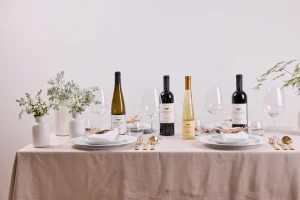
We started on the rooftop with his Sauvignon Blanc 2025. It was fresh, tropical with good aromatic notes. Refreshing. I then tasted his Zephyr Rose 2025, delicate salmon pink, made from Cabernet Sauvignon and Syrah. It was fruity, fresh and delicious with a real presence in the mouth. The most unique wine is Levanter Blanc de Noir 2025. This is unbelievably made from Cabernet Sauvignon, harvested in July. A red grape treated as though it was a white. The wine had the palest onion skin tint and has fruit with a pronounced herbaceous character. It was mouth coating, yet light, with good length. An original and rather enticing…and it works! In a world of sameness, it is a blast of sunshine. Unfortunately, he does not have much of it.
The main red is Sharkiya 2023, a blend of Cabernet Sauvignon, Syrah and a little Petit Verdot. It was very fruit forward, fresh (note how often that word is coming up), vibrant, showing excellent drinkability. Finally, we tasted the Petit Verdot 2023. It was restrained, slightly austere and elegant with a solid fruit core through to a long finish. I loved it. The Petit Verdot and Blanc de Noir were my favorites.
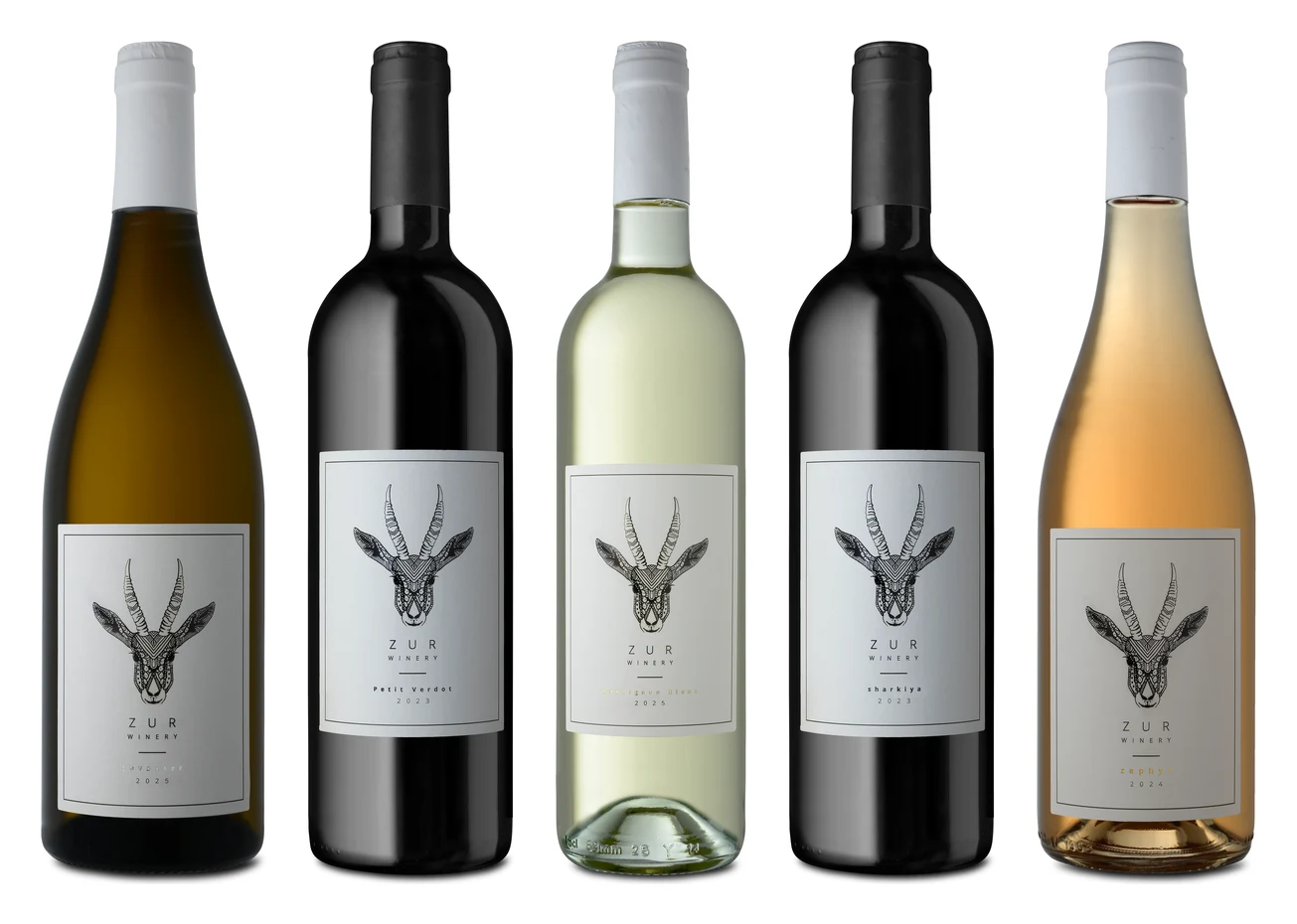 Photo: Eyal Keren
Itamar Aviran credits winemakers like Eran Pick MW (Tzora Vineyards), Golan Flam (Flam Winery) and Eran Goldwasser (Yatir Winery) as role models. He is flattered they show interest, and is bashful to be considered a winemaker alongside them. However, they, along with wine expert Yair Haidu of Cheers, are not shy with compliments, and offer support and encouragement.
Wine is an expression of a person and a place. And here we have a new winery in our midst, making wine in the center of country with quality, character and imagination. I think we will be hearing a great deal more about Zur Winery in the future. On the surface you have Itamar Aviran, a nice enough guy who likes pottering in his vineyard. Peel off the onion skin and you find a determined, driven wine guy busy turning fanciful dreams into a focused vision and then fulfilling them.
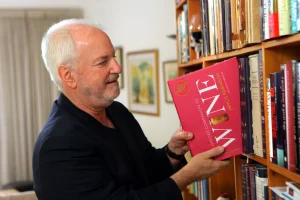
Adam Montefiore is a wine trade veteran and winery insider turned wine writer, who has advanced Israeli wines over four decades. He is referred to as the English voice of Israeli wine and is Wine Writer for the Jerusalem Post. www.adammontefiore.com