Usually, a wine writer writes about wineries and wines, but occasionally it is a vineyard the catches the eye. There are some famous vineyards in Israel, which shine like beacons because either the story, wine quality or the attention they generate. The El Rom vineyard on the Northern Golan Heights, the Kayoumi vineyard (in the early 2000s) in the Upper Galilee, the Shoresh vineyard in the Judean Hills, and the Nana vineyard at Mitzpe Ramon in the Negev are in this category. I recently visited what maybe the latest addition to the club.
Even Sapir vineyard will only truly become famous after a decade of special wines, but like a young promising lad going up to university, it has the looks, the uniqueness and the potential. The proof of the pudding will come in the tasting of the wines, but early signs are good. From an early pre-launch taste, the quality more than matches up to the standards expected. There are some impressive wines on the way.
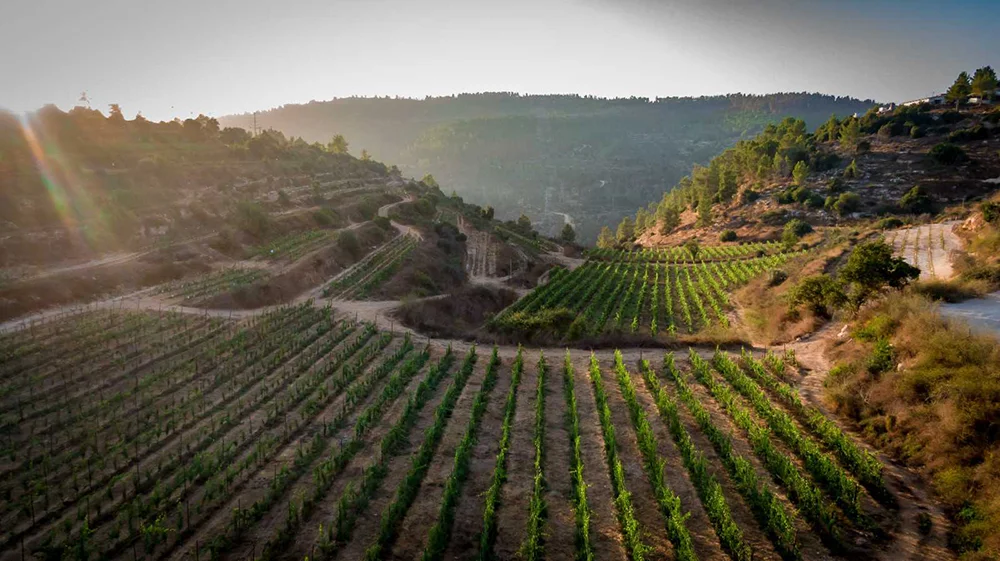
The Even Sapir vineyard is visually striking. It is situated high up in the Jerusalem mountains at 650 to 700 meters elevation. It is an amphitheater of terraced vineyards, with strips, blocks and rows of vines all with different aspects. The soil is very shallow terra rossa, on a deep bedrock of limestone. It is a mosaic of plots, all with different attributes, decorated by brush, garrigue, oak and olive trees. The vines have been planted to fit in the contours of the slopes, the stone terraces and the well-established wild flora that is present. Usually planting a vineyard is a destructive process. The land is cleared, obstacles removed but here the vineyard was not superimposed on nature, but fits in to become part of the ecosystem. It reminds me of vineyards I have seen in Cyprus and is no doubt one of the most beautiful we have in Israel. There is also a stone-built dwelling at the highest part of the vineyard, and a cave and the Ein Sapir Spring in the valley alongside. It has a mini, natural pool with steps that has the look of an ancient mikveh.
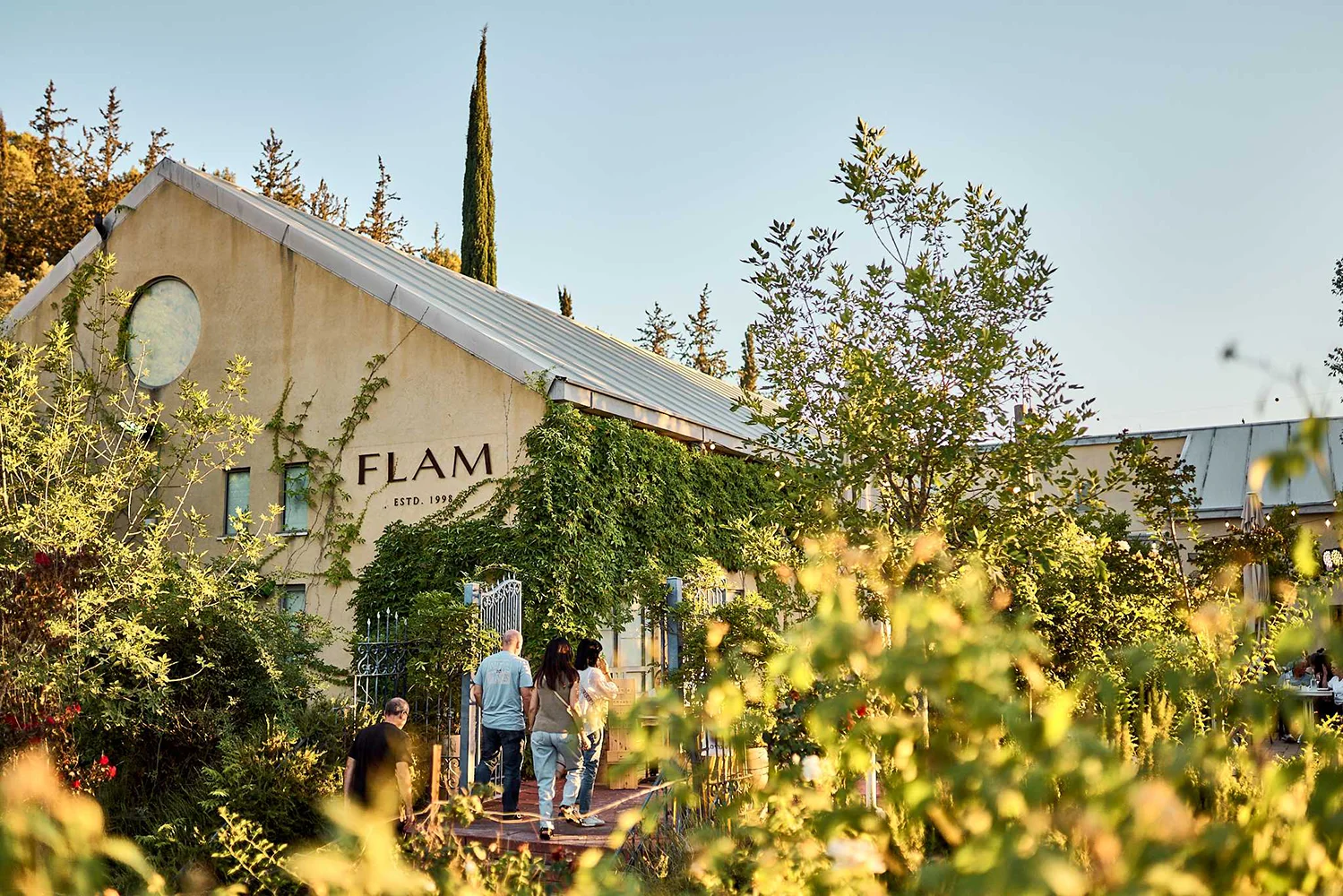
The vineyard belongs to Flam Winery and illustrates a change of direction by one of our finest practitioners of the art of fermented grape juice. Just because it is new to me now, does not mean that it was created yesterday. Wine is a process that occurs in slow motion. It takes an age for an idea to form, or a dream to become a vision and even longer to become a reality. Winemaker Golan Flam saw this site well over a decade ago. It was a forgotten, untended piece of land in the rough. Only the old terraces gave a clue to past agriculture.
The Judean Hills is choker block with vineyards, but real estate is more profitable. There is not much free land for a winery with an eye to the future. But Golan Flam had its own dreams. He saw through the wild, unkempt disguise and understood the potential, and in the nerve-racking negotiations, the winery was successful. They then used the skills and expertise of Noa Maoz, now viticulturist of the Israel Wine & Grapes Board, to map out a vineyard after carefully testing the soil and aspect of each plot, and it took three years to plant, from 2019 onwards. It is a particularly difficult vineyard to manage and I imagine is a nightmare to harvest, but hey, when you are reaching for the stars, they are mere inconveniences. Flam Winery now use the services of Avinoam Inbar as their viticulturist and Vincent Dupuch as their French consultant. These are local and international names from the top drawer.
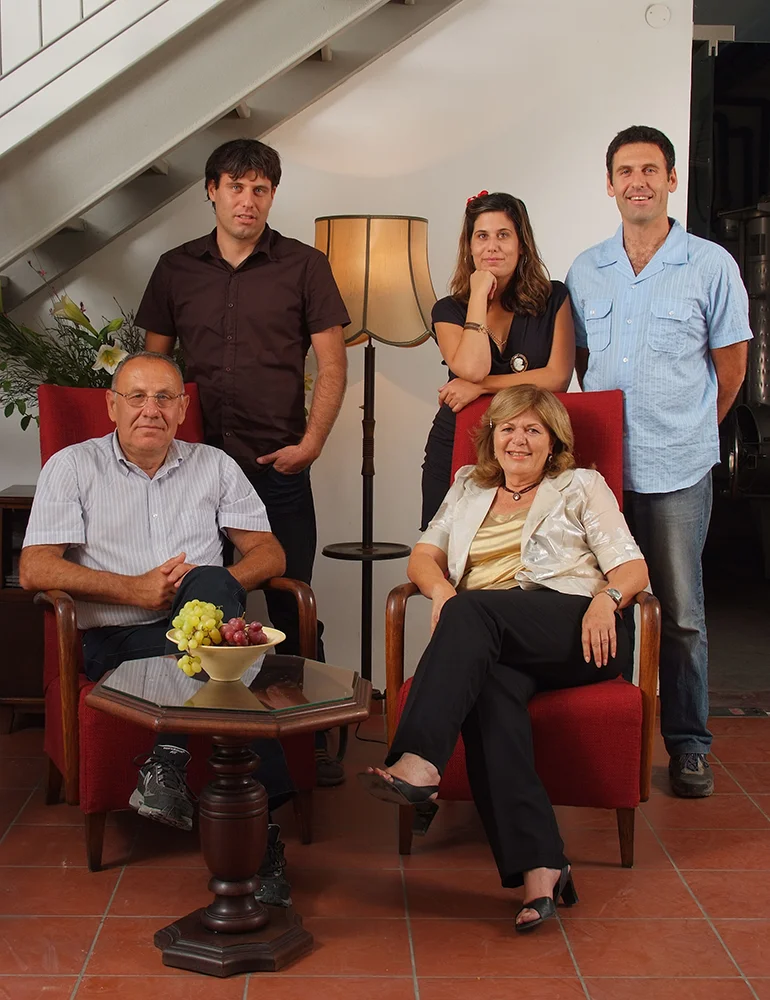
Flam Winery was founded in 1998 as a small boutique winery in Ginaton by the two brothers, Golan and Gilad Flam. They were practically born a bottle. Their father is Israel Flam, a legendary figure in Israeli wine who worked for 35 years for Carmel Mizrahi. He was initially head winemaker of Rishon Le Zion Cellars, and then in 1995 became head winemaker of the whole shebang. This included receiving 30,000 tons of grapes at harvest at Israel’s two largest wineries, Rishon and Zichron, and turning them into a myriad of products from Kiddush wine and grape juice, up to the finest Special Reserve, Rothschild, Private Collection or Single Vineyards wines of the day, which were in turn the leading labels during his time there. For the Flam boys, the deep cellars, smells of the winery and dark corners were a playground which beckoned them in to a world of wine. It was a good start.
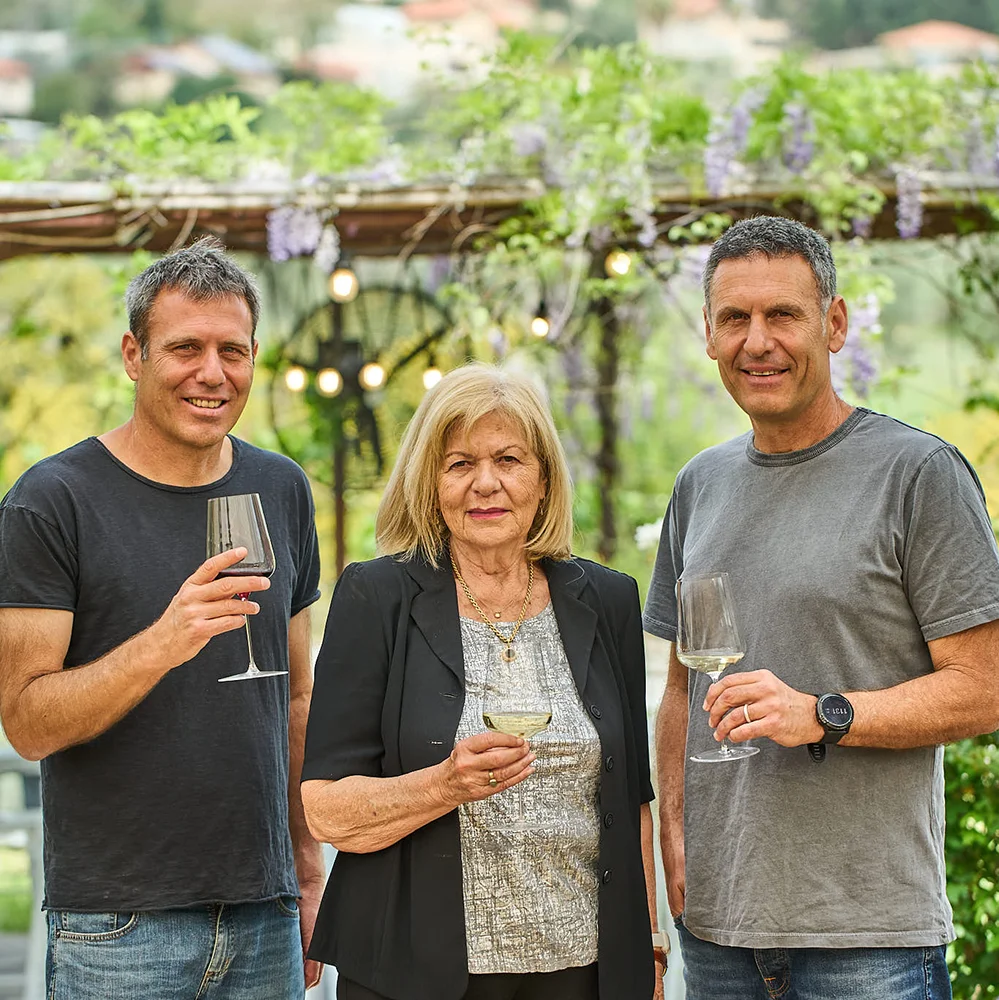
The boys had a secret weapon that has more or less been kept quiet for all these years. This is Camellia (Kami) Flam, their mother. She acted as a behind the scenes CEO, CFO and mother confessor. She prompted the idea of a family winery and then was the driver and the mastermind with the financial experience and the smarts, that led the way. She steered the winery, step by step, building image as well as infrastructure, and was the enabler allowing her sons to reach as high as they could in terms of style and quality. You would think the financial controller would skimp and save, but building a quality winery needs image and not only quality, but a perception of quality. Kami Flam understood this and walked the tightrope with great skill to give the boys what they needed, whilst ensuring a sound financial base. She is firm yet clever, savvy and streetwise. Furthermore, she decided the boys would be in the sunshine and be the face of the winery. So, she stayed behind the scenes to an exaggerated extent and as a result, has never received the credit she deserves.
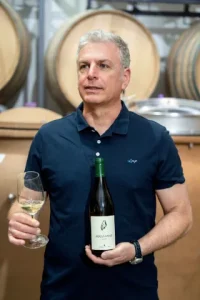
Golan Flam was born in South Africa whilst his father was studying winemaking there and later spent early teenage years in California. The apple did not fall far from the tree. Golan went on a long trip to Europe with a stay in Bordeaux that lit a fuse. He then decided on his career direction. He graduated in oenology in Milan, worked at Carpineto, and had work experience in Australia. Italy had a deep effect on him. Golan is an Italophile. He absorbed the history and culture, was impressed by the influence of family and the importance of fresh wines with balance and elegance, which match well with food. He projects quiet strength and is a very talented winemaker. He knows what he wants to achieve. He can be quite taciturn, but put him in a vineyard and he is suddenly transformed, excited by every sign of wildlife or whiff of wild herbs. He is a man with a mission.
Gilad Flam is quieter, more studious and careful, as you may expect from an ex-lawyer. He has a natural aptitude for business management, is a very talented and stylish marketer, with a strong sense of aesthetics and an absolute attention to detail that you can see at every turn. A meeting between the brothers in Tuscany cemented the whole idea. They were on the same page together.
The troika, the mother and her two boys, went on to build a winery that now produces 180,000 bottles a year of some of the finest wines produced in Israel. There was a period when their sister Gefen was also part of the success, and their father does his share too. However, it is the Flam trio that have steered the ship for all the 27 years from 1998 until now.
And they did some very smart things on the way. They founded an adjacent business. This was an import and distribution company called Hagefen. It was initially based on their Italian expertise, but soon developed to a broader list of quality, interesting wines. They became partners in a specialist wine shop in Tel Aviv called Mano Vino, which has become a small chain; both these things were to flatten out the risk.
They joined the Judean Hills Quartet, a consortium also including Domaine du Castel, Sphera and Tzora Vineyards, designed to market the region at the time when identity and place were becoming more important. The latest initiative was to invest in Bordeaux. In partnership with Tzora Vineyards, they bought a winery, Chateau Tour du Haut-Moulin, in the Haut Medoc. The thought of Golan Flam, Eran Pick, Israel’s first Master of Wine and Dan Sheinman (both Tzora Vineyards) working together is a mouthwatering prospect. They are a formidable winemaking team. With apologies to the late and great Leonard Cohen, first they take the Judean Hills, and then they take Bordeaux!
Flam Winery began by seeking fruit from the Upper Galilee as was the trend at that time and filled in the gaps with grapes from the Judean Hills. From this they built a reputation. In 2005 they moved to a permanent home at Eshtaol in the midst of the Kdoshim forest. Flam Winery built their beautiful winery close to the border between the Judean Foothills and Judean Hills. Wine lovers flock there to sit on the patio, overlooking the vineyard, trees and wild flowers, for a glass wine, a slice of cheese, a breath of nature and a feeling of Tuscany in the heart of Israel. Flam Winery were one of the first to change their visitors’ center, not once but twice, to lead new trends in wine tourism.
During this time the wines gained third party recognition at the highest level. Classico was the high quality fruit forward entry level, along with a fragrant white and crisp rose. It became a must list wine in Israel’s leading restaurants. The varietals of Cabernet Sauvignon and Merlot were the meat and the elegant, depth and complexity of the prestige Noble, with great potential for cellaring, was the cherry on top of the cake. One of the finest prestige blends in the country.
As they went on, they delved more and more into the Judean Hills. The fruity, spicy Syrah and the premium Camellia (a Chardonnay based white in homage to their mother) showed the potential of Judean fruit. The flirting with Givat Yeshayahu began in 2011, and believing in the terroir, they began to plant more vineyards. In 2022 they put their fingers in the soil by purchasing a meshek (farm) at Givat Yeshayahu. It is proving to be a sub region of quality and originality. All this while Even Sapir was taking shape. Now the road to Judea is open and the conversion is complete.
The winery is like a weathervane, giving an advance sign of changing trends. They started as winemakers. Choosing to work with a good vineyard and a compliant grower, and giving instructions. Hoping for the best. Now they have taken their fruit into their own hands. They manage and look after their own vineyards. They have become farmers and vignerons, literally growing wine. Varietals will a thing of the past, as a sense of place and local identity will be more important. The future will consist of blends exclusively from Even Sapir, Givat Yeshayahu and Eshtaol vineyards. Their very successful White Label blend which was one of the Wine Spectator’s Top 100 Wines of the Year was a signpost to the future. This is a winery that produces wines from farm to table, or rather from vine to wine. This is the essence of family winemaking, with a focus on a person and a place.
Photos: Elad Barami
Adam Montefiore is a wine trade veteran and winery insider turned wine writer, who has advanced Israeli wine over four decades. He is referred to as the English voice of Israeli wine and is the Wine Writer of the Jerusalem Post. www.adammontefiore.com