



I myself am partial to a good Malt Whisky. I was weaned on the sherry cask whiskies of The Macallan, and I have my favorites which I drink in thistle glasses with a drop or two of mineral water to bring out the aromas. These are whiskies to savor over an evening or to share with like-minded friends. Sharing the experience is always more satisfying than drinking alone.
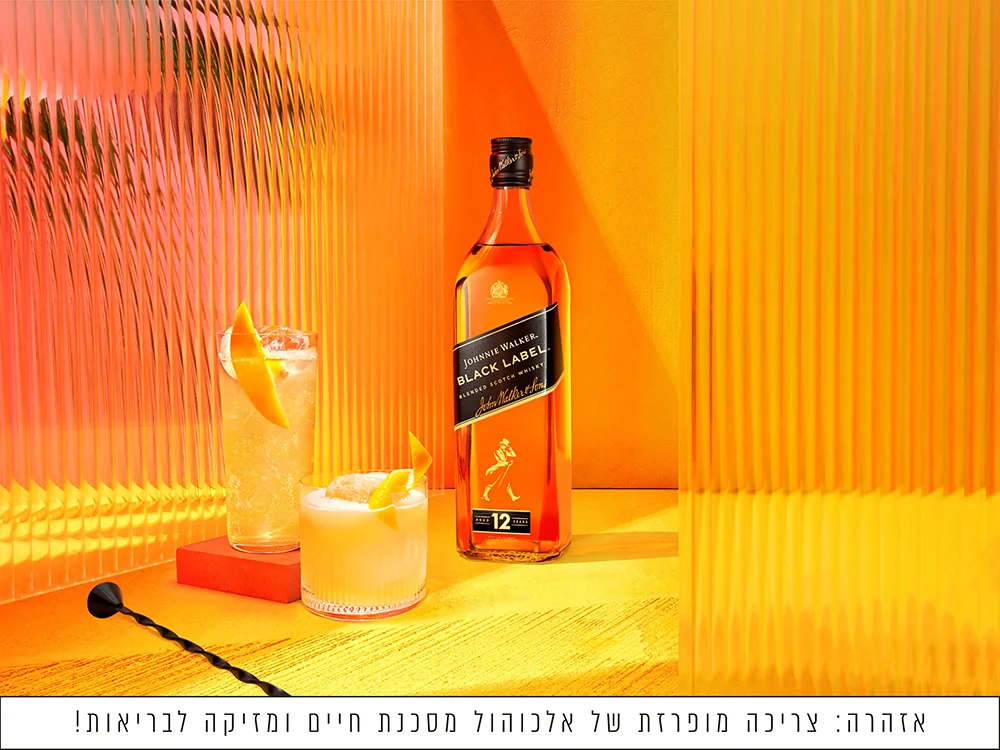
However, there is also the pick me up whisky, at the end of the day, which is a totally different animal. For this I am wedded to Johnnie Walker Black Label. I usually drink it in a tumbler with ice and water. Johnnie Walker is an aged blend, and though big volume normally means reduced character, rounder edges (or brand = bland as an ex-owner of Bruichladdich Distillery used to say), I find Johnny perfectly satisfying and better quality than its popularity would imply…and certainly better quality than its main competitors.
The idea of having a whisky before dinner was a habit that our late prime minister, Yitzhak Rabin picked up in America when he was the Israeli Ambassador there. This got him called a drunkard in Israel. This was before there was any drinks culture here. Of course he was no such thing, but Israel was a wine and spirit backwater and had a primitive, puritan view to alcohol. Wine was for religious ritual and local spirits were too rough to gain a following. Rabin also used to appreciate wine; Yarden Merlot to be precise. He was once in explanation heard to utter the immortal words: “water is for horses.” Of course, coming from Britain, there were no such cultural restrictions for me. The pub was a meeting place like the coffee shop is in Israel today and I remember the whisky decanter sitting permanently on the sideboard.
The remarkable thing about Johnnie Walker was the marketing genius that defined this brand was implemented and put in place well over 100 years ago. The square bottle, then unique, was chosen in 1860. The idea of having an aged blend with an age statement on the bottle was a totally new concept. The famous slanted label was not the creation of some modern PR company, but was implemented in 1877. It is apparently at 24 degrees, and has remained so ever since. The striding man is again one of the most enduring company logos. This dates back to 1908. The association with colors is from 1909, when the Red Label and Black Label were introduced. Each of these decisions, were flashes of enlightened genius which have stood the test of time.
An unchanging label is usually a flag for a successful brand. The number one beverage brand of all time has to be Coca Cola. They have not done too badly. (Ironically CBC Israel, otherwise known as Coca Cola Israel, are the importers and distributors of Johnnie Walker in Israel.) In wine, those wineries that have barely changed labels with only the odd tweak, are usually the successful ones. Chateau Lafite Rothschild is arguably the most famous winery in the world. To celebrate the 150th anniversary, the new generation decided to make a small change to the label. A hot air balloon was added to the 2018 label to reflect modernity and adventure. However, it is so well integrated, that most would not spot that it was new.
The most famous Israeli brands like Golan Heights Winery’s Yarden and Domaine du Castel have not found need to change logos and labels every five minutes. Usually, a change of label represents a lack of confidence in the brand, a lack of quality, poor performance or all three. We also have the absurd notion that each new CEO or marketing manager likes to show they have effected change, and the easiest way to that is to change the label. We see this twitch so regularly in our local wine industry. Usually, it is not for the good.
Anyway, Johnnie Walker is a brand whose credentials were really created well before the idea of branding took root. It showed astonishing foresight and this is why it has held so strong until today.
Who was this Johnnie Walker? The man who became a legend was actually a most quiet, almost nondescript person and barely anything is known about him. Also, there is no accurate representation of what he looked like. John Walker was a grocer in Kilmarnock in East Ayrshire, southwest Scotland, who started in the trade as a teenager in 1820. Think of the word grocery today, and one thinks of the most basic essential products. In those days, it could also entail being a wine and spirit merchant, whisky blender and tea blender. John Walker was in fact teetotal, but later sold whisky blends and malt whiskies. Eventually, John Walker produced a whisky in his name and in 1856 John Walker & Sons Co was formed. Apart from this, he did not leave tracks. Who would thought his name was to become the most well-known throughout the world in the spirits industry?
Alexander Walker, the second generation, was the one who rubbed the genie’s lamp. The square bottle and slanted label were decided on his watch and the brand became known as “Old Highland Whisky.” These were marketed in three levels: Old Highland, 5 year old; Special Old Highland, 9 year old and Extra Special Old Highland, 12 year old. Each had a color code, respectively white, red and black. It was only a small jump from these to the simplified names of White Label, Red Label and Black Label. The bottle, label and name until today are characteristics that distinguish and identify the brand. In 1893 the third generation, Alexander II and George P. Walker, purchased the Cardhu Distillery to ensure stocks of quality malt whisky. This again was a move way ahead of its time. You cannot ensure quality blends if you do not have guaranteed inventory of quality whiskies.
The striding man of the logo was the creation of cartoonist Tom Browne. Again, it was a stroke of genius. It suggested development, movement and aspiration. Moving forward and the slogan “Born 1820 – Still Going Strong” soon followed. A more recent advertising slogan: “Keep Walking” kept the man contemporary in modern times. Funnily enough the figure is a gentleman dressed in coattails and a top hat, but there is nothing identifiably Scottish about him at all. He is more dapper British Empire, than Highland Scottish.
When the Old Highland Whisky was renamed Red Label and Black label, the brand was strong enough to survive the problems at the beginning of the 20th century and was well placed to ride the crest of the wave when whisky really took off. The one thing that did not come from the family was the name. The family preferred the more stodgy, conservative John Walker, wanting to be loyal to the founder’s memory. The customers though had no such inhibitions. They began to call their whisky by the more familiar Johnnie Walker and in the end the company fell into line with the market. Johnnie Walker was born.
The first generation of the family was the founder, but the second and third generations took the brand forward in terms of volume and quality. They also had the smarts to concentrate on an export market long before their rivals. Johnnie Walker joined the massive and powerful Distillers Group in 1925. This was a company which had Scotch Whisky in the palm of its hand, though it came to be regarded as a ponderous, slow moving juggernaut over time. In 1986 Distillers was taken over by Guinness, the famous Irish stout brewery, and in 1997 Guinness merged with Grand Metropolitan to form Diageo. This is today the largest spirit company in the world with its head office in London. They are also the largest producer of Scotch Whisky and Johnnie Walker remains the pearl in the portfolio.
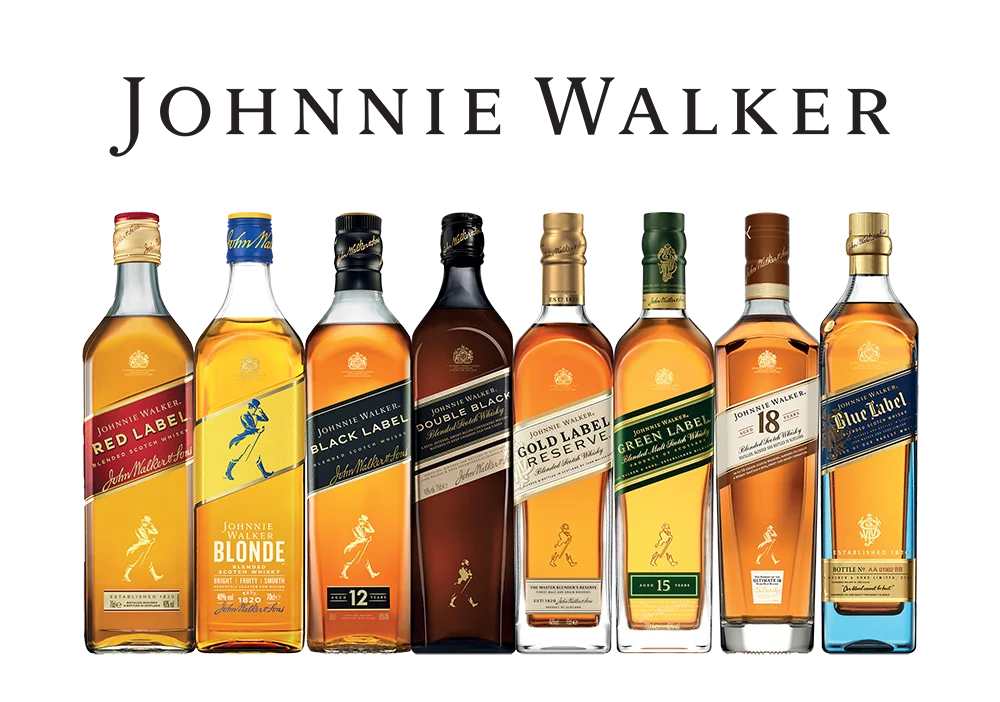
The core of Johnnie Walker is the Red and Black Label. The Red Label is a basic blended whisky, most usually enjoyed with a mixer. Since 1945 it has been the world’s leading selling Scotch whisky. Funnily enough it was less known to me. When I entered the drinks industry, Red Label was not sold in Great Britain. The price differential between the British and European market encouraged parallel imports. The Distillers Company had other options. So, during my time, Bells and Famous Grouse dominated sales, and Johnny Walker Red was significant by its absence. I only began to understand the power and breadth of the Johnnie Walker name when I came to Israel and began to travel more.
The Johnnie Walker Black Label is what I call a quality aged blend of grain and malt whiskies. The youngest whisky in the blend is 12 still years and there are some 40 different whiskies used to maintain quality and consistency. Its big competitor came to be Chivas Regal which had a Jewish phase of its story. Chivas Brothers started as grocers in the Aberdeen area. They created a quality aged blend called Chivas Regal in the early 20th century. Seagram purchased Chivas Bros in 1949. They were owned by the Bronfmans, a Canadian Jewish family. The legendary owner Sam Bronfman, with skill and panache, turned Chivas Regal into a global brand. His son Edgar took over the company and it became one of the largest spirits companies in the world. However, the third generation sold out, and the company was split up. Today Chivas Regal is owned by Pernod Ricard, a French company and the second largest spirit company in the world. In Israel it is represented by Tempo Beverages. Johnnie Walker is still owned by Diageo, and represented by IBBLS in Israel, part of the CBC Israel Group. Chivas Regal and Johnnie Walker go head to head, particularly in duty free, but I think Johnny Walker has the edge…but no doubt they are both quality products, each with their own following.
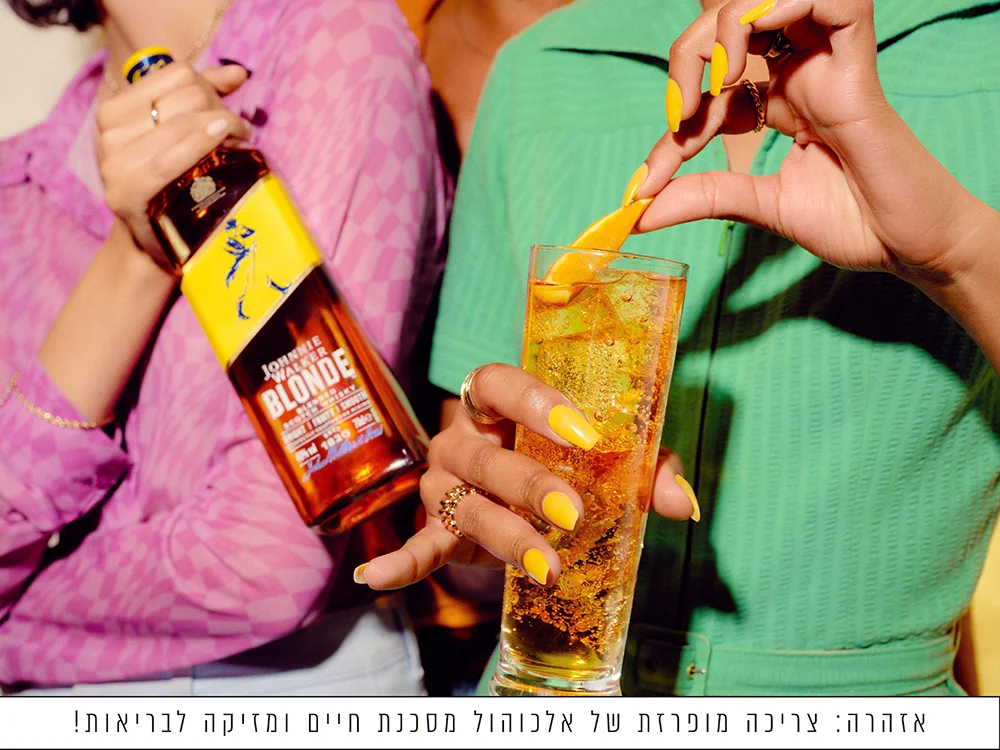
After barely changing over a hundred years, Johnnie Walker has capitalized on the premiumisation of the spirits market by expanding the range. Double Black is a more peaty version of Black Label. Gold Label Reserve, is a blend of over 15 malts and single grain whiskies. Green Label, 15 year old, is a blend only of malt whiskies. Then there is the Platinum Label, which has an 18 year age statement. The newest is the Johnnie Walker Blonde launched in 2020. It is lighter and fruitier, designed to be mixed. Everyone has a favorite dictated by taste and budget.
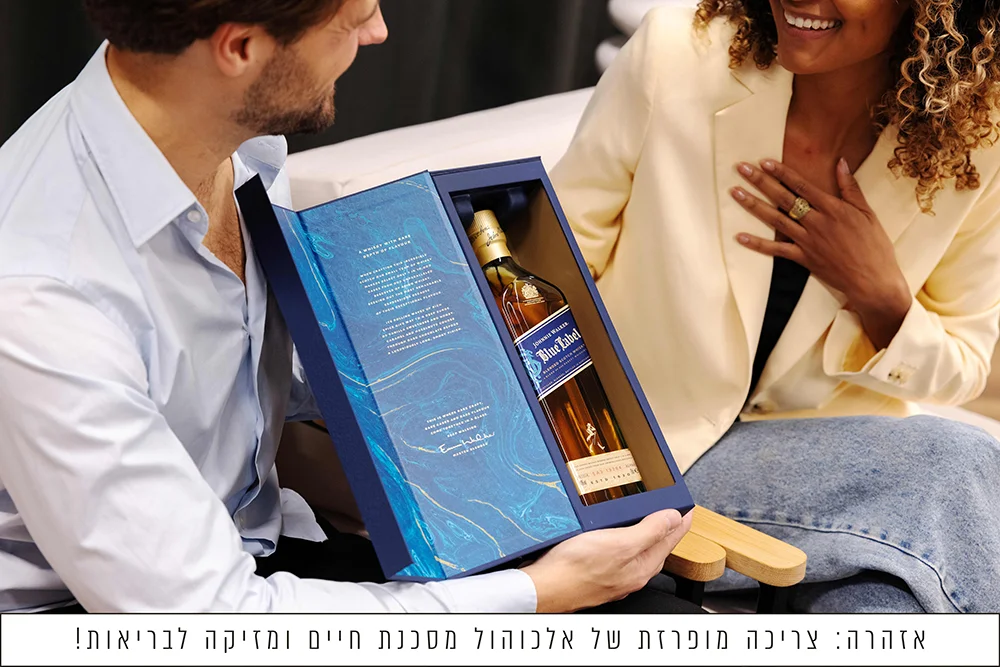
Finally, the Blue Label is one of the most expensive aged blends on the market, and what it has is status. I recently came a noisy group of middle-aged nouveau riche revelers in a hotel roof garden. There, they had brought their own spirits. Full bottles adorned the table, and the whisky was a highly visual statement in itself, Johnnie Walker Blue Label. Quality, price and status are obviously enhanced by the product which is a symbol of all three. Of course we were invited to join in. Status craves an audience. So, we joined in…and drank the Blue Label in plastic cups.
In their wonderful podcast “Intoxicating History”, hosts Henry Jeffreys and Tom Parker Bowles quote Christopher Hitchens as saying that Johnnie Walker was the favorite drink of the Iraqi Bath party, the Palestinian Authority, the Libyan dictatorship, and large branches of the Saudi Arabian Royal family! They describe how Johnnie Walker is almost seen as currency in India, and in the Near and Far East.
For those that want to learn more, I recommend the fascinating book “A Long Stride” by Nicholas Morgan, which tells the story of the world’s number one Scotch Whisky. Now I have completed this article, I am going to reward myself, in the words of Amy Winehouse, by going “back to black.”
Adam Montefiore is a wine trade veteran and winery insider turned wine writer, who has advanced Israeli wines for 38 years. He is referred to as the English voice of Israeli wine and is the Wine Writer for the Jerusalem Post. www.adammontefiore.com