

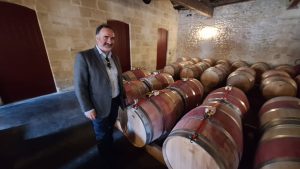
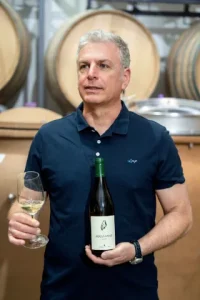


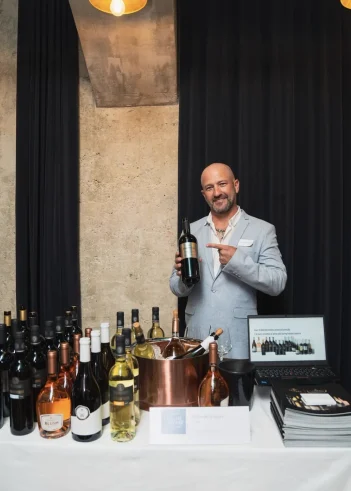
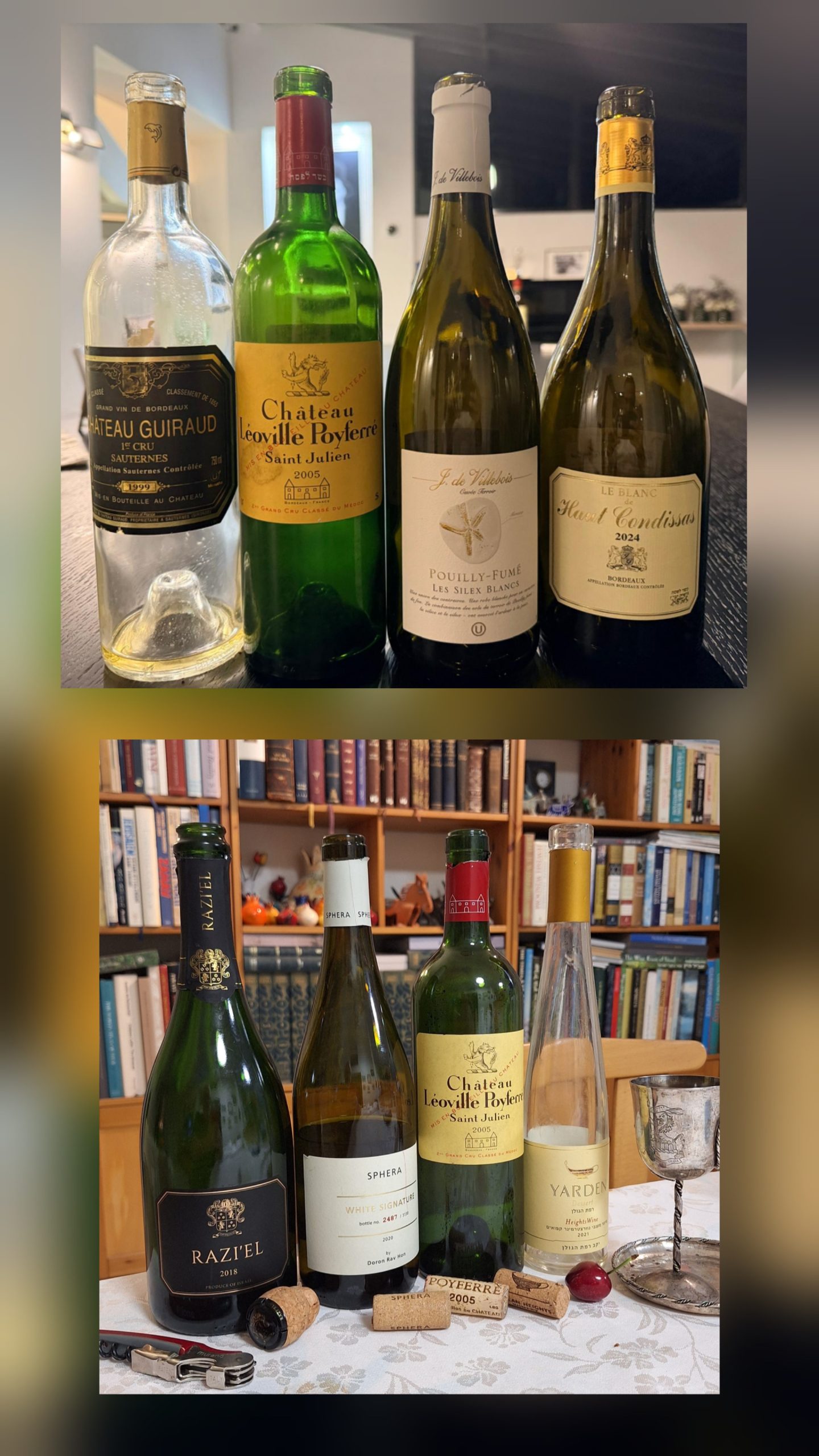
I recently was invited to a Shabbat meal in Paris by Menachem Israelievitch, winemaker of Royal Wine Corp. He generously opened a bottle of Château Léoville Poyferré 2005. Looking at the label it looks exactly like the regular wine. However, with your glasses on, looking closely at the capsule, you will discover it is a kosher cuvée. Furthermore, in the kosher niche, it is one of the best performing kosher wines in quality terms.
Three weeks later, we had a family meal on Shabbat and decided to drink something special. I chose the Château Léoville Poyferré 2005, the regular non-kosher version. It is a Deuxième Cru Classé (2nd Growth), but it is regarded as a “Super Second”, because it regularly outperforms the category. You would think same vintage, same wine; or was it?
The main difference with a kosher batch made in a non-kosher winery, is that parameters have to be proactive and decided in advance. The plots harvested earmarked for kosher need to be chosen so the kosher crew can be booked and activated when the specific plots are harvested. The barrels for the final blend are also determined in advance. The kosher barrels are the ones you have to make the kosher blend with. That is the sum of your selection. You can’t cross blend to fill gaps and enhance missing characteristics.
With a non-kosher wine, the decision-making process is retrospective. The plots are harvested according to when they are ripe and ready. In essence, different plots will be ready at different times. The wine is then fermented and later barrel aged. Only at the tastings plot by plot, barrel by barrel, is the decision taken what to use for the Grand Vin, or what needs to be declassified down to a second wine.
When the celebrated Château Valandraud from St Emilion, made a kosher wine, they explained to the Wine Spectator, that their wine was made from 40 vats, but the kosher wine was made from two vats. The kosher cuvée may not differ by much and it still can be high quality. It may even represent the character of the winery and local terroir. It carries the same label, the imprint of the winemaker, but even with the best will in the world, the kosher wine will not be the same. It can’t be.
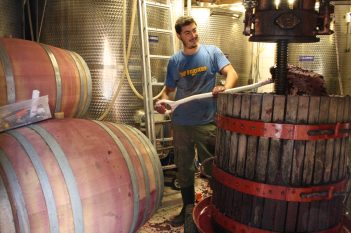
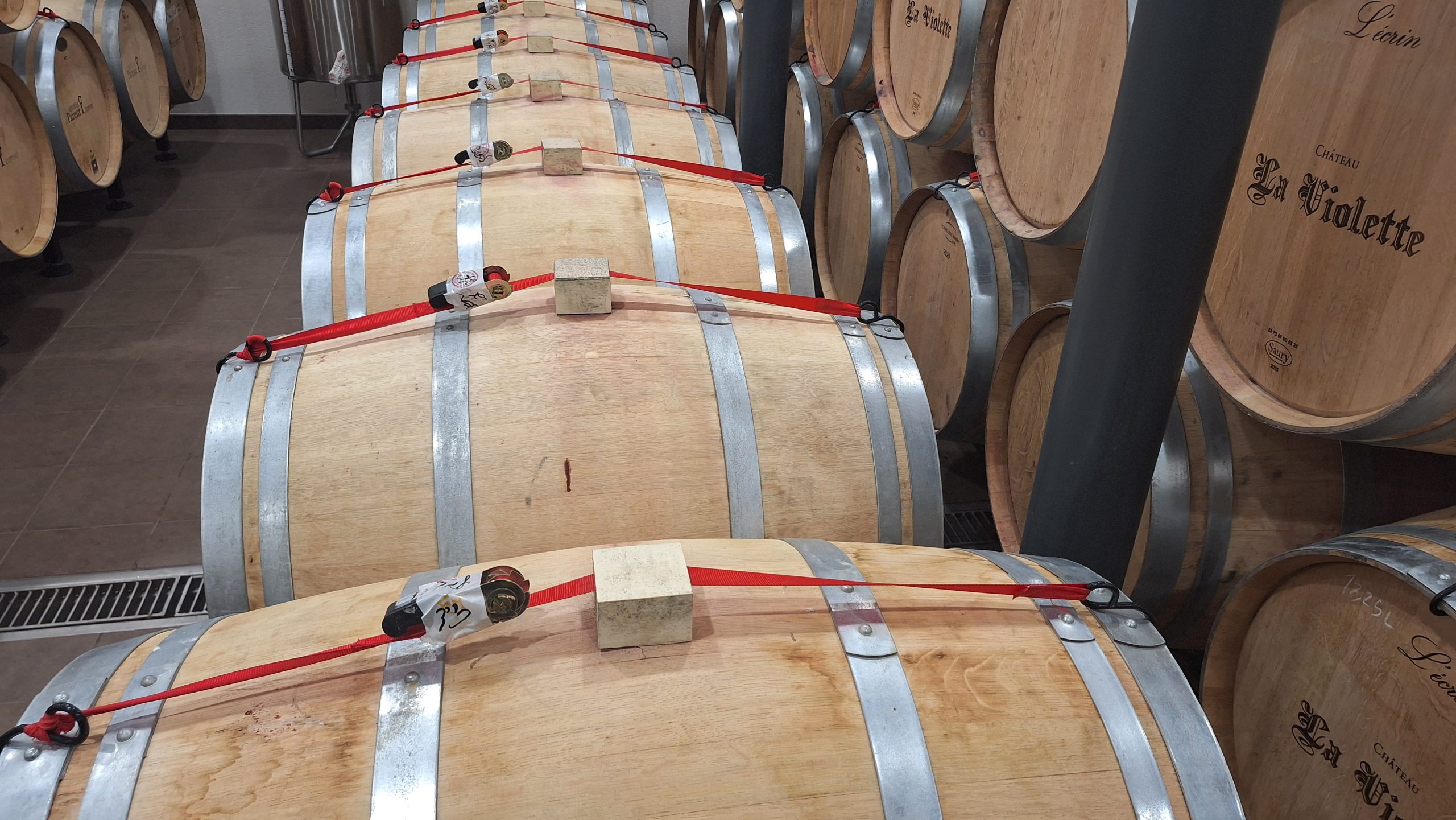
Kosher seems to be spreading through Bordeaux like a rash. More and more wineries are making kosher wine. In addition, some pretty big names take on the task of making kosher wines very seriously. Visit the wineries and you see the kosher tanks and barrels as part of the regular tank farm and barrel room. It is not like once when they were closed off by tarpaulins, padlocks and often you were not able to see them, without the man with a key. These days, there will be masking tape over the taps or bungs. There is a new system to secure kosher barrels, which looks like a red pair of braces, which can only be accessed by the kosher crew.
When I recently went to France, I enjoyed visiting a few wineries, all different and was interested how they cope with the kosher conundrum. Why make kosher? To some it was a healthy part of their sales. As sales are contracting, a niche market that does not undercut or override markets or compete with existing customers is attractive. To others it was the good price. Kosher wines are rarely cheaper than the non-kosher expression. I have heard it said it is important to make a wine everyone can drink. One was persuaded by the interest in the kosher category in America. Another even mentioned his own Christianity as being a contributing reason. Surprisingly, those wineries that make the jump into kosher production, are not discouraged by the restrictions or put off by the nuisance value. They very rarely backtrack being put off by the experience.
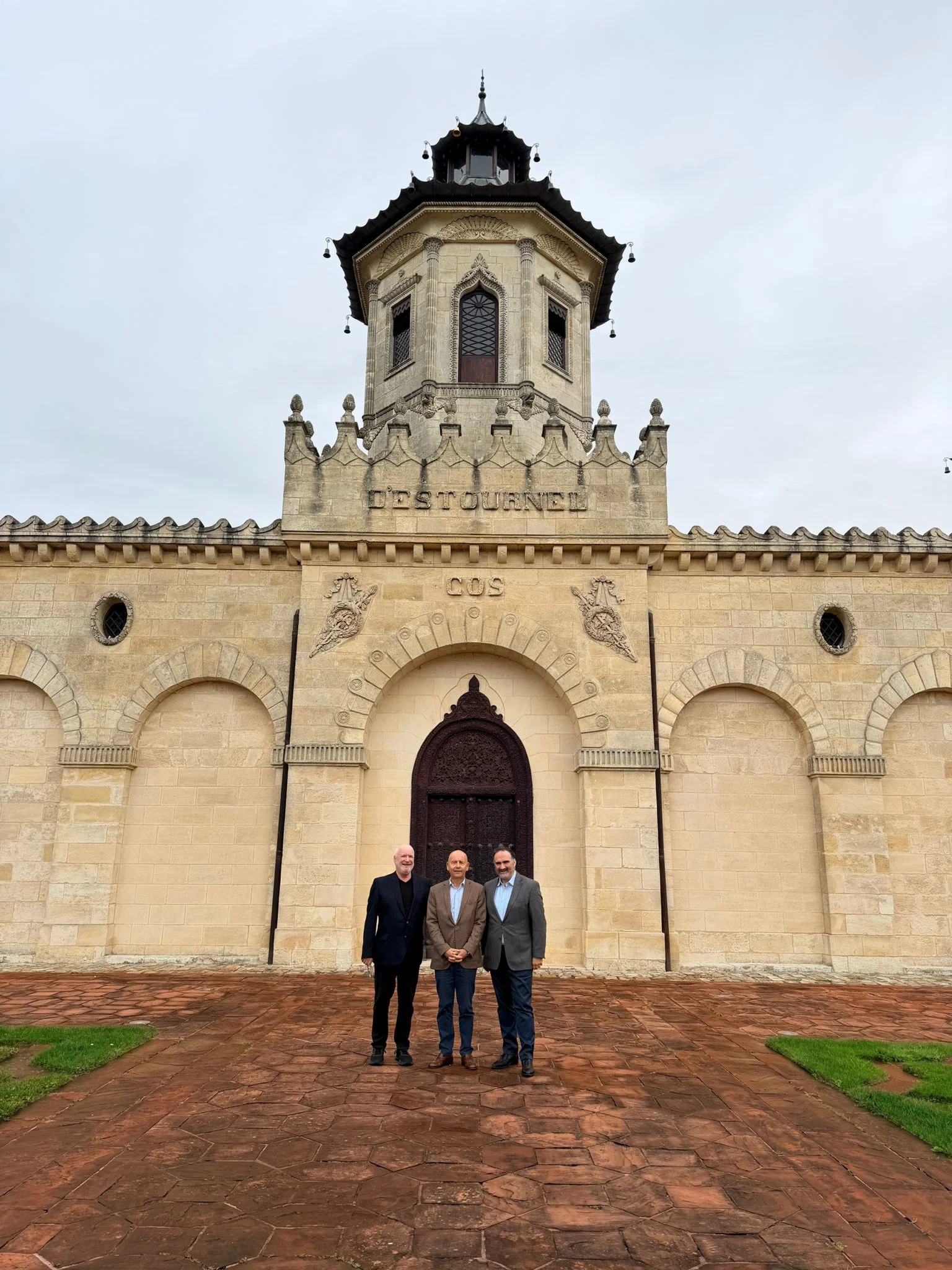
Let’s talk about leading names from different regions of the Haut Médoc in Bordeaux, starting with the more northerly appellation of St. Estèphe. Excitingly for the kosher consumer, there is a wonderful new addition to the kosher portfolio: Château Cos d’Estournel. It is also a Deuxième Cru Classé and is also regarded as a “Super Second.” The beautiful Château is instantly recognizable because of its pagoda turrets. Inside it is manicured in a regal, exotic way exuding style. The wine has a tradition of excellence. The Château Cos d’Estournel 2025 will be the first kosher cuvée and it will vie with the very best kosher wines on the market. For expedience, they harvested the Cabernet Sauvignon and Merlot together for the Pagodes de Cos 2024, the 2nd label, and co-fermented them. Once this was quite commonplace in Bordeaux. Now because of smaller quantities and the need to be a creative to make a quality kosher wine, they have chosen to do this. The kosher connoisseur will be salivating at the thought these wines being on the way. Pascal Chatonnet is the wine consultant of Clos d’Estournel. Amongst his other clients is our own Domaine du Castel.
Working our way south, the next major appellation is Pauillac, arguably the most famous. This is home to Château Lafite Rothschild, Château Mouton Rothschild, but also Château Pontet Canet. This is 5th Growth, but is also in the group of “Super Seconds”, performing just behind the First Growths. Pontet Canet is well known for pioneering Biodynamic wine practices in Bordeaux. They have a team of horses to work the vineyards instead of tractors, cow horns full of dung are buried in the vineyards and everything is as natural as possible. One winemaker once told me: “I don’t know if being biodynamic works, but it helps me feel better about myself.” Well at Pontet Canet it works, because since they started up this rabbit warren, the quality of wine has improved no end and prices have soared. Interesting they operate according to the lunar calendar, as does Judaism. There is a point of convergence there. The winery has to be seen to be believed and their devotion to their way is absolute. They even destem by hand and uniquely have a micro winery just for making the kosher expression in exactly the same way. Mathieu Bessonnet, the technical director, was open and friendly. There is nothing they will not do to absolutely follow the way they have chosen without compromise.
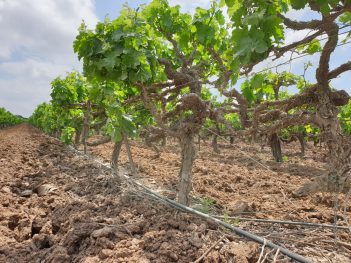
The aforementioned Château Léoville Poyferré is situated in St Julien. They first made a kosher wine way back in 1999. They have their own system of maximizing the potential of the kosher wine. They harvest as normal, but leave the end of all the rows untouched, because they ripen slightly later. These are then harvested separately allowing the kosher crew to build a blend representing the different plots.
From Margaux, there is Château Lascombes. It is a winery that was considered good enough to be a Deuxième Cru Classé in 1855. The chateau has now returned to family ownership and they lost no time in appointing a truly big name, Axel Heinz as estate director. He has a sterling record at Ornellaia and Masseto in Italy. He was generous with his time and fascinating with his answers to my questions. No doubt in my mind that Château Lascombes under new ownership and management is climbing high and fast. They have reduced production of the Grand Vin, identifying and returning to the best blocks historically, from the time of the 1855 classification (symbolized by the new excellent La Côte Lascombes – a single plot Merlot) invested heavily in the winery and thankfully dispensed with the blue lighting in the barrel room. Of the kosher expressions, the Chevalier de Lascombes is more fruit forward, the Chateau Lascombes more complex. Maybe the difference between a lunchtime wine and a dinner wine.
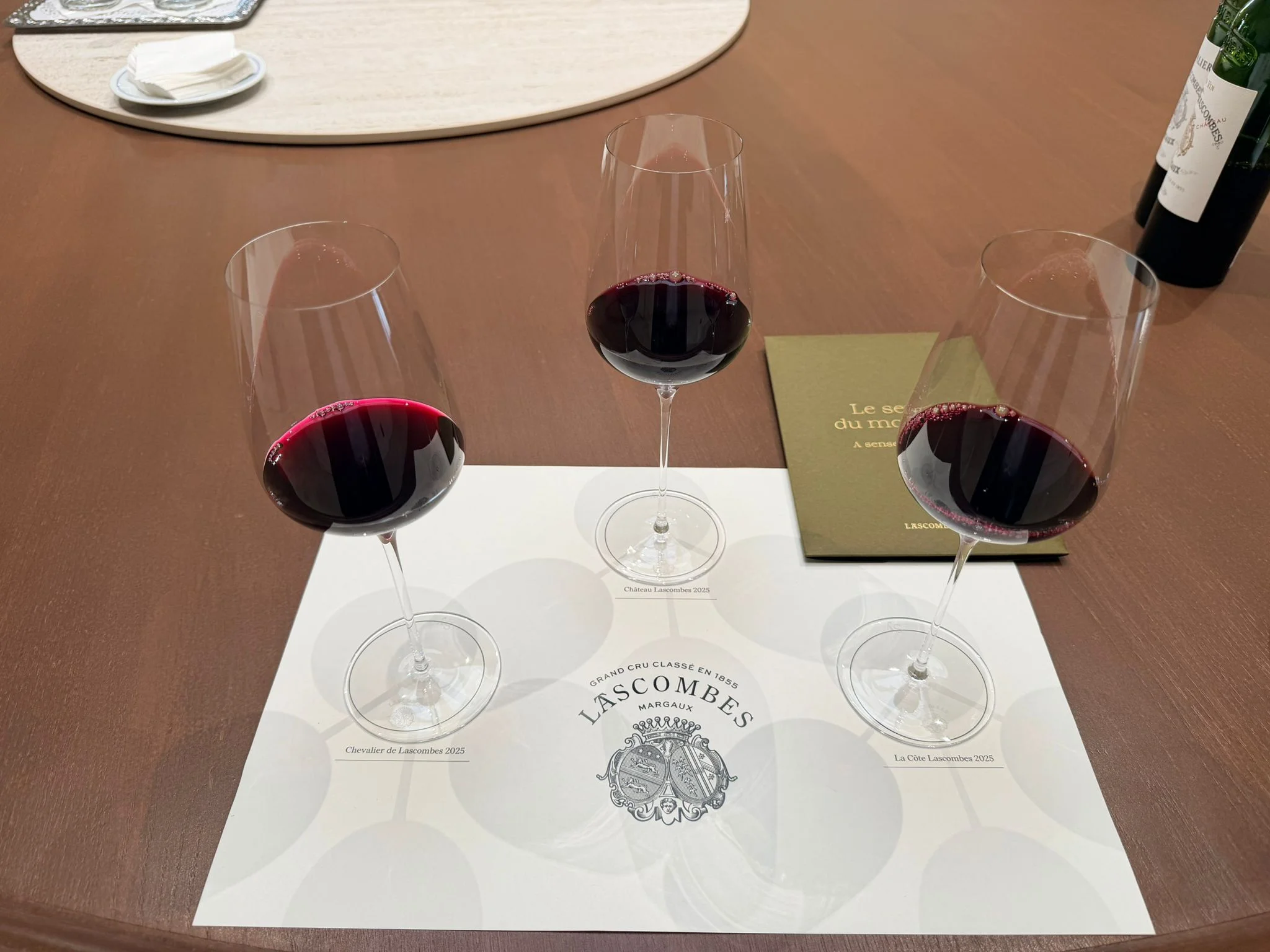
They first made kosher wine in 2015, and will continue under the new ownership and management. The blending of the kosher blend included the winery’s team tasting with Royal Wine Europe’s Menachem Israelievitch and also their external consultant. In this instance, it used to be the late, great Michel Rolland. It shows commitment and the importance to them of producing a kosher wine worthy of the name.
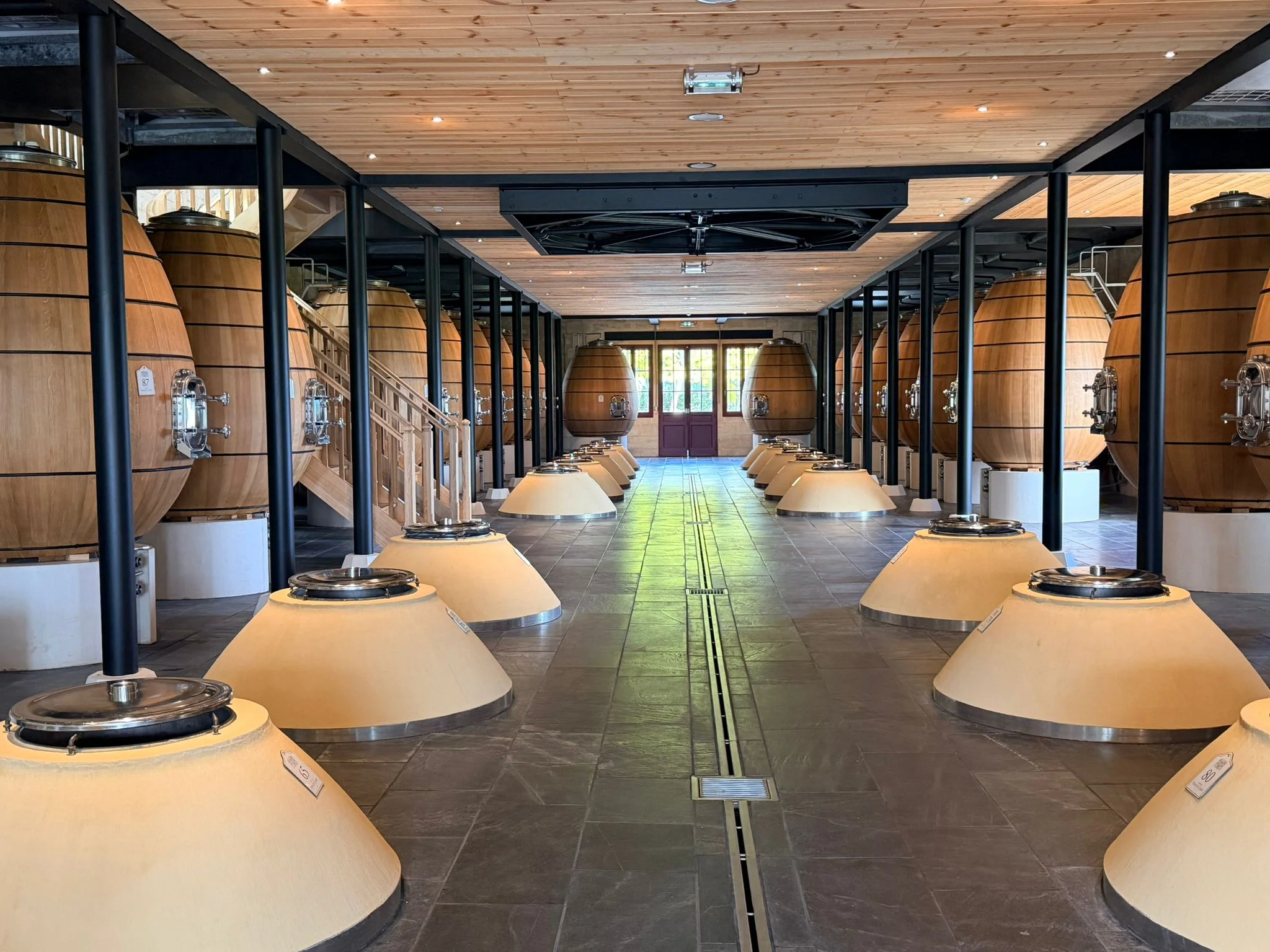
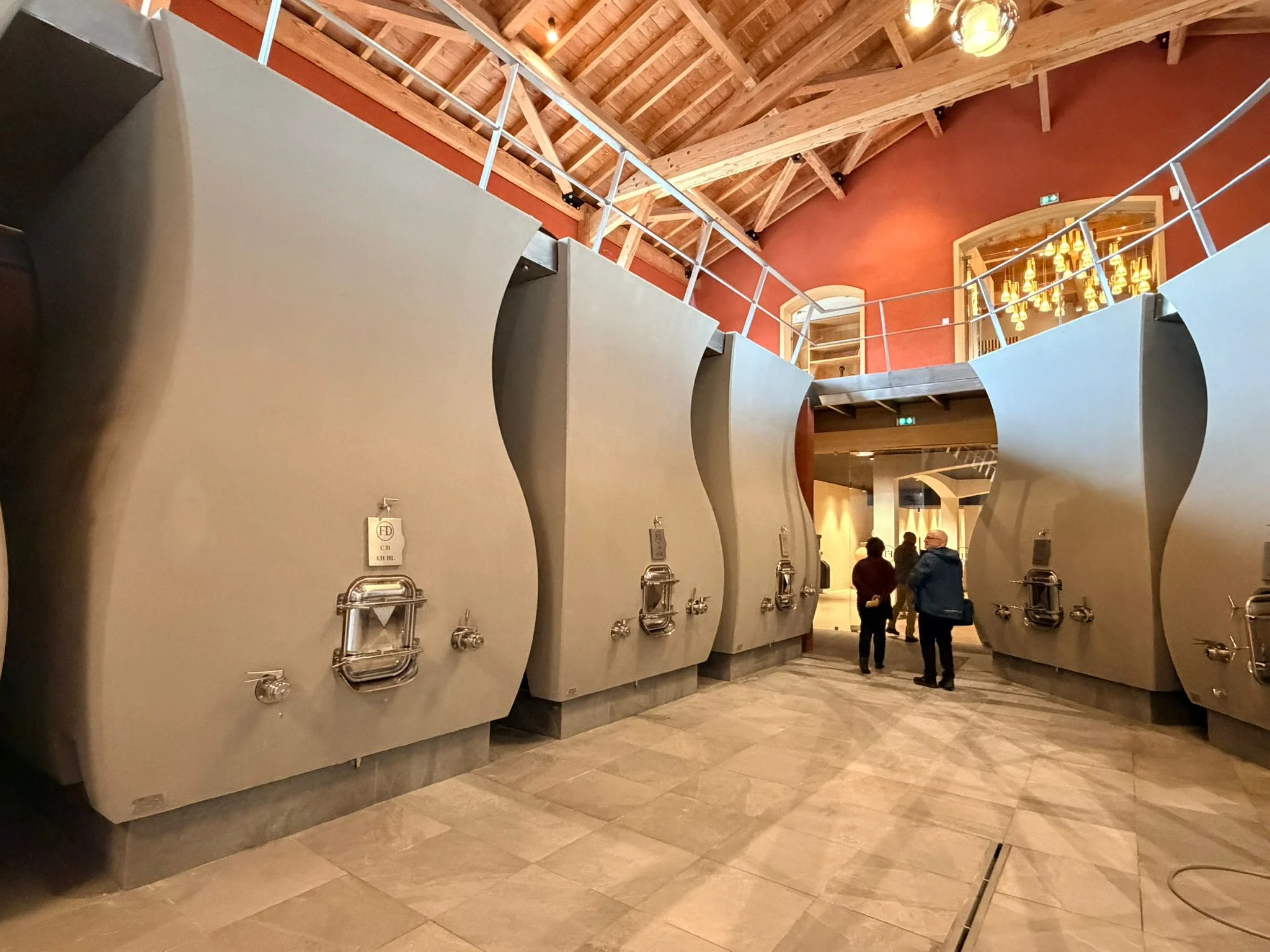
Then there is the appellation of Listrac in between Margaux and St. Julien, where Heritage Baron Edmond de Rothschild’s Château Clarke is situated. Château Fourcas Dupré is a very old winery. It was bought by new owners in 2019. Their interest is wine and tourism, they also own hotels. They have invested in a striking new state-of-the-art winery with tulip shaped concrete tanks under a wooden roof. A winery is no longer a factory making wine, but aesthetics, originality and visual beauty are also an issue. Here the number of tanks equals the number of plots. Amazingly, the original winery is preserved like a museum within a winery and a reminder of the long history of winemaking in these parts. The new owners decided to continue to make kosher wines which they made since 2003.
The calling card of the winery is value. Not every Bordeaux wine has to be in the stratosphere. We were hosted by the charming, enthusiastic and dynamic Lucas Leclercq. Château Fourcas Dupré exhibited a bright freshness and balanced elegance and the sister winery Château d’Agassac was more savory, with a light smokiness, but also was great value. Quite apart from that it is a good reference point for the Israeli owned Château La Tour du Haut Moulin which is not far away.
Then, nipping over to the Right Bank of Bordeaux; Firstly, to the beautiful St. Emilion. Château Bellefont-Belcier, a Grand Cru Classé, is a beautiful estate. Emmanuelle Fulchi, the oenologist, is a real role model, fascinating to listen to, with a succinct informative frankness and she is also very modest. They have beautiful and varied vineyards within sight, each with different soils and aspects. Here their secret power is tourism. It is a place to visit as they have beautiful accommodation, parklands, gardens and woods. The stable of wines includes Château Tour Christophe and Château Le Rey, as well as Château Bellefont-Belcier. All were good, showing typicity and drinkability as well as quality.
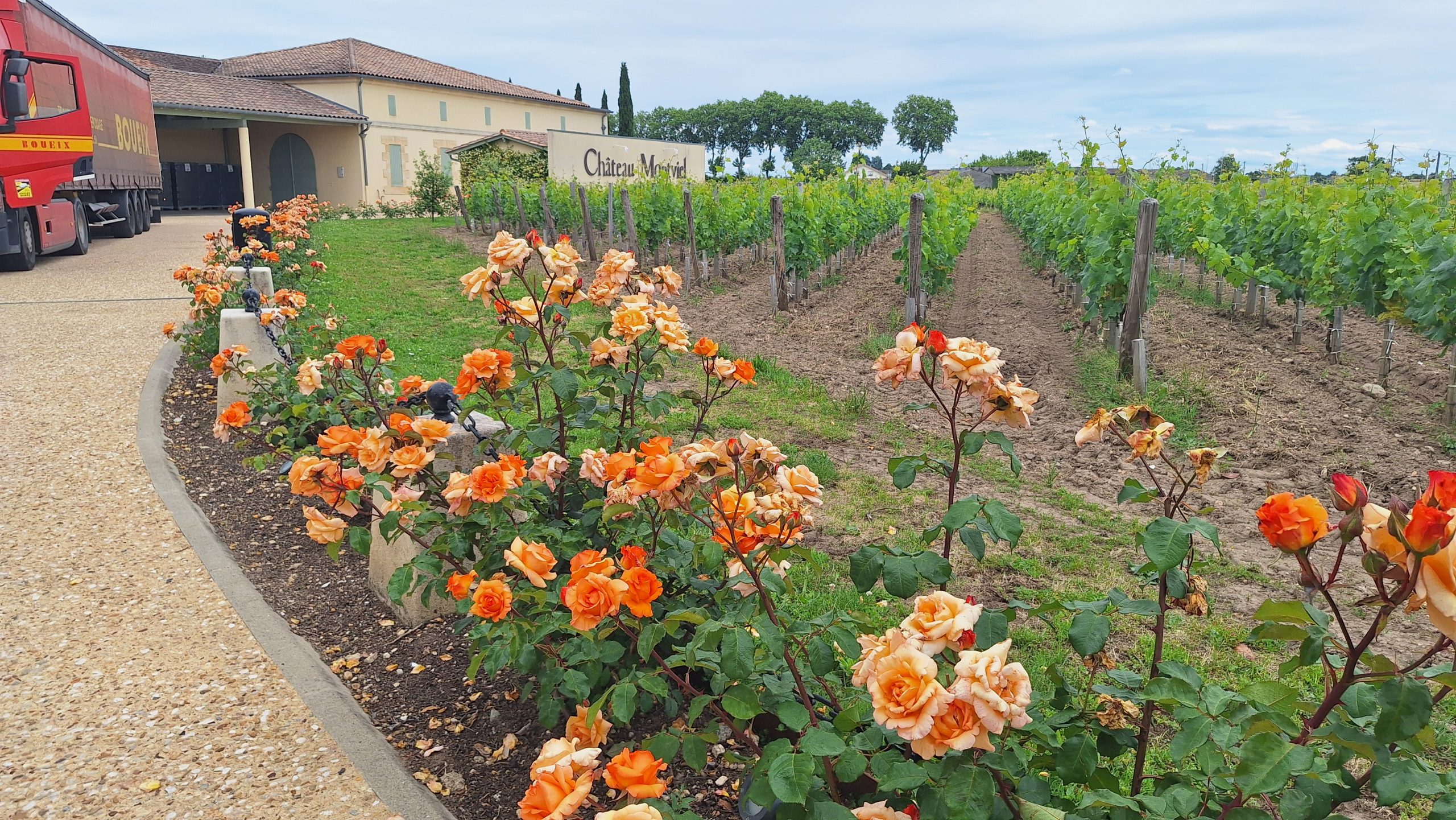
In Pomerol, everything is on a far smaller scale. Château Montviel and Château Le Gay are two wineries that were under the ownership of the irrepressible, late Catherine Péré-Vergé. It was lovely to meet her grandson, Henri Junior and to see how they preserve her vision and memory. There has been a kosher Montviel since 2002, whilst Le Gay is from 2022. Here the totally unique factor is that the rare, limited edition Chateau Le Gay (mainly Merlot, with a little Cabernet Franc) is barrel fermented! This is another place where Michel Rolland was heavily involved and worked his magic.
Back to where we started. Which Léovile Poyferré was better – the kosher or not kosher wine? The answer is both were a treat. Three weeks apart I could not say there were memorable differences. I would have to taste one alongside the other. I remember when kosher wines made in France were reasonably appalling. Today we are living in a golden age for the kosher consumer. The world’s most famous wine critic, Jancis Robinson MW once wrote that some of these famous Chateaux (mentioning Chateaux Pontet Canet, Léoville Poyferré and Malartic Lagravière (of Pessac Leognan) produce kosher wines remarkably similar to the non-kosher version. The previous technical director of Pontet Canet, Jean Michel Comme, perhaps summarized it best of all: “the (kosher) wine cannot be the same but it has to get the soul of the place.” I think most kosher connoisseurs and wine lovers will be happy with that!
Adam Montefiore is a wine trade veteran and winery insider turned wine writer, who has advanced Israeli wines over four decades. He is referred to as the English voice of Israeli wine and is the Wine Writer for the Jerusalem Post. www.adammontefiore.com