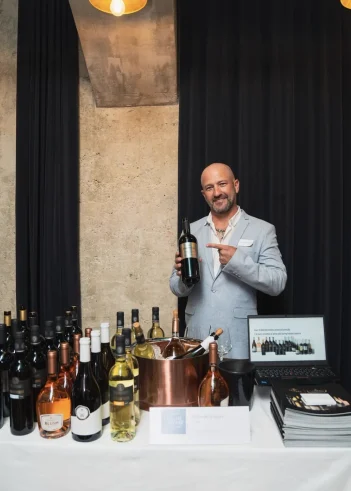
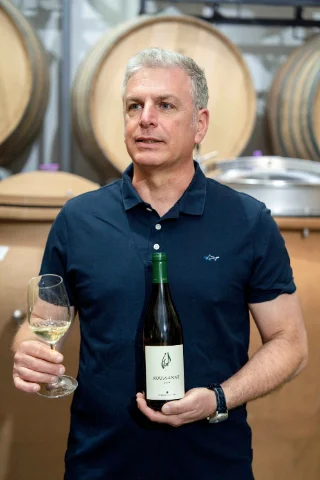
In the wine trade we celebrated Randal Grahm who was known as the Rhone Ranger in California. Well, Itay Lahat is Israel’s very own Rhone Ranger! His Lahat Winery has become a pioneer of Rhone varieties and Rhone style blends.
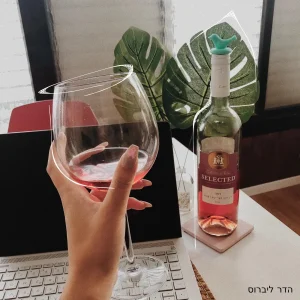
I am sitting here, finger punching my laptop whilst sipping Lahat Adom 2024. That is the name in English, not a Rouge or Red in sight. The wine has a faint chill on it from 20 minutes in a fridge. It is mainly made with Syrah, a variety that seems so at home in the Eastern Mediterranean and the Levant. Just so it is not alone, it has a splash or two of Cabernet Sauvignon which adds structure and a framework, but not too much. It has a juicy fruity nose, primarily of red fruit, but not in a jammy way. It has spice, peppery notes and is the opposite of a full-bodied wine but is not exactly light. It is full of content, interwoven like a braid, so that complexity, fruit, flavor and length intertwine. Yet, the result is a harmonious, well balanced, refreshing wine with great drinkability. It is the antithesis of the Israeli wines we have become used to. It is a wine that speaks Hebrew, or rather modern Israeli.
I have followed Lahat Winery since the first vintage in 2012. I have been to numerous tastings and heard Itay Lahat presenting his wines quite a few times. What I had not done is visited his vineyards and that gives an ultimate insight. See a vineyard and you feel you are climbing into a wine. Like peeking behind the curtains of a dressing room, you see everything. So, I invited myself to visit and drove up to the Western Galilee.
I was conscious of the terrible time the Galilee vintners have experienced since 7.10.23. During 2023-2024, they had to prune and harvest under fire. Visitors’ Centers were closed. Winery employees and their families evacuated. The danger raised its head again during the first and second Iran war. Galilee wineries merit special support. They have been through a very tough time.
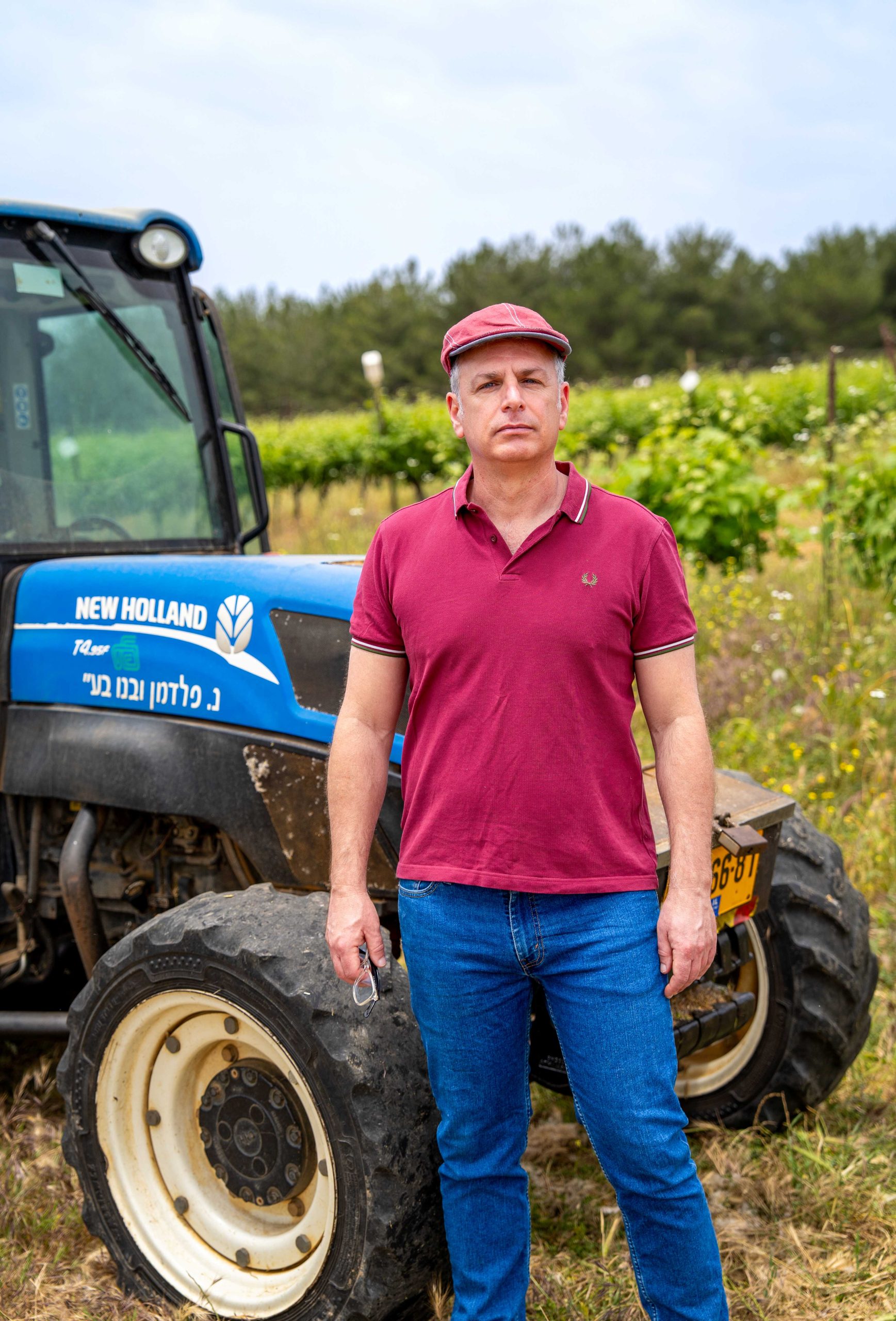
Lahat Winery was a start-up winery founded by winemaker Itay Lahat, which is already 14 years old. Lahat makes his wines at Kishor Winery, for whom he is also the winemaking consultant. It is no doubt one of our finest small wineries and the chef, Itay Lahat, is one of the more interesting and knowledgeable wine folk to talk to.
Itay Lahat’s first smell of wine was at Rishon Le Zion Wine Cellars as a teenager. With his friend Golan Flam (winemaker of Flam Winery), he would go and help out at the winery for fun and to earn a few shekels as a holiday job. Golan’s father, Israel Flam, was head winemaker of Carmel Mizrahi. Once he decided on a wine future, his wine career may be divided into four distinct stages. The first of which was as an enthusiastic newbie. He got a job working with working for the late Shlomo Cohen at the Israel Wine Institute in Rehovot.
There, they used to make experimental wines from different varieties and clones, and from different vineyards. The main weekly event was when the great and good of Israeli wine would come to taste, ostensibly in the interest of research, but it was more to talk and catch up with friends. The main people there were on the Carmel side of the map. From 1990-1992 I used to go to these tastings. Carmel’s Technical Director Freddie Stiller, Israel Flam (then head winemaker of Rishon), Koby Gat (winemaker, agronomist and wine educator) were usually present from Carmel. Winemakers Ed Salzberg (Tishbi & later Barkan) and Amram Surasky (Barkan, later Binyamina) were also there occasionally. Charles Loinger, the previous director of the Wine Institute was a regular, as was wine book author Mimi Ben Yosef, and Prof. Ben Ami Bravdo (professor at the Hebrew University and world-renowned expert in viticulture research.) I went along as the new boy from Carmel, then responsible for wine education in hotels and restaurants.
In my day the busy assistant was Sasson Ben Aharon. He went on to help Eli Ben-Zaken of Domaine du Castel in those crucial early days and later became winemaker of Efrat and Binyamina, and is now at Mony Winery. In 1992 I moved to the Golan Heights Winery. They were then already on a different plain. They did not go to tastings at the Israel Wine Institute. So, by the time Lahat took over from Ben Aharon in 1995, I was no longer a guest at these cosy tastings.
The beauty of this job for the young Lahat is that he met everyone and had an opportunity to learn about everything from the cutting to the final wine in the mini-micro-winery he managed. He came into contact with different varieties and regions, and rubbed shoulders with those who were then the wine establishment.
Lahat studied horticulture in Israel, and then oenology in Australia at the same time as Eran Goldwasser of Yatir Winery, and joined a young dynamic team at Barkan Winery. This was stage two: he began a promising career as an internationally trained winemaker at a very large winery. Under head winemaker Ed Saltzberg, there was Yotam Sharon, Avi Feldstein (then Segal) and Lahat. Quite a team! Itay Lahat’s job was to look after the vineyards as well as make the white wine. As such he got to know winemaking in the fast lane and gained expertise and familiarity with the different terroirs all over Israel.
Stage three was when he left the nest of corporate comfort, went solo and became a wine consultant from 2008. At the time it was a brave move. He began assisting a variety of small wineries from all over to fulfill their dreams of making wines of better quality. Those who did not know him wrapped within his Barkan cloak, soon heard about his ability, calm common sense and experience. He swiftly became considered as the number one wine consultant in the country and was greatly in demand.
Then with a hop, skip and a jump, we came on to the current stage, when Itay stopped making wine for others, decided to establish his own winery. For the first time he was making wine for himself. In 2012 he launched a white: Lahat Lavan, made from Roussanne and Viognier. It showed a direction: Mediterranean varieties, Rhone style blends from Israeli terroir. It was a wine that caught attention being a white where the focus was on texture rather than just aroma. As such it became a benchmark which showed the quality and direction of the new style of Israeli whites. Tzora Vineyards, Sphera and Shvo Vineyards were others in this mini revolution within a revolution. In 2014 he made his first Lahat Adom.
All this time he maintained his high profile. When not consulting, he was teaching. He became lecturer at Ben Gurion University amongst other venues and organized the Tel Hai College Cellar Master program for a number of years. This has been an ongoing way of giving back, of passing on knowledge and sharing. Lahat has always been a superlative communicator.
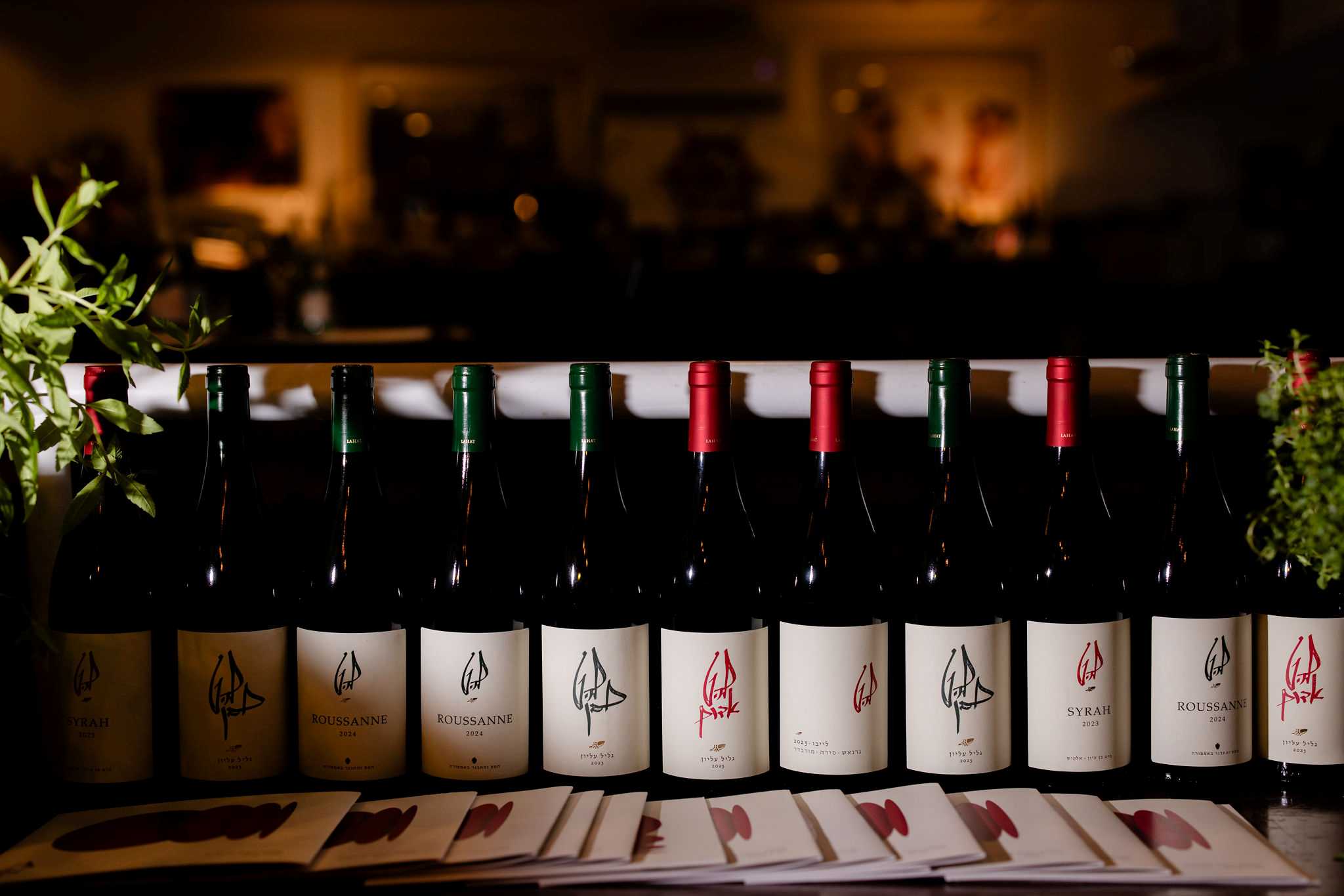
Lahat Winery reeks of authenticity and roots. The wines are vineyard expressions. Then you only have to look at the label. The calligraphy on the label, which looks strikingly beautiful in a Japanese style to me, is an artistic interpretation of a flame, the meaning of the word Lahat. The acorn on the label and capsule was drawn by his wife. It represents the oak trees adjacent to the vineyards. The original European family names on the side of both parents, Laichter and Leibo, are immortalized in the name of blends. In the beginning Lahat made wines in the Jerusalem hills and on the Golan, but through trial and error, gradually honing his art, he eventually focused on the Western Upper Galilee, west of Mount Meron. Being closer to the Mediterranean, the Western Galilee vineyards are windier with higher humidity, warmer nights and cooler days than the Eastern Upper Galilee.
The raison d’etre of Lahat Winery is based on a few principles. In his view Israeli Chardonnay will never be Burgundy and our Cabernet Sauvignon will never be Bordeaux. Therefore, he built his castle on Syrah and Roussanne and decided to focus on blends. This he confidently and prophetically told me quite a few years ago, was the way forward for Israeli wines. He believes in whites with complexity and content and fresh reds with fruit, easy complexity and drinkability. He has said by way of explanation, that he makes reds like whites and whites like reds. Wine is a product of a person and a place. Lahat wraps them together and says terroir of the place is enhanced by the personal terroir of the grower and winemaker.
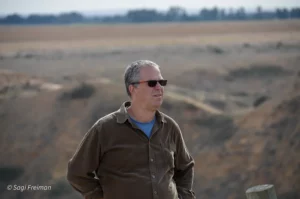
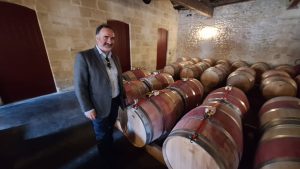
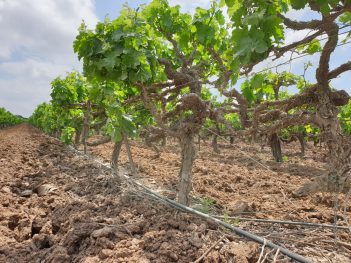
When I went to see him in his vineyard he was explaining to a Thai worker with an engaging smile about shoot thinning. He walked me around his Elkosh and Matat vineyards like a proud parent. His wines are expressions of these vines. Lahat Winery chose the Western Upper Galilee, in the foothills east of Mount Meron, at 600-700 meters above sea level to grow his wine. As such he became a frontline pioneer for the Western Galilee. Most wineries and vineyards are still concentrated in the Eastern Upper Galilee.
The Upper Galilee vineyards are amongst the most beautiful in Israel. Surrounded by oak and pine forests, it is a mountainous region of stony peaks and deep valleys. There is something positive about a winemaker in the vineyard. We always prefer the winemakers who are farmers or growers who do it the hard way, rather than beginning the process with grapes received at the winery.
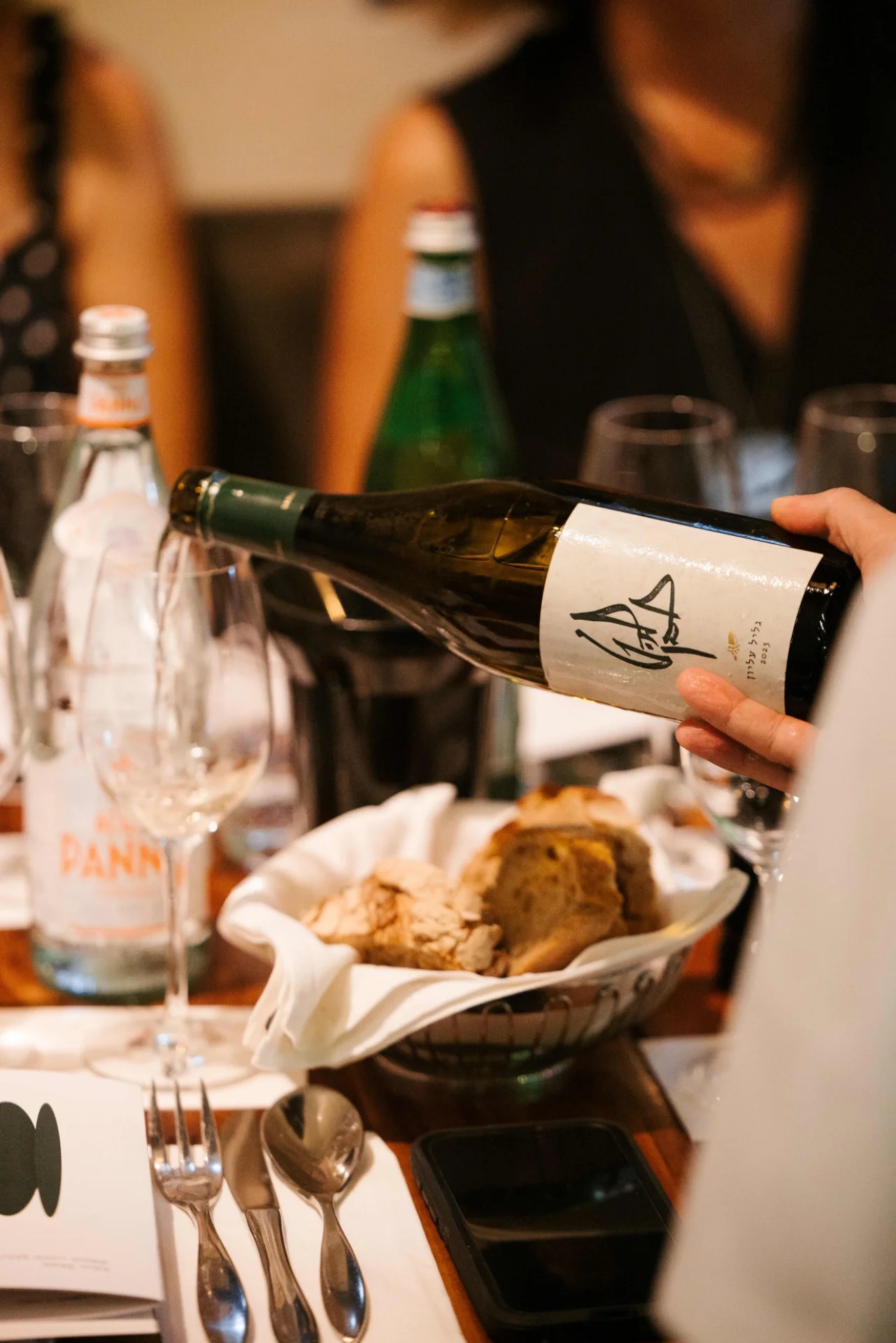
The marketing of Lahat Winery is supported by the most extensive, stylish and informative written material. A new catalogue is produced each vintage. Itay Lahat is a grower, winemaker, marketing manager and wine educator all rolled into one. He makes wine with the precision of a surgeon wielding a sharp scalpel. Everything is authentic, thought out to the nth degree and rigorously measured. His carefully sculptured wines fit into his vision. The precision viticulture and finely nuanced winemaking is supported by the written and spoken word. Everything is in sync and geared with great disciple and flair to convey the message and direction. The control of the marketing message absolutely reflects the style and perfectionism of an individual with an obsessive attention to detail.
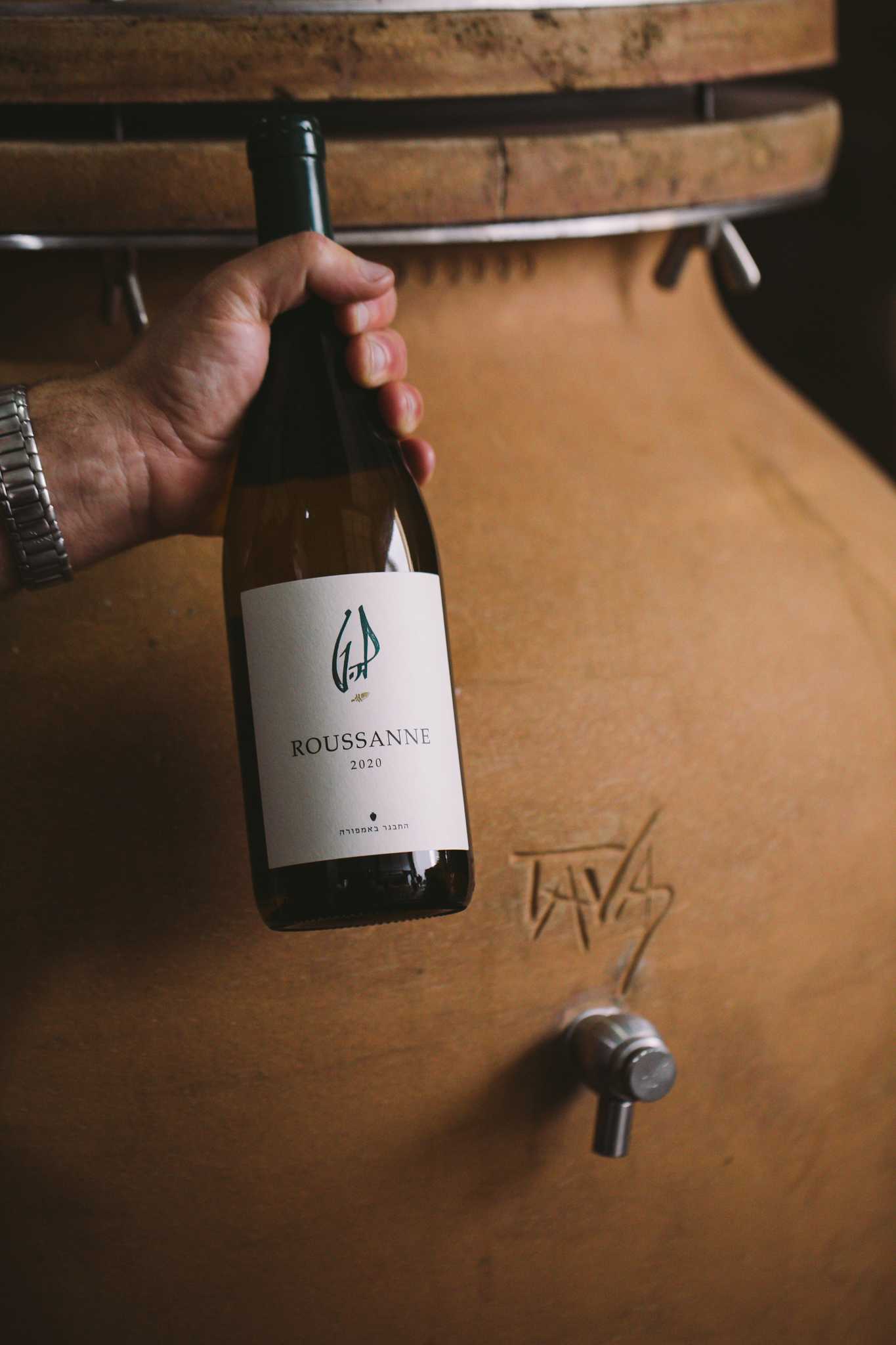
The wines are the aforementioned Lahat Lavan and Lahat Adom, respectively made from Roussanne, Viognier and Marsanne; and Syrah and Cabernet Sauvignon. These are the main commercial wines of the winery. There are two special edition whites: Lahat Laichter, made from Roussanne, Grenache Blanc and Marsanne; and a varietal Roussanne fermented in amphorae. The other reds include an enchanting Leibo GSM and a varietal Lahat Syrah. The whites are full of content, with tension, tautness and minerality, which have a capacity to age. The reds are relatively light, but not light in the literal sense of the word. They have fruit, spice, good acidity and great drinkability. The newest kid on the block is Lahat Garrigue Rose, which is about as far removed from a swimming pool rose you can get. As we walked in the vineyard, he pointed out some wild za’atar. “That’s garrigue he said” with a wink. The wine has a flavor-filled mineral texture. All the wines are gastronomic friendly. They are wines to enjoy with food.
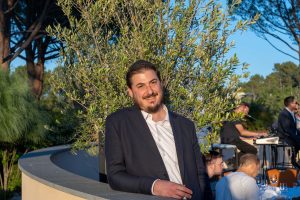
Itay Lahat himself is quiet, thoughtful, a deep thinker yet as up to date as tomorrow. He is debonaire, with matinee looks, always dresses smartly and is a pioneer of the Western Galilee, Israeli Rhone style wines and of culinary wines in a fresh style. Now back to Lahat Adom. It simply demands another shluk (sip.) As I learnt from Lahat: What is a good wine? The answer: an empty bottle! Well, it has been a long article – we are nearly there.
Adam Montefiore is a wine trade veteran and winery insider turned wine writer, who has advanced Israeli wines over four decades. He is referred to as the English voice of Israeli wine and is the Wine Writer for the Jerusalem Post. www.adammontefiore.com